Introduction
The TIP141 is a high-power NPN Darlington transistor designed for applications that require high current gain and reliable switching performance. Built using Darlington pair technology, it provides extremely high current gain compared to standard bipolar transistors, making it ideal for controlling heavy loads with minimal input current. With its ability to handle collector currents up to 10A (continuous) and 15A (peak), the TIP141 is widely used in power amplifier circuits, industrial motor drivers, and switching regulators.

This transistor comes in a TO-218 package, allowing efficient heat dissipation when used with a proper heatsink. Its collector-emitter voltage rating of 80V enables it to be used in medium-to-high voltage circuits, providing flexibility for both industrial and consumer electronic projects. The TIP141 is also favored for its robust durability, thermal stability, and ability to operate under demanding conditions.
TIP141 NPN Transistor
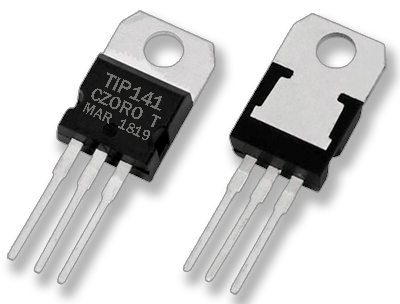
Because of its Darlington configuration, the TIP141 offers a very high DC current gain (hFE up to 1000), which reduces the need for external driver stages. This makes it especially suitable for audio amplifier circuits, relay drivers, and high-power switching. Its complementary PNP counterpart, TIP146, allows designers to create push-pull amplifier stages for efficient signal amplification.
TIP141 Pinout

TIP141 Transistor Key Features
- High DC current gain (hFE up to 1000) with Darlington pair technology.
- Suitable for high-current switching applications.
- Designed in TO-218 package for effective heat dissipation.
- Can directly interface with low-power control circuits like microcontrollers.
- Provides reliable performance in audio, industrial, and automotive circuits.
Specifications/Characteristics of TIP141 NPN Transistor
- Transistor Type: NPN (Darlington)
- Collector-Emitter Voltage (Vce): 80V
- Collector-Base Voltage (Vcb): 80V
- Emitter-Base Voltage (Veb): 5V
- Collector Current (Ic): 10A continuous, 15A peak
- DC Current Gain (hFE): Up to 1000
- Power Dissipation (Ptot): 125W (with heatsink)
- Package Type: TO-218
TIP141 Pin Configuration
| Pin# | Pin Name | Pin Description |
|---|---|---|
| 1 | Base (B) | Controls transistor biasing |
| 2 | Collector (C) | Connected to the load/output |
| 3 | Emitter (E) | Connected to ground or return path |
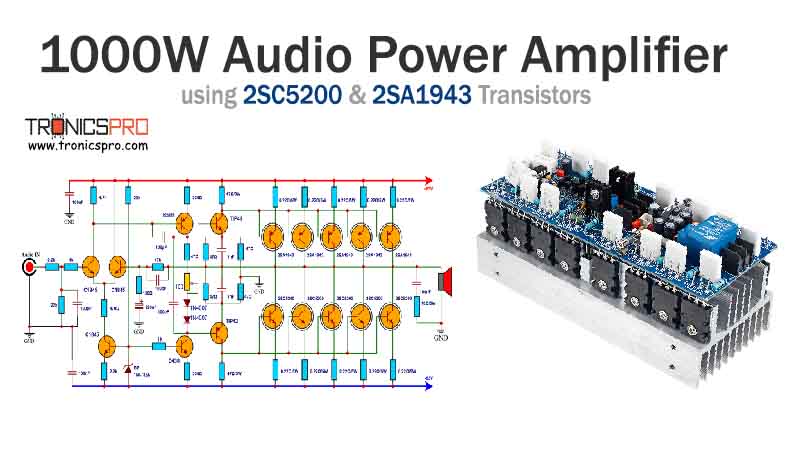
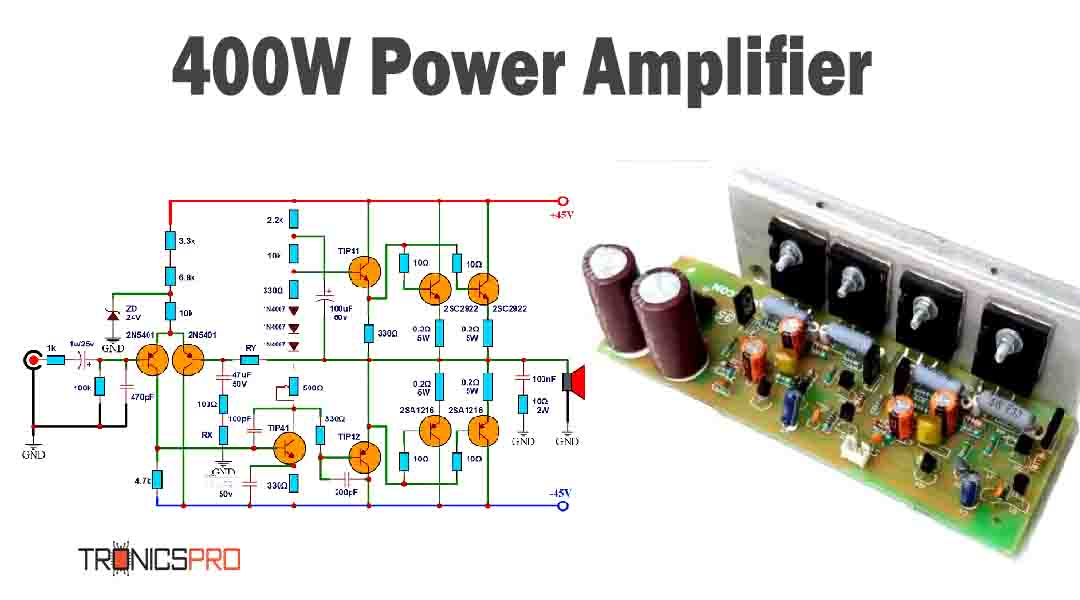
More Circuit Layouts

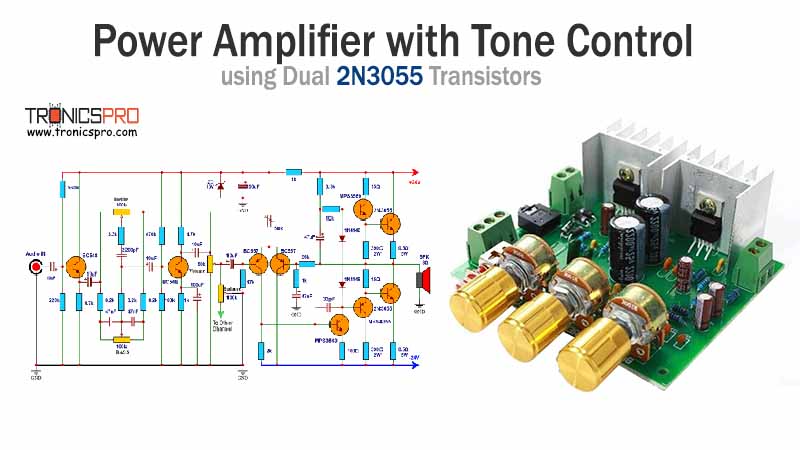
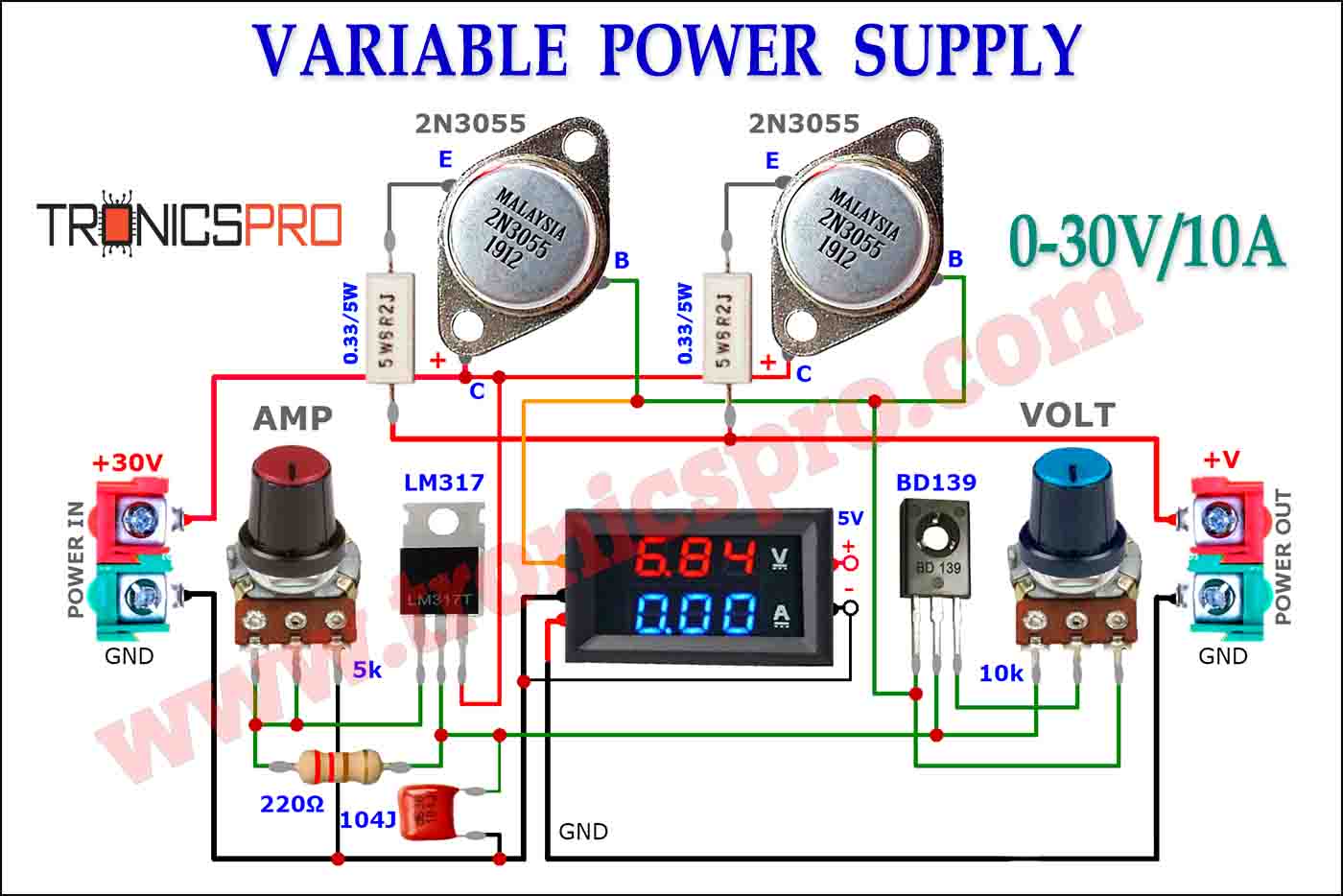
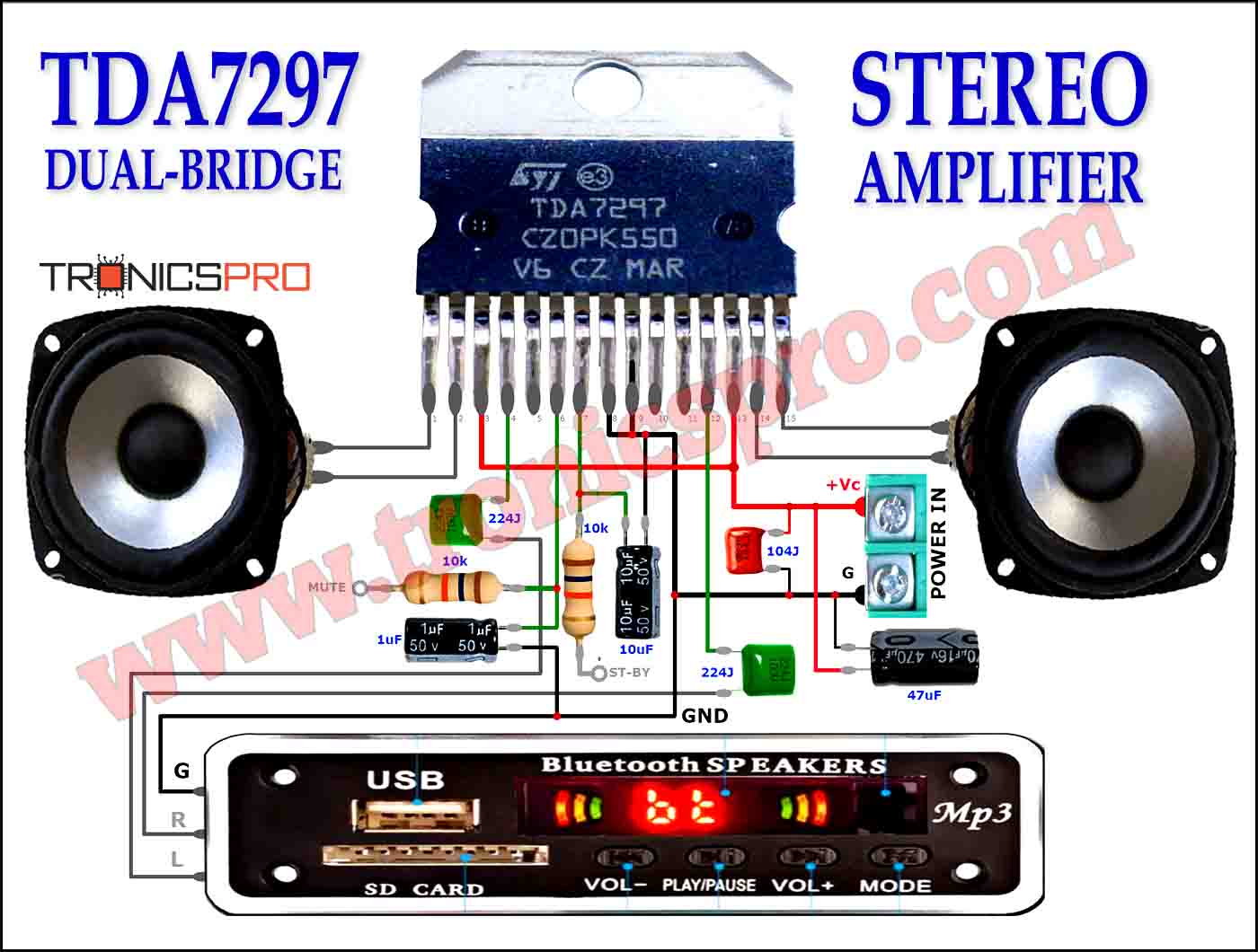
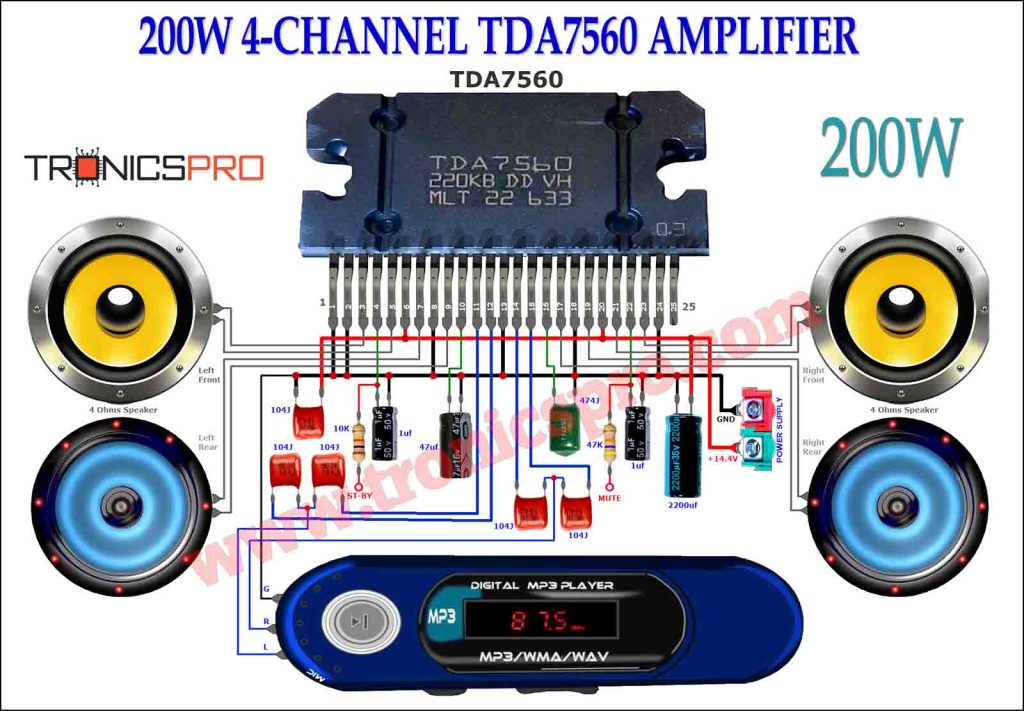
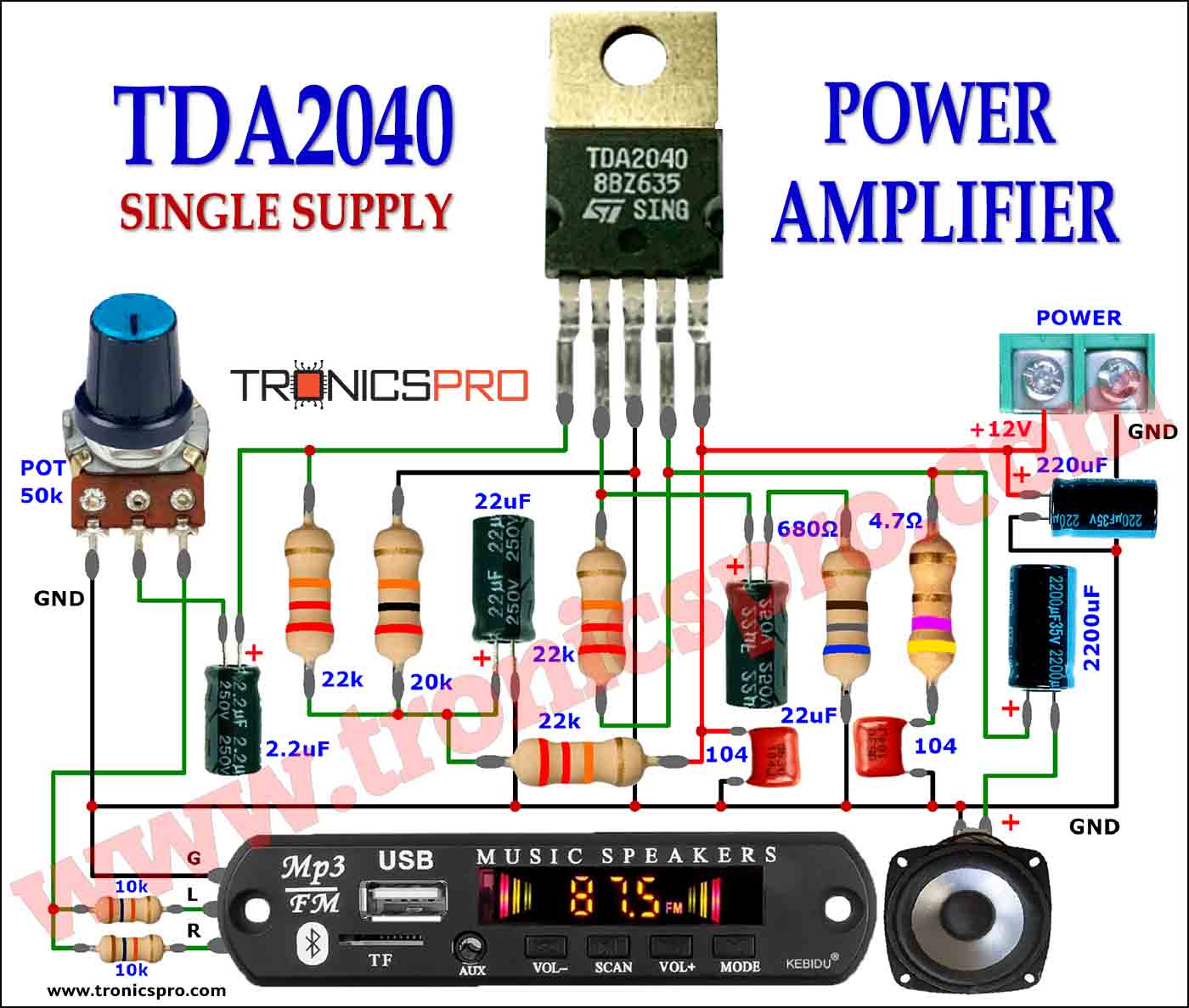
Key Applications of TIP141 NPN Transistor
- Audio amplifier output stages
- Motor drivers and speed control circuits
- Power switching and regulation
- Relay and solenoid drivers
- Inverter and UPS systems
- Industrial automation circuits
PNP Complimentary Transistor
TIP146 is the PNP complementary transistor of TIP141.
Equivalent Transistors of TIP141
- TIP140 (60V, NPN Darlington)
- TIP142 (100V, NPN Darlington)
- MJ11015 (High-power NPN Darlington)
- 2N6284 (NPN Darlington Power Transistor)
- TIP120 / TIP121 / TIP122 (Lower power Darlington transistors)
(Pin configuration of some transistors mentioned above may different from TIP141).
TIP140 vs TIP141 vs TIP142 Comparison
TIP140, TIP141, TIP142 are all NPN Darlington transistors in the same family.
The main difference is their voltage rating:
- TIP140 → 60V
- TIP141 → 80V
- TIP142 → 100V
Current handling and package TO-218 are the same, so the choice depends mainly on the required voltage tolerance in your circuit.
Datasheet of TIP141 NPN Transistor
Click the following Button below to download the datasheet of TIP141 Transistor :
More projects, You may like:
- Video Transmitter DIY Homemade FM Radio Transmitter
- Adjustable Power Supply DIY Battery Charger
- 12V-220V 500 Watt inverter DIY Homemade
- MPPT Solar Charge Controller DIY Homemade
- DIY LA4440 bass amplifier homemade
For more project and circuit diagrams, you can go through the Schematics in the main menu where you can find many interesting projects and circuit diagrams like audio amplifier circuits, voltage booster circuit, battery charger circuit and timer circuits etc., which are all beginner circuit projects. Feel free to check them out!
Thank you for visiting the article.
You may also like:
![MJE13007 NPN Power Transistor Datasheet]()
MJE13007 NPN Power Transistor Datasheet
![2n6475 datasheet pinout equivalent specification]()
2N6475 Pinout, Equivalent, Application, Datasheet
![2SA1216 PNP Transistor Datasheet Pinout]()
2SA1216 PNP Transistor Datasheet Pinout
![2n2222 datasheet pinout]()
2N2222 Pinout, Equivalent, Application, Datasheet
![TIP132 NPN Transistor Datasheet]()
TIP132 NPN Transistor Pinout Datasheet
![mje15030 datasheet pinout]()
MJE15030 Pinout Equivalent Application Datasheet
![BC546 NPN Transistor Datasheet Pinout]()
BC546 NPN Transistor Datasheet
![BC549 NPN Transistor Pinout Datasheet]()
BC549 NPN Transistor Pinout Datasheet