The BD911 pinout is important to understand before using this transistor in any power amplifier or switching circuit. The BD911 is a high-power NPN silicon transistor known for its strong current-handling capability, making it suitable for high-current and high-voltage applications. It’s commonly used in audio output stages, motor control, and regulated power supplies due to its robustness, fast switching, and linear performance.

Introduction to BD911 NPN Transistor
The BD911 transistor is an NPN silicon power transistor that delivers excellent performance for both linear and switching applications. It has a collector-emitter voltage (Vce) of 100V, a collector current (Ic) rating of 15A, and can dissipate up to 90W of power.
Encased in a TO-220 package, the BD911 offers efficient thermal performance, allowing it to operate safely under heavy loads with proper heat sinking. Because of its rugged design and high gain, it is widely used in audio power amplifiers, voltage regulators, and DC motor drivers.
BD911 NPN Transistor

Pinout of BD911

Understanding the BD911 Pinout Configuration
Before connecting the transistor in any circuit, understanding the BD911 pinout is crucial to avoid incorrect wiring. The pin arrangement of this transistor in the TO-220 package is standard and easy to identify.
Pin Configuration of BD911 Pinout
| Pin# | Pin Name | Pin Description |
|---|---|---|
| 1 | Base | Controls transistor operation |
| 2 | Collector | Connected to the load/output |
| 3 | Emitter | Connected to the ground or return path |
Key Features of BD911 Transistor
- High-power NPN silicon transistor
- Maximum collector-emitter voltage of 100V
- Collector current up to 15A
- Power dissipation up to 90W
- Excellent linear gain characteristics
- Suitable for both switching and audio amplifier circuits
- TO-220 package ensures efficient heat transfer
BD911 Transistor Datasheet and Specifications
- Collector-Emitter Voltage (Vce): 100 V
- Collector-Base Voltage (Vcb): 100 V
- Emitter-Base Voltage (Veb): 5 V
- Collector Current (Ic): 15 A
- Power Dissipation (Ptot): 90 W
- DC Current Gain (hFE): 40 – 250
- Transition Frequency (fT): 3 MHz
- Junction Temperature (Tj): 150 °C
- Package Type: TO-220
These specifications make the BD911 transistor ideal for use in demanding environments where both voltage and current stress are high. Its high current capacity ensures smooth operation in heavy-load audio systems and power circuits.
Working Principle of BD911 NPN Transistor
The BD911 NPN transistor works on the basic principle of current amplification. When a small current flows into the base, it controls a much larger current flow between the collector and emitter. In amplifier circuits, this property allows the BD911 to boost weak input signals into stronger outputs.
In switching applications, the transistor operates in saturation (fully ON) and cutoff (fully OFF) regions to control high-power devices such as motors or lamps. When used with its PNP complementary pair BD912, it enables push-pull output stages in Class-B or Class-AB audio amplifiers for better efficiency and linearity.
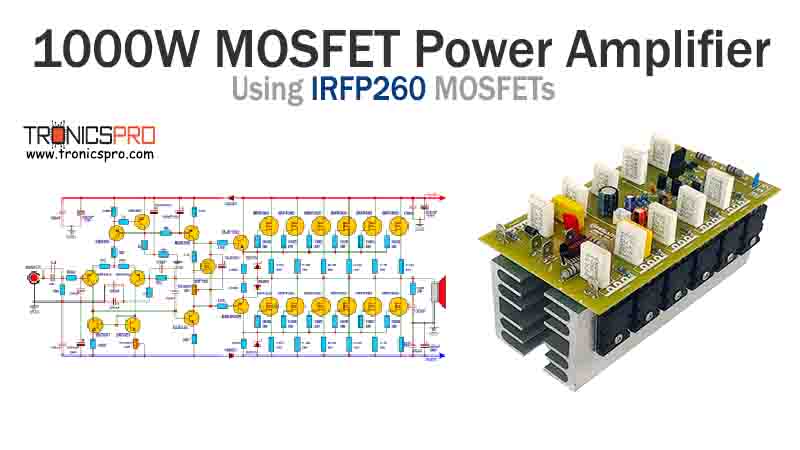
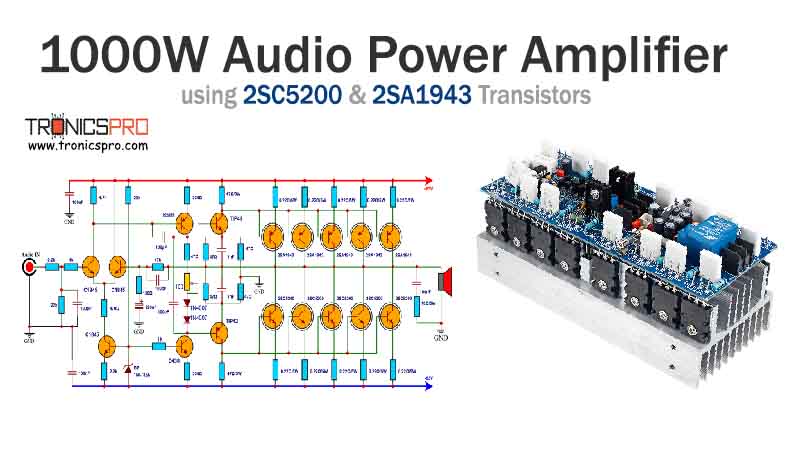
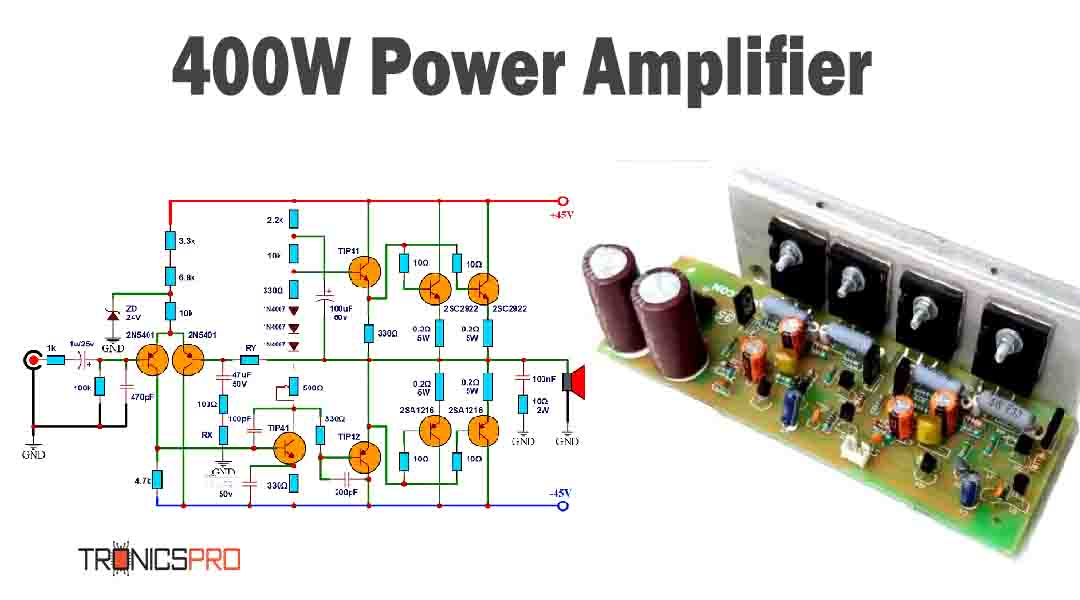
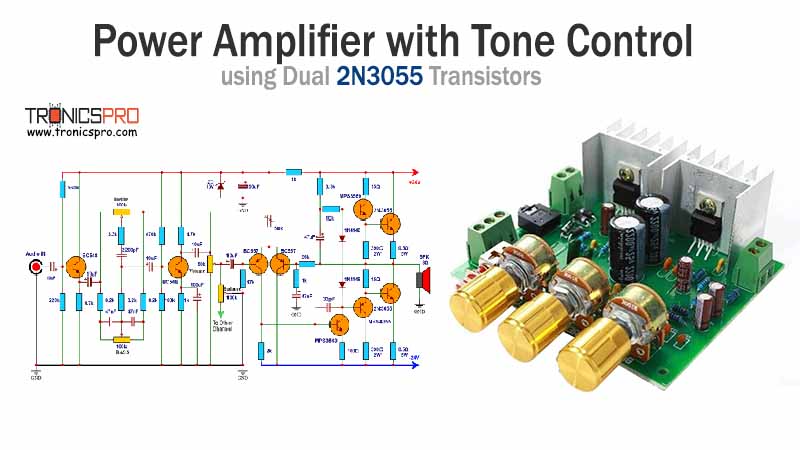
More Circuit Layouts
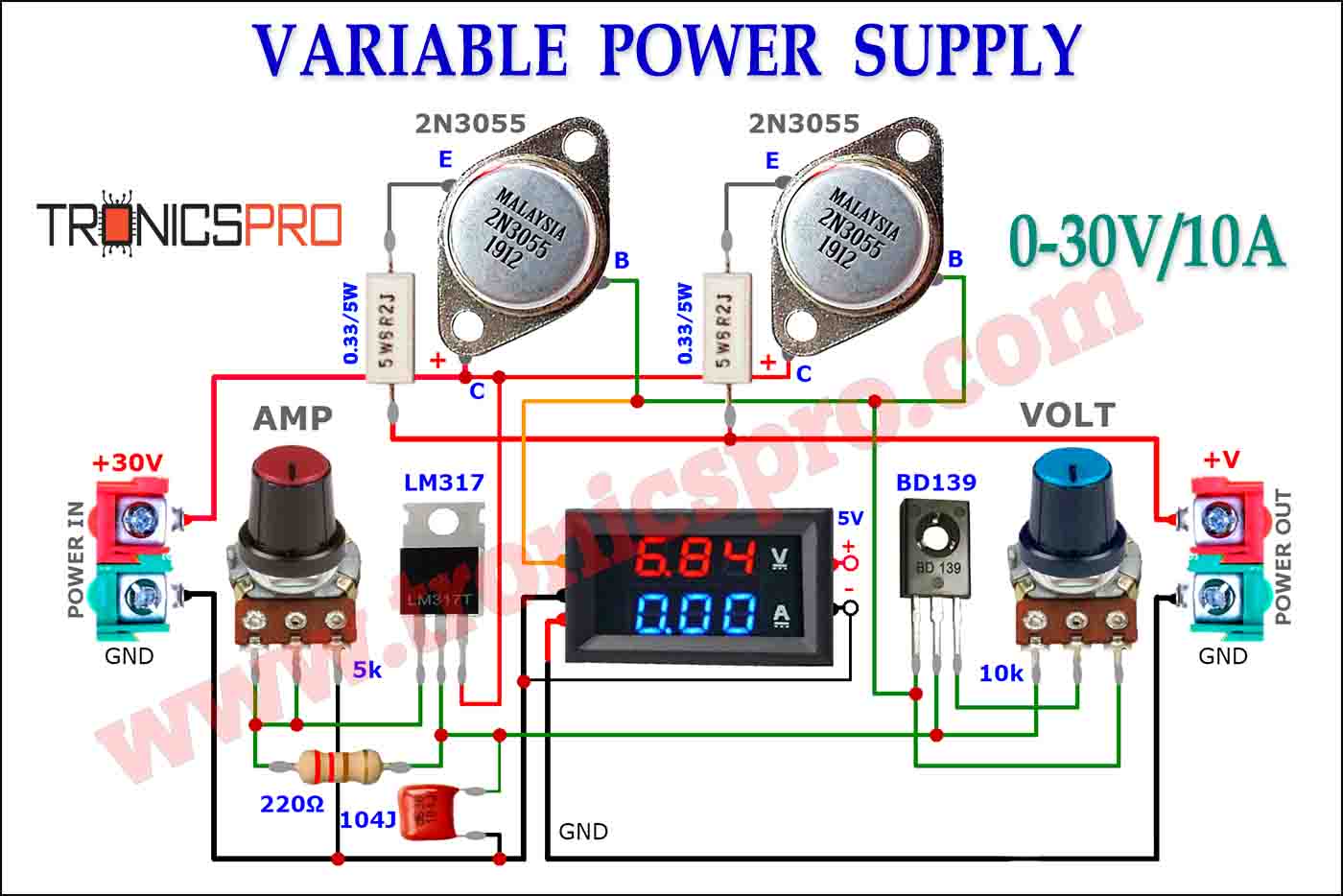
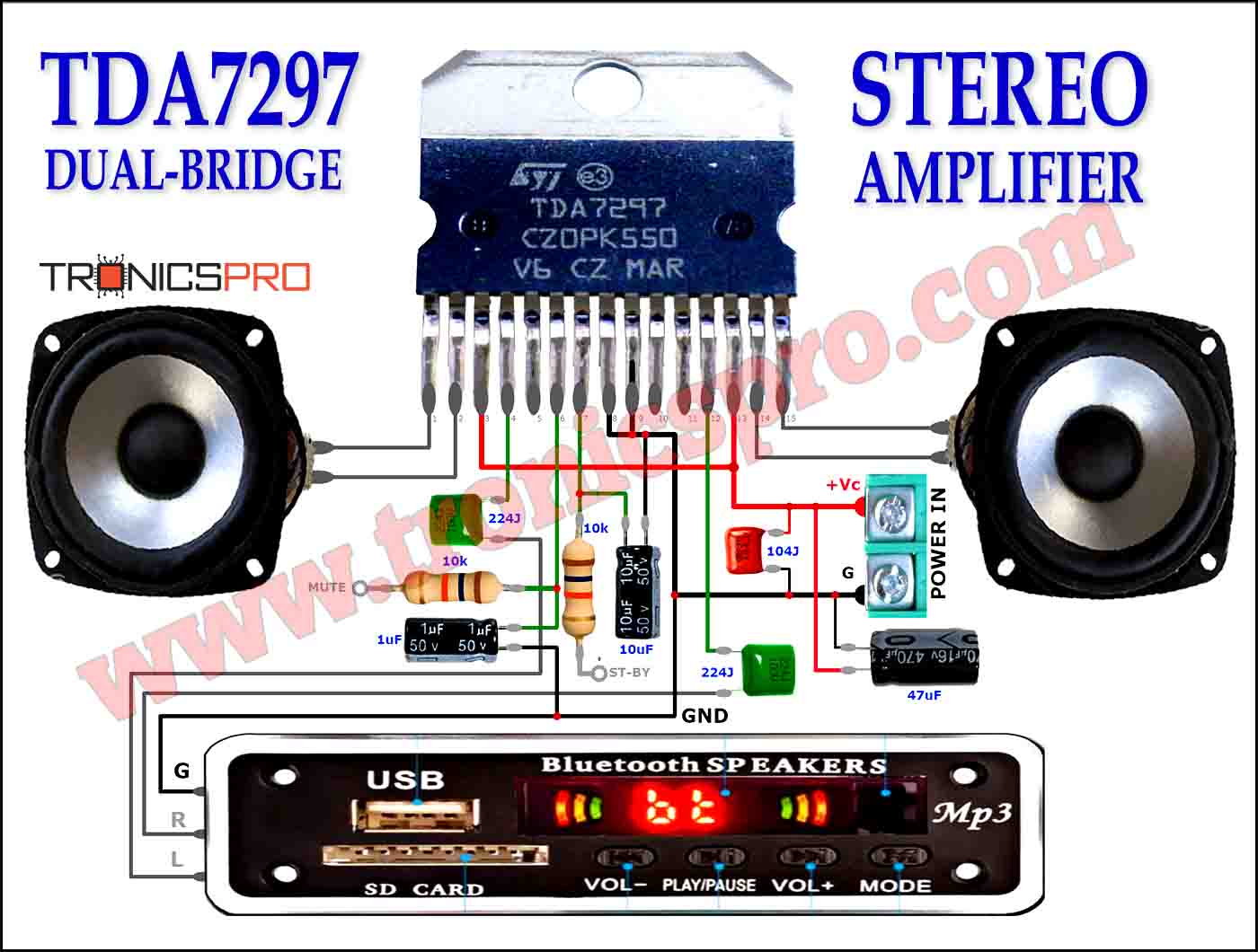
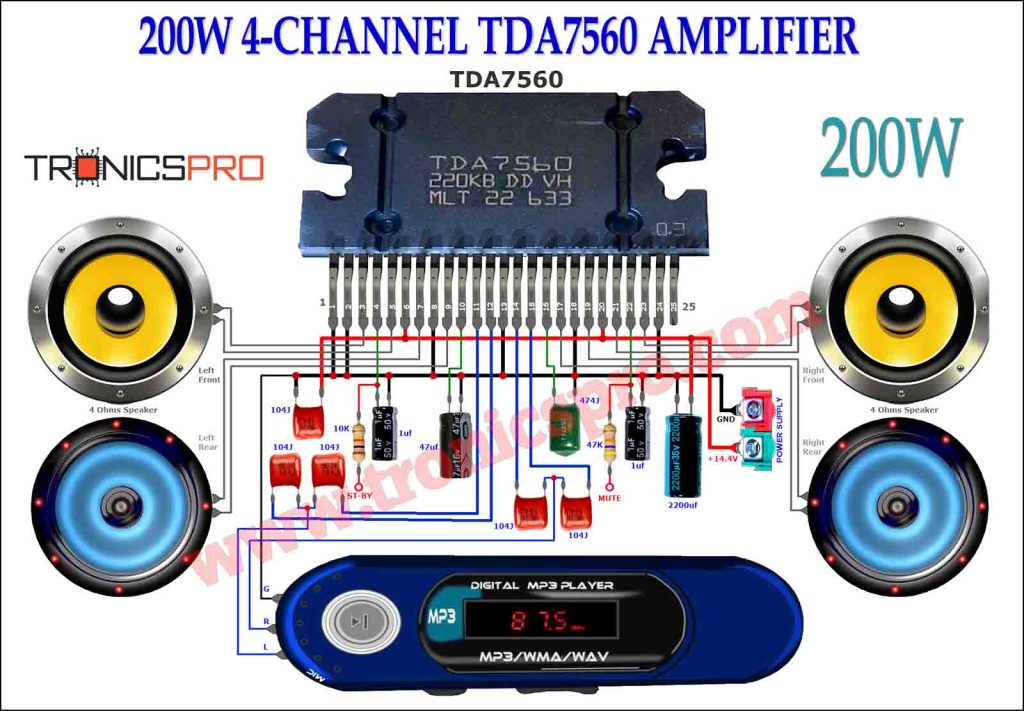
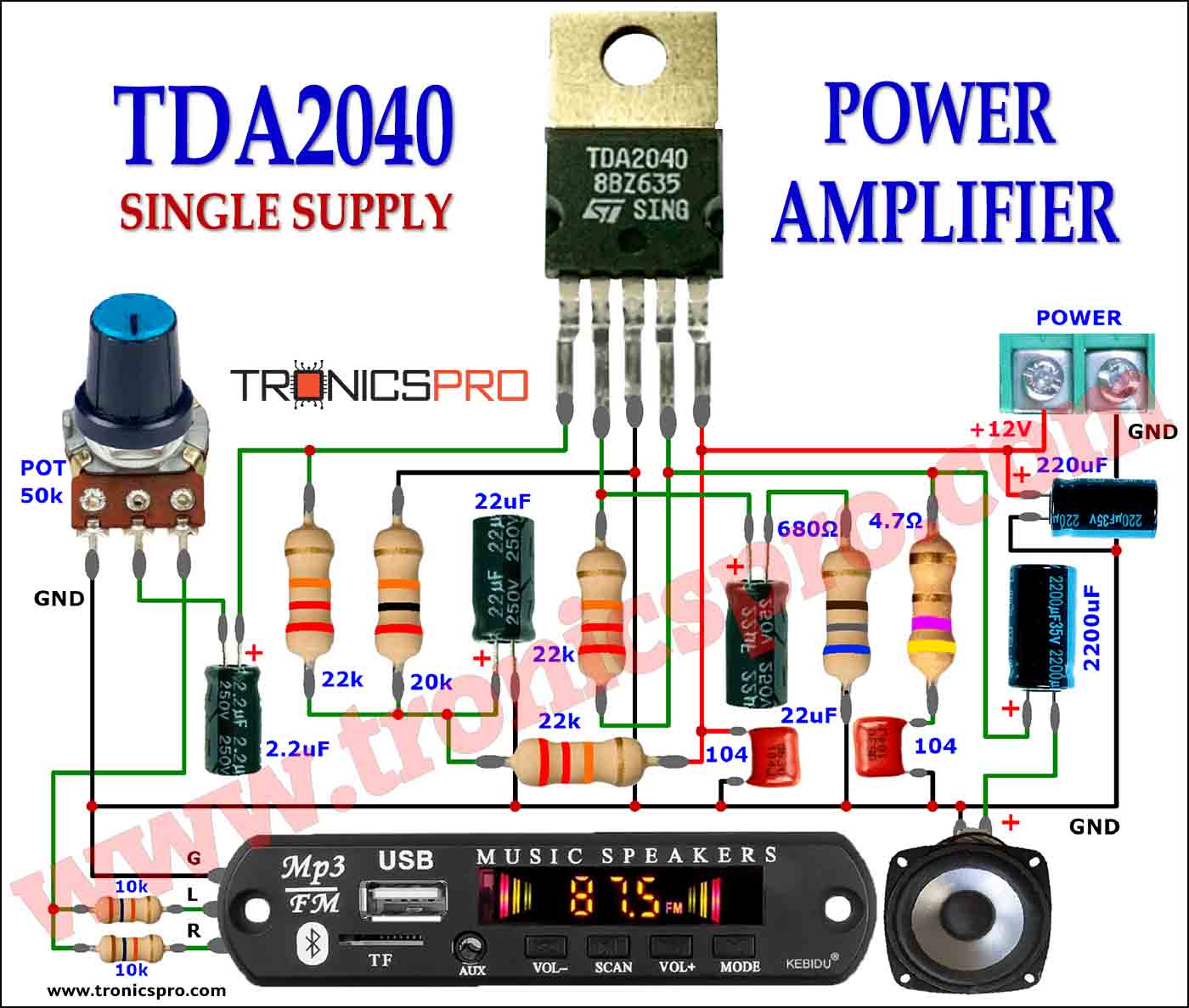
Typical Applications of BD911
- Audio power amplifiers
- High-current switching circuits
- Power supply and voltage regulators
- Inverter and converter circuits
- DC motor drivers and control systems
- Push-pull complementary output stages
PNP Complementary Transistor
The PNP complementary transistor of BD911 is BD912.
Both transistors are designed to work in tandem, especially in audio amplifier or power output circuits. When used together, BD911 (NPN) handles the positive half of the waveform, while BD912 (PNP) handles the negative half, ensuring symmetrical performance and low distortion output.
Equivalent Transistors and Alternatives
The following are some equivalent or alternative transistors for BD911, depending on circuit voltage and current requirements:
Before substitution, always verify pin configuration, voltage ratings, and power dissipation to ensure compatibility with your circuit.
Comparison BD911 vs BD912 Complementary Transistors
The BD911 is an NPN transistor, while the BD912 is its PNP complementary pair. Both share identical ratings — 100V voltage, 15A current, and 90W power dissipation — making them perfectly matched for push-pull amplifier designs.
In operation, BD911 conducts during the positive cycle of the signal, while BD912 conducts during the negative cycle. This balanced conduction ensures high-quality amplification with reduced distortion and higher efficiency, especially in Class-AB amplifier stages.
Frequently Asked Questions (FAQ)
What is the BD911 transistor used for?
The BD911 transistor is mainly used in audio amplifiers, power regulators, and switching circuits that require high voltage and current handling.
What type of transistor is BD911?
It is an NPN silicon power transistor capable of handling up to 100V and 15A.
What is the BD911 pin configuration?
The BD911 pinout is Base (Pin 1), Collector (Pin 2), and Emitter (Pin 3) in the TO-220 package.
What is the complementary transistor for BD911?
The BD912 is the PNP complementary transistor for BD911.
Can I use TIP41C instead of BD911?
Yes, TIP41C can be used as a replacement for BD911 in most circuits if it meets the voltage and current requirements.
Conclusion
The BD911 transistor is a powerful and reliable NPN silicon device built for heavy-duty amplifier and switching applications. With its 100V voltage capacity, 15A current handling, and 90W power dissipation, it offers high efficiency, stability, and durability.
When paired with its PNP complementary BD912, it becomes an excellent combination for designing push-pull audio amplifiers, motor control circuits, and power supplies. Its widespread availability and proven reliability make the BD911 one of the most trusted choices among professionals and hobbyists alike.
Datasheet of BD911 NPN Transistor
Click the following Button to download the datasheet of BD911 Transistor :
More projects, You may like:
- Video Transmitter DIY Homemade FM Radio Transmitter
- Adjustable Power Supply DIY Battery Charger
- 12V-220V 500 Watt inverter DIY Homemade
- MPPT Solar Charge Controller DIY Homemade
- DIY LA4440 bass amplifier homemade
For more project and circuit diagrams, you can go through the Schematics in the main menu where you can find many interesting projects and circuit diagrams like audio amplifier circuits, voltage booster circuit, battery charger circuit and timer circuits etc., which are all beginner circuit projects. Feel free to check them out!
Thank you for visiting the article
You may also like:
![2n5191 datasheet pinout equivalent specification]()
2N5191 Pinout, Equivalent, Application, Datasheet
![mj15003 datasheet pinout]()
MJ15003 Pinout Equivalent Applications Datasheet
![C9015 PNP Transistor Datasheet]()
C9015 PNP Small Signal Transistor Datasheet
![2n6111 datasheet pinout equivalent specification]()
2N6111 Pinout, Equivalent, Application, Datasheet
![2n3706 datasheet pinout]()
2N3706 Pinout, Equivalent, Application, Datasheet
![bd675 datasheet pinout]()
BD675 Pinout, Equivalent, Applications, Datasheet
![2n2906 datasheet pinout]()
2N2906 Pinout, Equivalent, Application, Datasheet
![2n3903 datasheet pinout]()
2N3903 Pinout, Equivalent, Application, Datasheet