The BCY70 is a PNP general-purpose transistor designed for reliable amplification and switching in compact metal packages. This article presents a complete technical overview, explains electrical behavior, and highlights practical uses while clearly describing the BCY70 pinout for correct circuit integration.

Introduction
The BCY70 is a classic PNP bipolar junction transistor housed in a robust TO-18 metal package. It is well suited for general-purpose amplification, signal conditioning, and switching tasks where mechanical strength, thermal stability, and consistent gain are important.

Pin Configuration / Pinout of BCY70 Transistor

Understanding the BCY70 Pinout Configuration
The BCY70 uses a TO-18 package with three terminals:
| Pin# | Pin Name |
|---|---|
| 1 | Emitter |
| 2 | Base |
| 3 | Collector |
Accurate identification of the pinout is essential to ensure proper biasing, avoid reverse operation, and achieve predictable performance in amplifier or switching circuits.
Note: DATASHEET DOWNLOAD button is provided end of this article.
BCY70 Key Features
- PNP general-purpose bipolar transistor
- Suitable for amplification and switching
- Metal TO-18 package for improved durability
- Stable gain characteristics
- Good high-frequency response
- Reliable thermal performance
BCY70 Specifications/Characteristics
- Collector-Emitter Voltage (Vceo): −50V
- Collector-Base Voltage (Vcbo): −40V
- Emitter-Base Voltage (Vebo): −5V
- Collector Current (Ic): −200mA
- Power Dissipation (PD): 350mW
- Junction Temperature (Tj): 200°C
- Storage Temperature (Tstg): −65°C to 150°C
- DC Current Gain (hFE): 100
- Transition Frequency (fT): 250MHz
Key Applications of BCY70 Transistor
- Small-signal audio amplifiers
- RF and IF amplification stages
- Switching circuits
- Signal conditioning modules
- Industrial and military electronics
- Educational and experimental designs
BCY70 Equivalent / Alternatives
(Verify pin compatibility before using substitutions)
Equivalent Transistors: BCY71, BC212
Alternative Devices: BC214, BC557, 2N3906
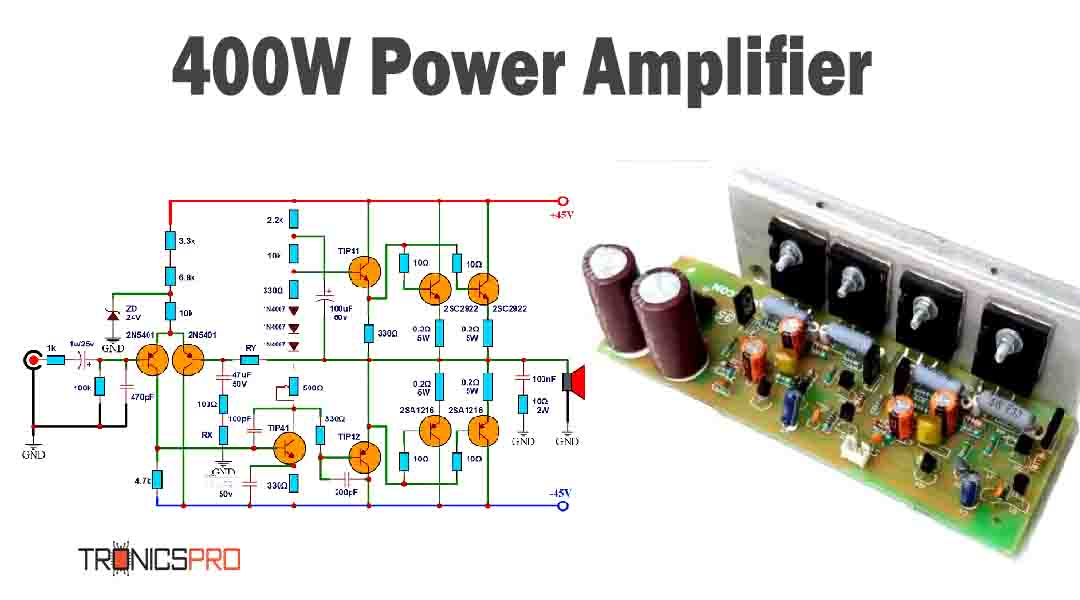
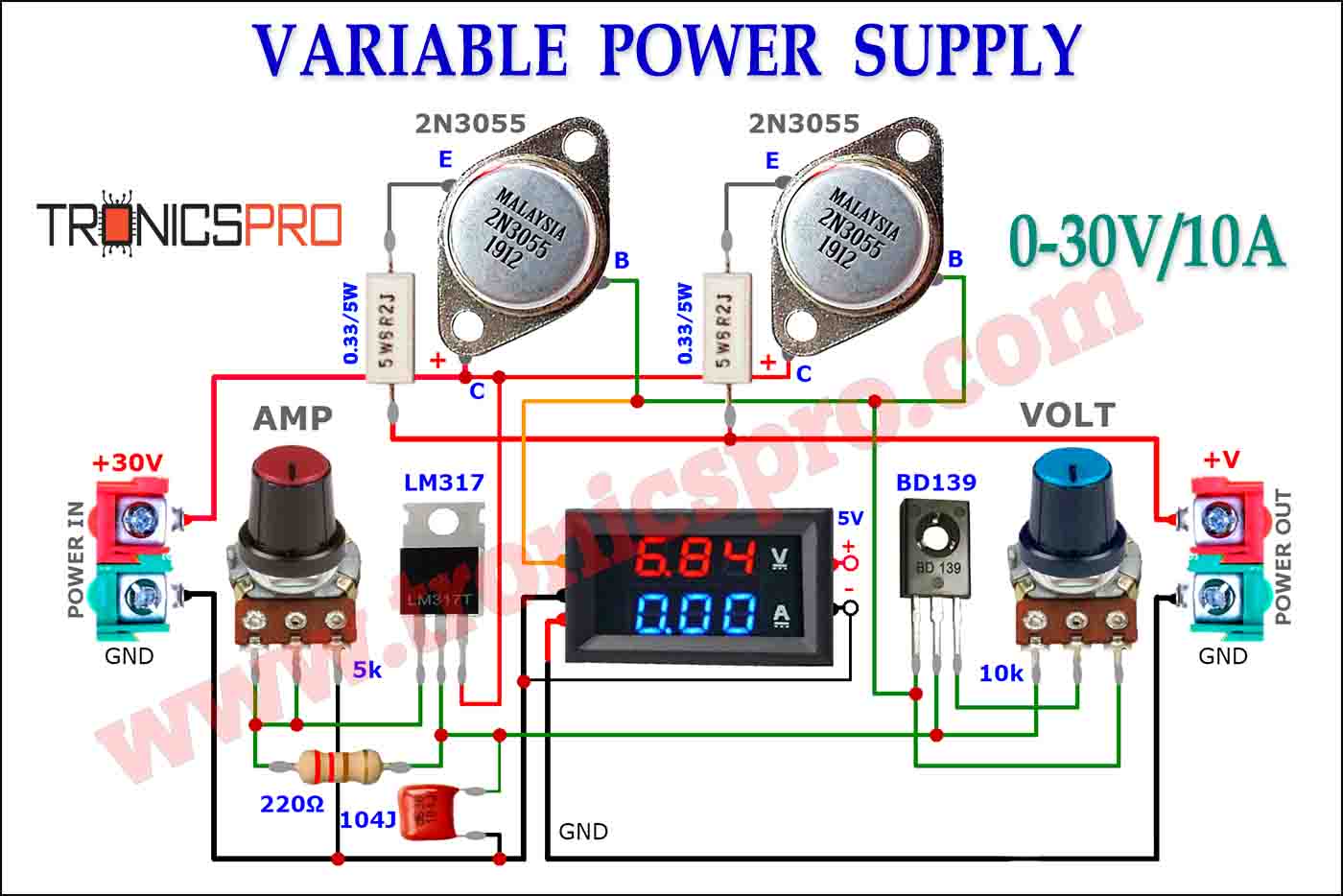
More Circuit Layouts






Working Principle of BCY70
The BCY70 operates by controlling the flow of current between the emitter and collector through a small base current. When the base is biased negatively relative to the emitter, the transistor conducts and amplifies the input signal. Its frequency capability allows effective operation in both audio and high-speed signal circuits.
Frequently Asked Questions (FAQ)
Q1: What package does the BCY70 use?
The BCY70 is supplied in a TO-18 metal package.
Q2: Is BCY70 suitable for high-frequency circuits?
Yes, its transition frequency supports RF and fast signal applications.
Q3: Can BCY70 be used in audio amplifiers?
Yes, it performs well in low-power audio amplification stages.
Q4: What is the maximum collector current of BCY70?
The maximum continuous collector current is −200mA.
Conclusion
The BCY70 is a dependable PNP general-purpose transistor offering solid electrical performance, high-frequency capability, and mechanical robustness. Its versatility makes it suitable for a wide range of analog, RF, and switching applications.
Datasheet of BCY70 Transistor
Click the following Button below to download the datasheet of BCY70 :
More projects, You may like:
- Video Transmitter DIY Homemade FM Radio Transmitter
- Adjustable Power Supply DIY Battery Charger
- 12V-220V 500 Watt inverter DIY Homemade
- MPPT Solar Charge Controller DIY Homemade
- DIY LA4440 bass amplifier homemade
For more project and circuit diagrams, you can go through the Schematics in the main menu where you can find many interesting projects and circuit diagrams like audio amplifier circuits, voltage booster circuit, battery charger circuit and timer circuits etc., which are all beginner circuit projects. Feel free to check them out!
Thank you for visiting the article.
You may also like:
![2n3439 datasheet pinout equivalent specification]()
2N3439 Pinout, Equivalent, Application, Datasheet
![bf423 datasheet pinout equivalent specification application transistor]()
BF423 Pinout, Equivalent, Application, Datasheet
![2n6111 datasheet pinout equivalent specification]()
2N6111 Pinout, Equivalent, Application, Datasheet
![bd683 datasheet pinout]()
BD683 Pinout, Equivalent, Applications, Datasheet
![bcy71 datasheet pinout equivalent specification application transistor]()
BCY71 Pinout, Equivalent, Application, Datasheet
![2n3251 datasheet pinout equivalent specification]()
2N3251 Pinout, Equivalent, Application, Datasheet
![BD434 PNP Transistor Datasheet]()
BD434 PNP Transistor Pinout Datasheet
![mje15031 datasheet pinout]()
MJE15031 Pinout Equivalent Application Datasheet