Introduction
The BC557 PNP transistor is a general-purpose small-signal transistor designed for low-power amplification and switching applications. Belonging to the BC55x transistor family, it is commonly used in audio, signal processing, and control circuits where low current handling and reliable switching are required. With a maximum collector-emitter voltage of -45V and a collector current rating of -100mA, the BC557 is suitable for a variety of low-power electronic applications.

The transistor is manufactured in three gain classifications: BC557A, BC557B, and BC557C, each offering different DC current gain (hFE) values in the range of 110 to 800. This flexibility allows engineers and designers to choose the right variant for specific amplification requirements. Its transition frequency of 150 MHz makes it well-suited for both low-frequency audio and higher frequency signal applications.
BC557 PNP Transistor

Encased in a compact TO-92 plastic package, the BC557 is cost-effective, easy to use, and available worldwide, making it a popular choice for students, hobbyists, and professionals. It is often employed in audio preamplifiers, small-signal amplifiers, switching circuits, LED drivers, and sensor-based circuits, where its low noise and reliable performance make it a trusted component.
BC557 Pinout

BC557 Transistor Key Features
- PNP bipolar junction transistor for small-signal applications.
- Designed for low-power switching and amplification.
- Available in gain groupings (A, B, C) for application flexibility.
- Compact and low-cost TO-92 package.
- Ideal for audio circuits and general-purpose electronics.
- Reliable, durable, and widely available.
Specifications/Characteristics of BC557 PNP Transistor
- Maximum Collector-Base Voltage (Vcb): -50V
- Maximum Collector-Emitter Voltage (Vce): -45V
- Maximum Emitter-Base Voltage (Veb): -5V
- Maximum Collector Current (Ic): -100mA
- Total Power Dissipation (Ptot): 500mW
- DC Current Gain (hFE): 110 – 800 (depending on classification)
- Transition Frequency (ft): 150 MHz (typical)
- Noise Figure: Low (optimized for audio circuits)
- Operating Temperature Range: -65°C to +150°C
- Package: TO-92 plastic
BC557 Pin Configuration
| Pin# | Pin Name | Pin Description |
|---|---|---|
| 1 | Collector | Current flows out, connected to the load |
| 2 | Base | Controls transistor operation and switching |
| 3 | Emitter | Current flows in, usually connected to negative supply |
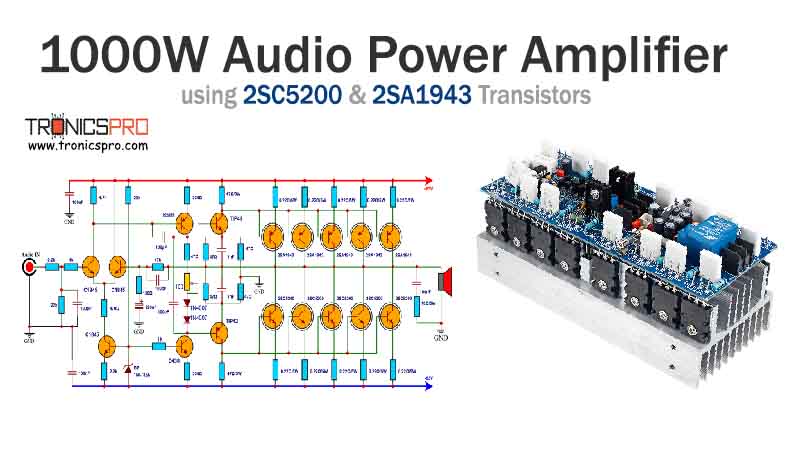
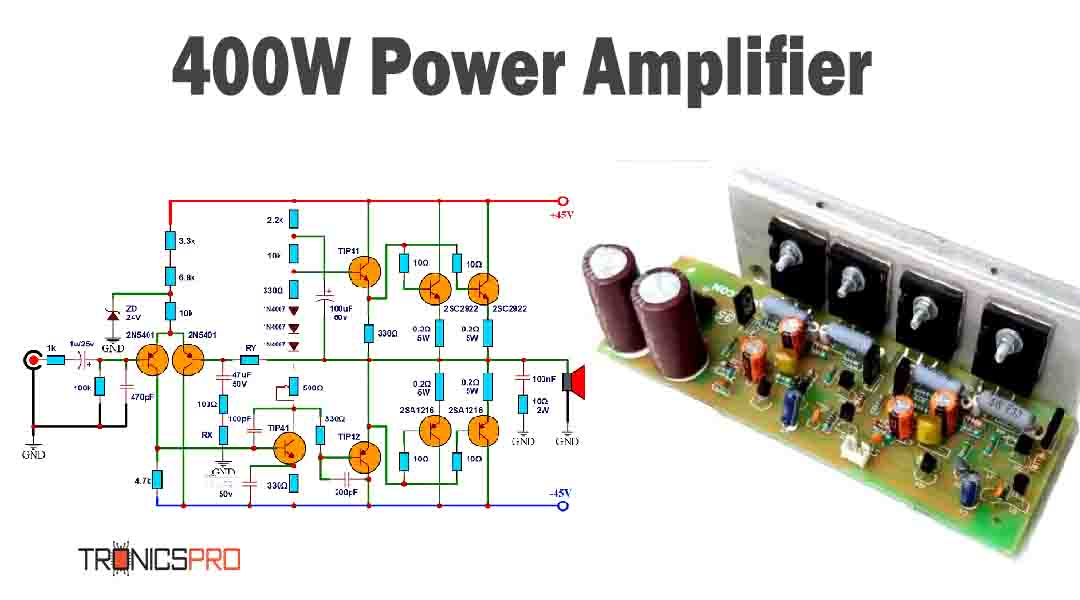
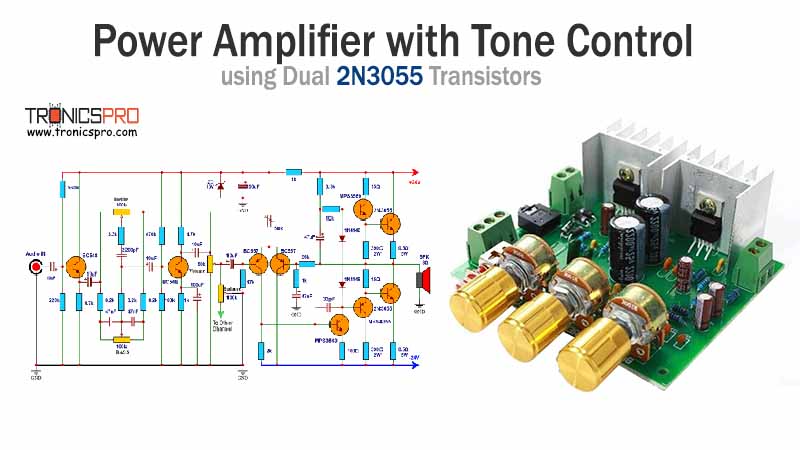
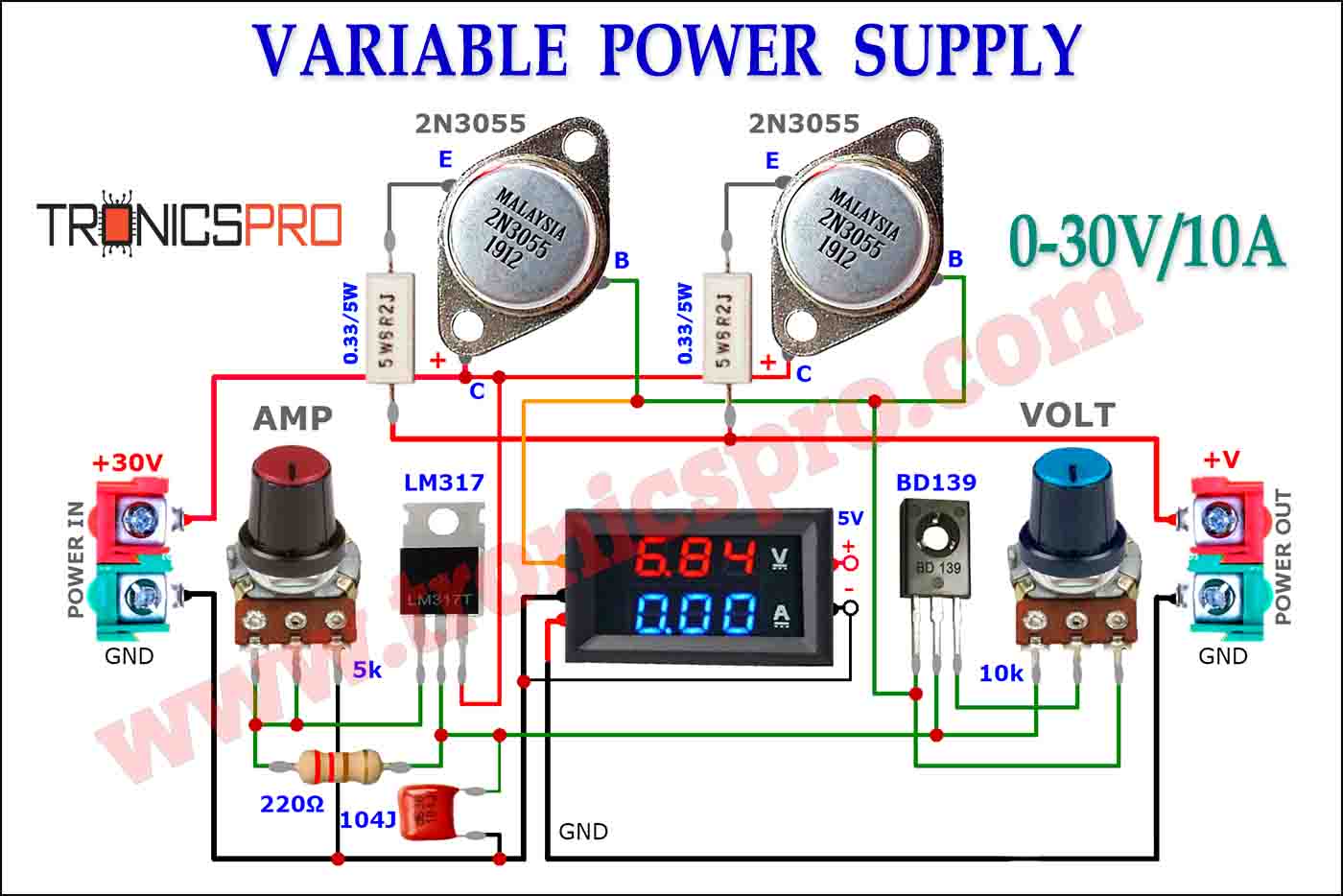
More Circuit Layouts

Key Applications of BC557 PNP Transistor
- Audio frequency low-noise amplifiers.
- General-purpose signal amplification.
- Switching loads up to 100mA.
- LED drivers and control circuits.
- Sensor interface and signal conditioning.
- Oscillators and waveform generation circuits.
- DIY electronics and educational projects.
NPN Complimentary Transistor
BC547 (NPN) is the complementary transistor to BC557.
Equivalent Transistors of BC557
- BC556 (higher voltage PNP, -65V).
- BC558 (similar general-purpose PNP transistor).
- BC559 (low-noise PNP transistor).
- 2N3906 (PNP small-signal transistor).
- 2N2907 (PNP transistor with higher current capacity).
(Pin configuration of some transistors mentioned here may different from BC557).
Datasheet of BC557 PNP Transistor
Click the following Button below to download the datasheet of BC557 Transistor :
More projects, You may like:
- Video Transmitter DIY Homemade FM Radio Transmitter
- Adjustable Power Supply DIY Battery Charger
- 12V-220V 500 Watt inverter DIY Homemade
- MPPT Solar Charge Controller DIY Homemade
- DIY LA4440 bass amplifier homemade
For more project and circuit diagrams, you can go through the Schematics in the main menu where you can find many interesting projects and circuit diagrams like audio amplifier circuits, voltage booster circuit, battery charger circuit and timer circuits etc., which are all beginner circuit projects. Feel free to check them out!
Thank you for visiting the article.
You may also like:
![2n2222A datasheet pinout equivalent specification]()
2N2222A Pinout, Equivalent, Application, Datasheet
![2n6099 datasheet pinout equivalent specification]()
2N6099 Pinout, Equivalent, Application, Datasheet
![bf458 datasheet pinout equivalent specification application transistor]()
BF458 Pinout, Equivalent, Application, Datasheet
![BD244 PNP Transistor Datasheet]()
BD244 PNP Transistor Pinout Datasheet
![BD179 NPN Transistor Datasheet]()
BD179 NPN Transistor Pinout Datasheet
![2n4918 datasheet pinout]()
2N4918 Pinout, Equivalent, Application, Datasheet
![2n5089 datasheet pinout]()
2N5089 Pinout, Equivalent, Application, Datasheet
![mps2222 datasheet pinout equivalent specification]()
MPS2222 Pinout, Equivalent Application, Datasheet