The BD711 is a high-power NPN transistor designed for use in audio amplifiers, switching regulators, and power control circuits. It offers a collector-emitter voltage of 100 V and a collector current of 12 A, providing strong performance for both linear and switching applications. Packaged in a TO-220 case, the BD711 is rugged, thermally efficient, and perfectly paired with the BD712 PNP complementary transistor for push-pull amplifier designs as the BD711 pinout is the same.
BD711 Pinout, Overview, and Features
The BD711 pinout structure follows the standard TO-220 transistor layout and allows for easy integration into existing power circuit designs. This NPN transistor operates efficiently under high voltage and current conditions, making it an ideal choice for medium-power amplifiers, DC motor drivers, and switching converters.
Engineers and hobbyists prefer the BD711 transistor because of its excellent current gain (hFE), low saturation voltage, and high durability under load. Its complementary relationship with BD712 ensures balanced amplification in audio output stages and inverter circuits, improving system reliability and sound quality.

Introduction to BD711 NPN Transistor
The BD711 NPN transistor is a silicon power device specifically built for high-current switching and linear amplification. Its performance stability across wide temperature ranges makes it a trusted component in power electronics and automotive control systems.
With a VCEO of 100 V, collector current of 12 A, and power dissipation capacity of 75 W, the BD711 provides excellent efficiency and signal fidelity. It ensures consistent performance even under heavy loads, which makes it a preferred option for audio power amplifiers, motor control circuits, and regulated power supplies.
BD711 NPN Transistor

Pinout of BD711

Understanding the BD711 Pinout Configuration
The BD711 pinout determines how the transistor interfaces with your circuit. Correct pin identification ensures safe and efficient performance.
Pin Configuration of BD711 Pinout
| Pin# | Pin Name | Pin Description |
|---|---|---|
| 1 | Base | Triggers transistor operation |
| 2 | Collector | Current input/load connection |
| 3 | Emitter | Current output/ground return |
Pin Orientation:
When facing the flat side with leads downward, the pin order from left to right is Base → Collector → Emitter.
Key Features of BD711 Transistor
- NPN silicon power transistor
- High DC gain (hFE)
- Low collector-emitter saturation voltage
- TO-220 package for easy mounting and heat control
- Complementary to BD712 PNP transistor
- Reliable operation for switching and amplification
BD711 Transistor Datasheet and Specifications
- Collector-Emitter Voltage (VCEO): 100 V
- Collector-Base Voltage (VCBO): 100 V
- Emitter-Base Voltage (VEBO): 5 V
- Collector Current (IC): 12 A
- Power Dissipation (PC): 75 W at Tc = 25 °C
- DC Current Gain (hFE): 40 (min) – 250 (max)
- Collector-Emitter Saturation Voltage (VCEsat): 1 V (max at IC = 4 A)
- Transition Frequency (fT): 3 MHz (typical)
- Junction Temperature (Tj): 150 °C (max)
- Thermal Resistance (RθJC): 1.67 °C/W
These specifications confirm that the BD711 transistor is capable of handling significant current loads and provides stable gain even at high temperatures.
Working Principle of BD711 NPN Transistor
The BD711 transistor works as a current amplifier and electronic switch. In NPN operation, a small base current controls a much larger collector-emitter current. This makes it useful for signal amplification and fast-switching applications.
In amplifier circuits, the BD711 NPN transistor amplifies the positive half-cycle of a signal. When paired with its PNP complementary (BD712), it forms a push-pull amplifier, enabling full-cycle operation with minimal distortion and high efficiency.
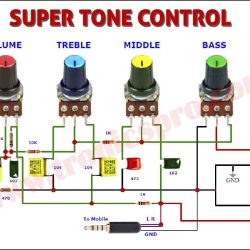
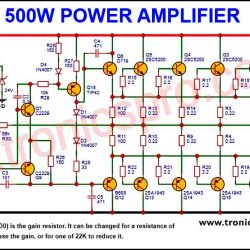
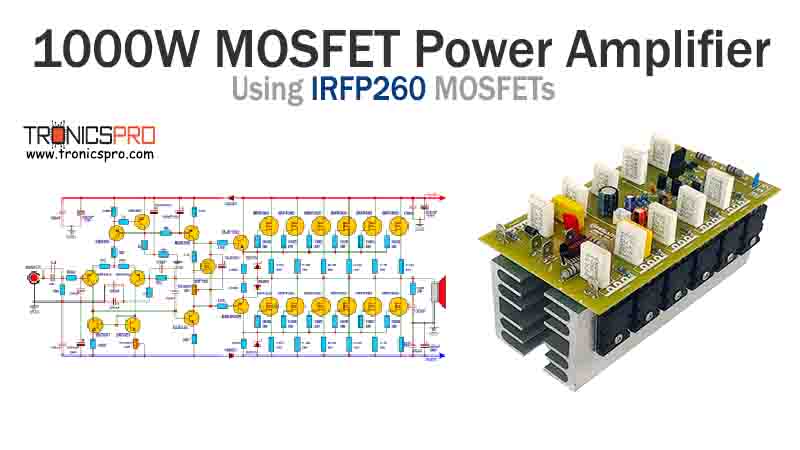
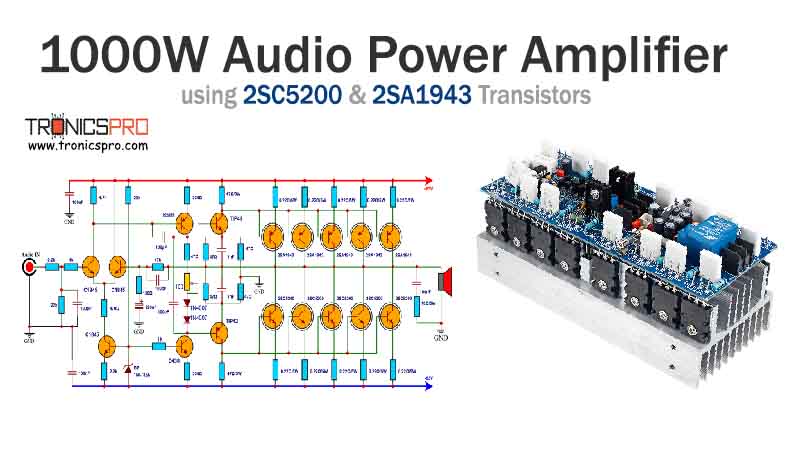
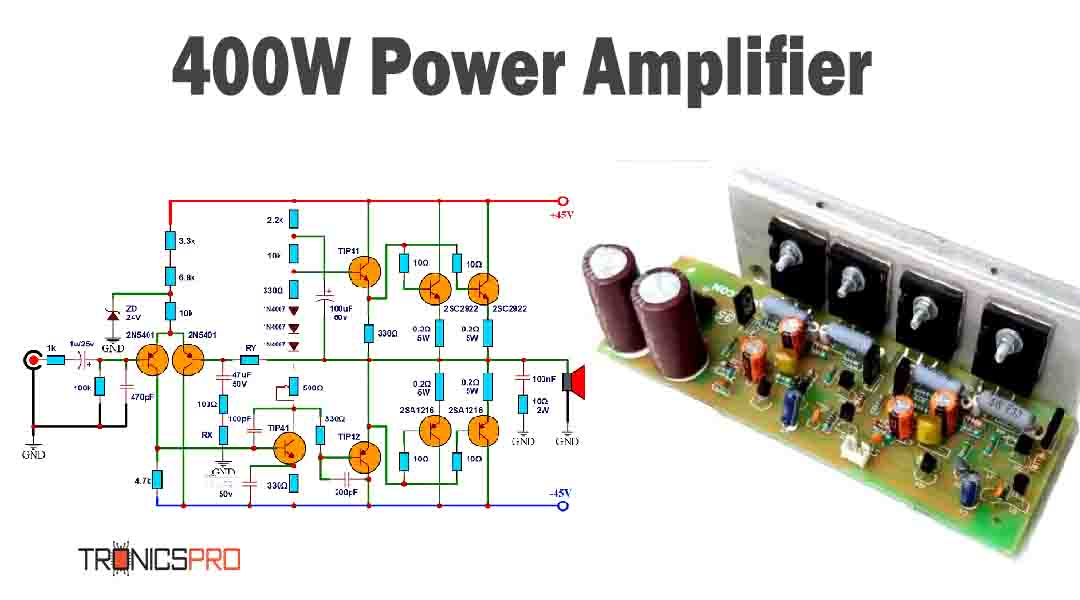
More Circuit Layouts
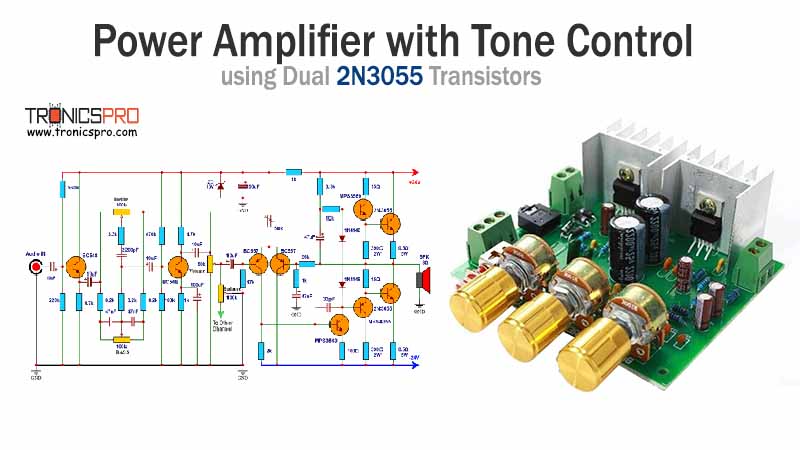
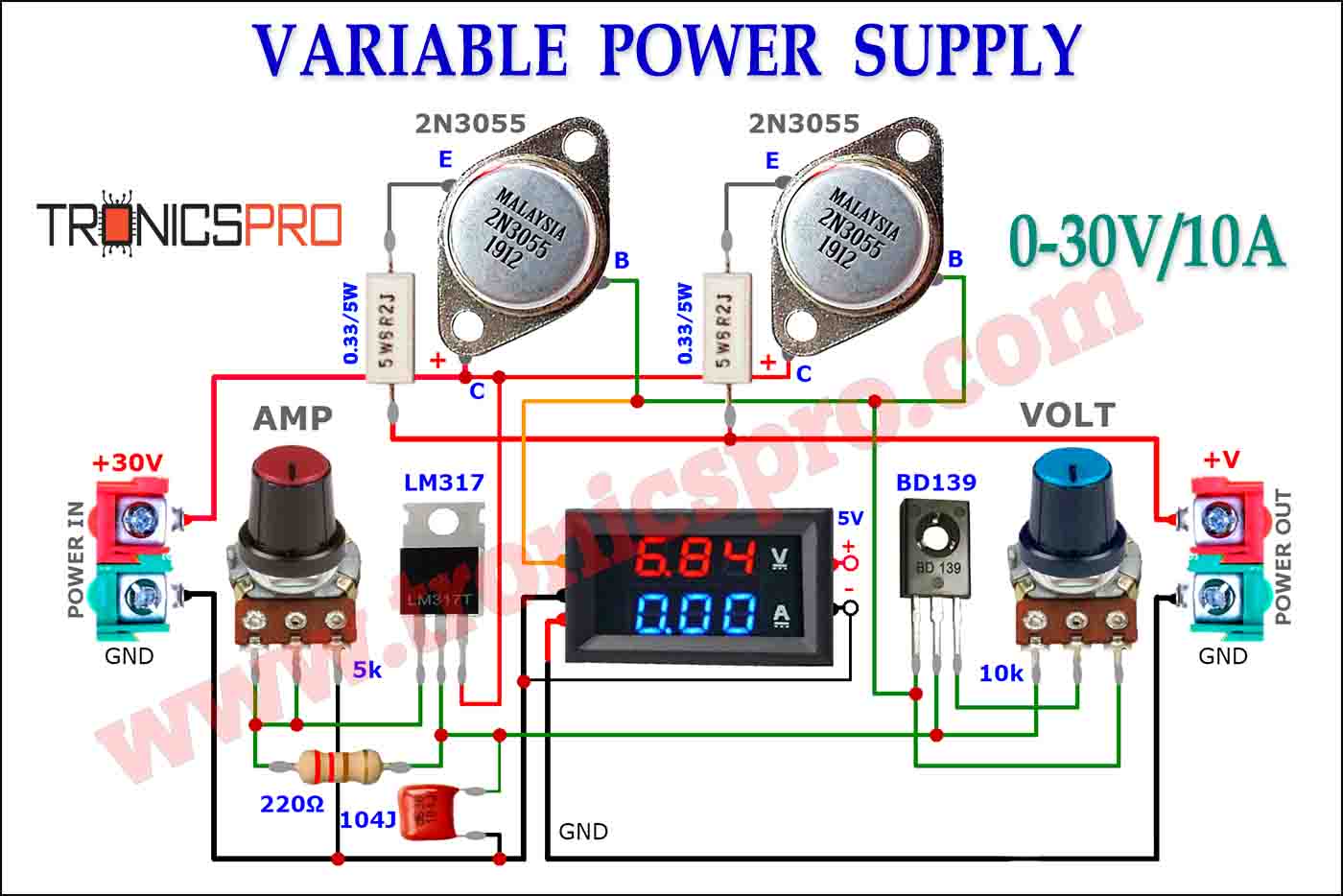
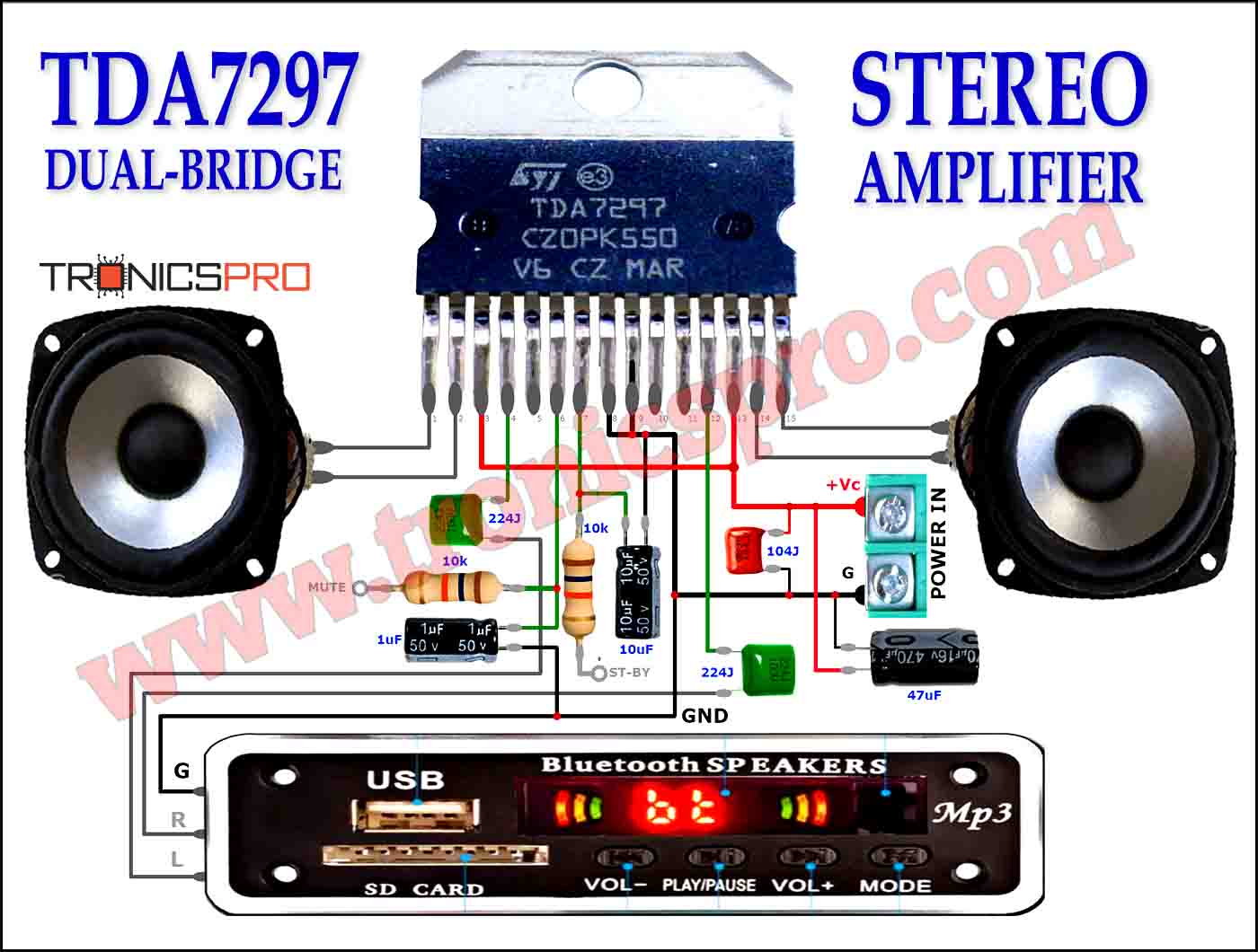
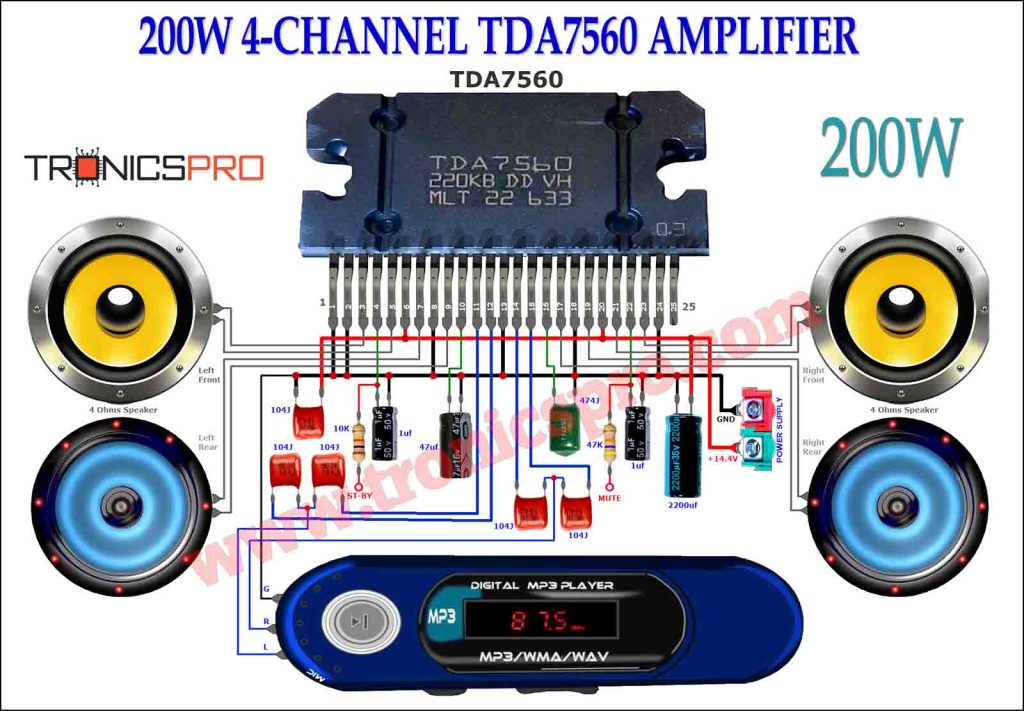
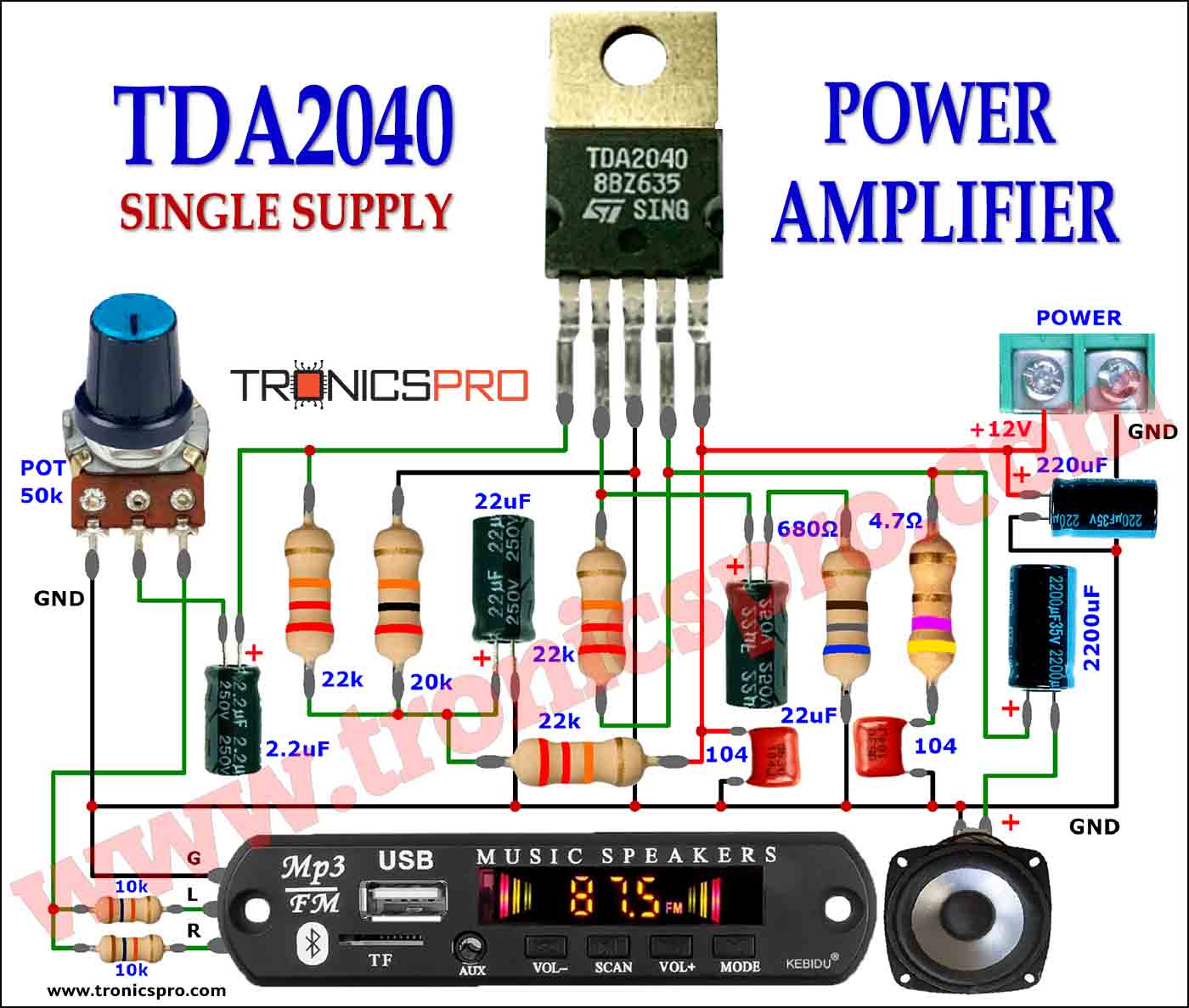
Typical Applications of BD711
- Audio power amplifier output stages
- Switching regulators and voltage converters
- DC motor drivers and control units
- Relay drivers and solenoid controllers
- Power supply circuits and regulators
- Inverters and converters
- Industrial control and automation circuits
PNP Complementary Transistor
The BD712 is the PNP complementary transistor to the BD711.
When combined, this pair enables balanced and efficient amplification in power circuits. The BD711 (NPN) handles the positive signal cycle, while BD712 (PNP) manages the negative side, ensuring consistent linear performance and reducing crossover distortion in push-pull amplifier designs.
Equivalent Transistors and Alternatives
Always confirm the pin configuration and maximum ratings before substituting any equivalent transistor.
Comparison BD711 vs BD712 Complementary Transistors
The BD711 (NPN) and BD712 (PNP) transistors are complementary pairs designed for symmetrical performance in high-power amplification.
While BD711 conducts when the base is positive relative to the emitter, BD712 conducts when the base is negative.
Both share the same 100 V, 12 A, and 75 W ratings, making them perfect partners for audio output, DC motor drivers, and switching regulators.
Together, they offer excellent linear response, low distortion, and high efficiency in demanding power circuits.
Frequently Asked Questions (FAQ)
What is the BD711 transistor used for?
It’s used for audio amplification, switching circuits, power supplies, and DC motor control.
What type of transistor is BD711?
The BD711 is an NPN silicon power transistor.
What is the BD711 pin configuration?
Pin 1 = Base, Pin 2 = Collector, Pin 3 = Emitter (TO-220).
What is the complementary transistor for BD711?
The BD712 PNP transistor is its complementary pair.
Can I use BD709 instead of BD711?
BD709 has lower voltage (80 V) and is not ideal for all BD711 applications, use with caution.
Conclusion
The BD711 transistor is a durable and powerful NPN silicon device with 100 V, 12 A, and 75 W capability. Its robust construction, high current gain, and TO-220 packaging make it perfect for power amplifiers, switching supplies, and industrial control circuits.
When paired with its complementary BD712 PNP transistor, it forms a balanced and efficient push-pull configuration, offering stable performance, reduced distortion, and long-term reliability.
The BD711 pinout and specifications make it a trusted choice in both professional and DIY power electronics.
Datasheet of BD711 NPN Transistor
Click the following Button to download the datasheet of BD711 Transistor :
More projects, You may like:
- Video Transmitter DIY Homemade FM Radio Transmitter
- Adjustable Power Supply DIY Battery Charger
- 12V-220V 500 Watt inverter DIY Homemade
- MPPT Solar Charge Controller DIY Homemade
- DIY LA4440 bass amplifier homemade
For more project and circuit diagrams, you can go through the Schematics in the main menu where you can find many interesting projects and circuit diagrams like audio amplifier circuits, voltage booster circuit, battery charger circuit and timer circuits etc., which are all beginner circuit projects. Feel free to check them out!
Thank you for visiting the article
You may also like:
![BD436 PNP Transistor Datasheet]()
BD436 PNP Transistor Pinout Datasheet
![2n1893 datasheet pinout]()
2N1893 Pinout, Equivalent, Application, Datasheet
![TIP130 NPN Power Transistor Datasheet]()
TIP130 NPN Power Transistor Pinout Datasheet
![TIP147 PNP Transistor Datasheet]()
TIP147 PNP Transistor Pinout Datasheet
![bf259 datasheet pinout equivalent specification application transistor]()
BF259 Pinout, Equivalent, Application, Datasheet
![2n3504 datasheet pinout]()
2N3504 Pinout, Equivalent, Application, Datasheet
![2n2369 datasheet pinout]()
2N2369 Pinout, Equivalent, Application, Datasheet
![BD441 NPN Transistor Datasheet]()
BD441 NPN Transistor Pinout Datasheet