The BD709 is a silicon NPN power transistor designed for high-current and medium-voltage switching and amplification. With a collector current up to 12 A and collector-emitter voltage of 80 V, this device provides reliable operation in power amplifiers, motor drivers, and control circuits. Packaged in TO-220, it offers excellent heat dissipation and works as the complementary pair of the BD710 PNP transistor with the same BD709 pinout.

Introduction to BD709 NPN Transistor
The BD709 is a versatile NPN silicon power transistor widely used in medium and high-power circuits. It delivers strong current-handling capability, thermal stability, and low saturation voltage, making it suitable for both switching and amplification.
Engineers favor the BD709 for DC motor controls, audio amplifier stages, power regulators, and inverter circuits, thanks to its reliable 80-volt operating range and 12-ampere collector current rating.
As part of the BD700 series, the BD709 pairs perfectly with the BD710 PNP transistor, forming an efficient complementary pair for push-pull and symmetrical output amplifier designs. Its TO-220 case ensures high durability and heat management under heavy load.
BD709 NPN Transistor

Pinout of BD709

Understanding the BD709 Pinout Configuration
The BD709 follows a standard TO-220 pin layout that ensures easy installation and compatibility with a wide range of power circuits.
Pin Configuration of BD709 Pinout
| Pin# | Pin Name | Pin Description |
|---|---|---|
| 1 | Base | Controls transistor bias |
| 2 | Collector | Main current path input |
| 3 | Emitter | Output current terminal |
Pin Orientation:
Viewed from the flat front face with leads pointing downward, the arrangement is Base – Collector – Emitter from left to right.
Key Features of BD709 Transistor
- NPN silicon power transistor
- High current gain with stable performance
- Low collector-emitter saturation voltage
- TO-220 package for efficient heat transfer
- Complementary to BD710 PNP transistor
- Ideal for power amplification and switching
BD709 Transistor Datasheet and Specifications
- Collector-Emitter Voltage (VCEO): 80 V
- Collector-Base Voltage (VCBO): 80 V
- Emitter-Base Voltage (VEBO): 5 V
- Collector Current (IC): 12 A
- Power Dissipation (PC): 75 W (at Tc = 25 °C)
- DC Current Gain (hFE): 40 (min at IC = 0.5 A)
- Collector-Emitter Saturation Voltage (VCEsat): 1.0 V (max at 4 A)
- Transition Frequency (fT): 3 MHz (typical)
- Junction Temperature (Tj): 150 °C (max)
- Thermal Resistance (RθJC): 1.67 °C/W
These specifications ensure BD709’s robust performance in both amplifier output stages and industrial switching systems.
Working Principle of BD709 NPN Transistor
The BD709 operates as a current-controlled device, where a small base current controls a much larger collector current. When the base-emitter junction is forward-biased, electrons flow from emitter to collector, enabling high-current amplification or switching.
This transistor is ideal for power regulation, driver circuits, and output amplifier stages, providing smooth current gain with low power loss. Its high transition frequency and low saturation voltage contribute to efficient switching and minimal heat generation during operation.
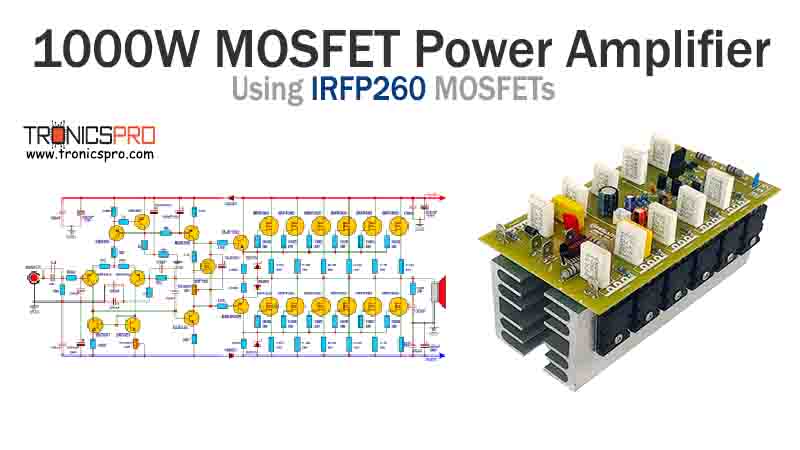
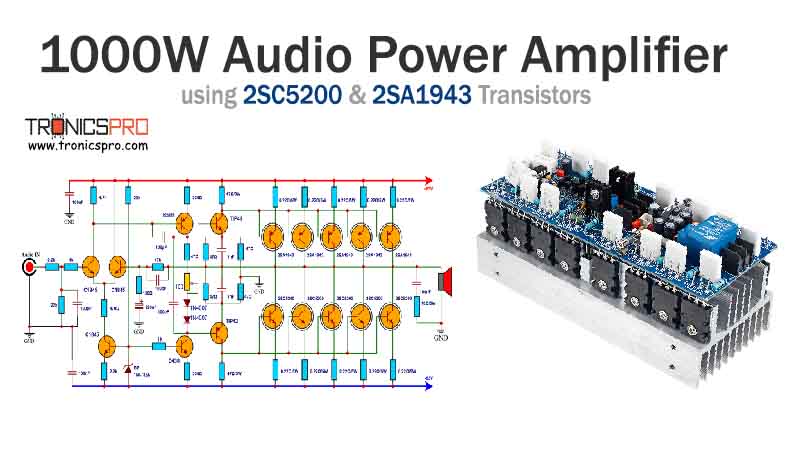
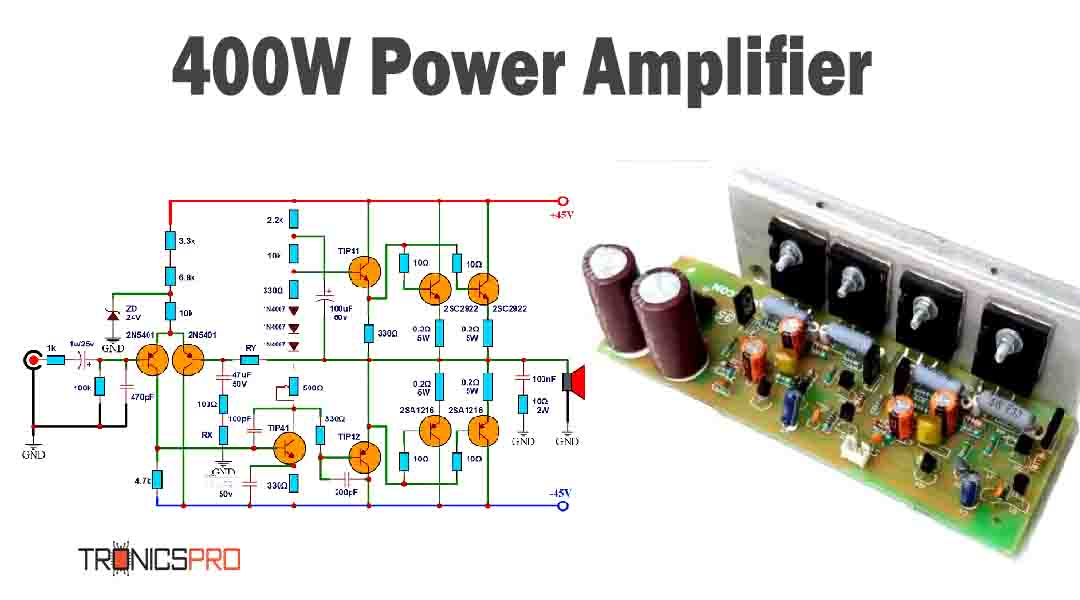
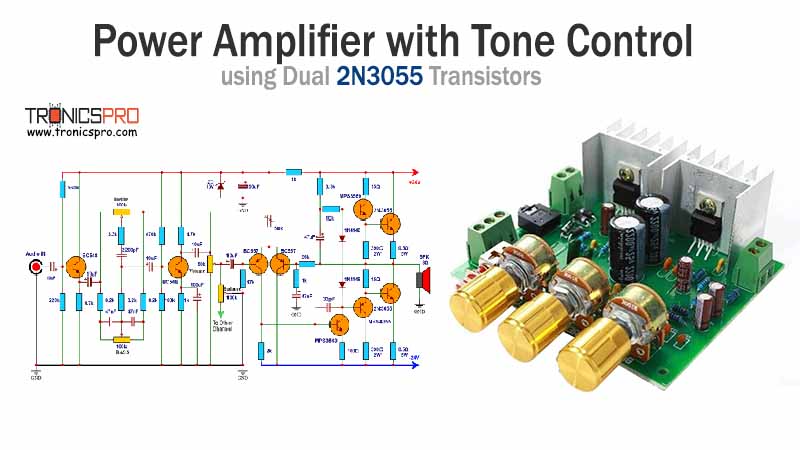
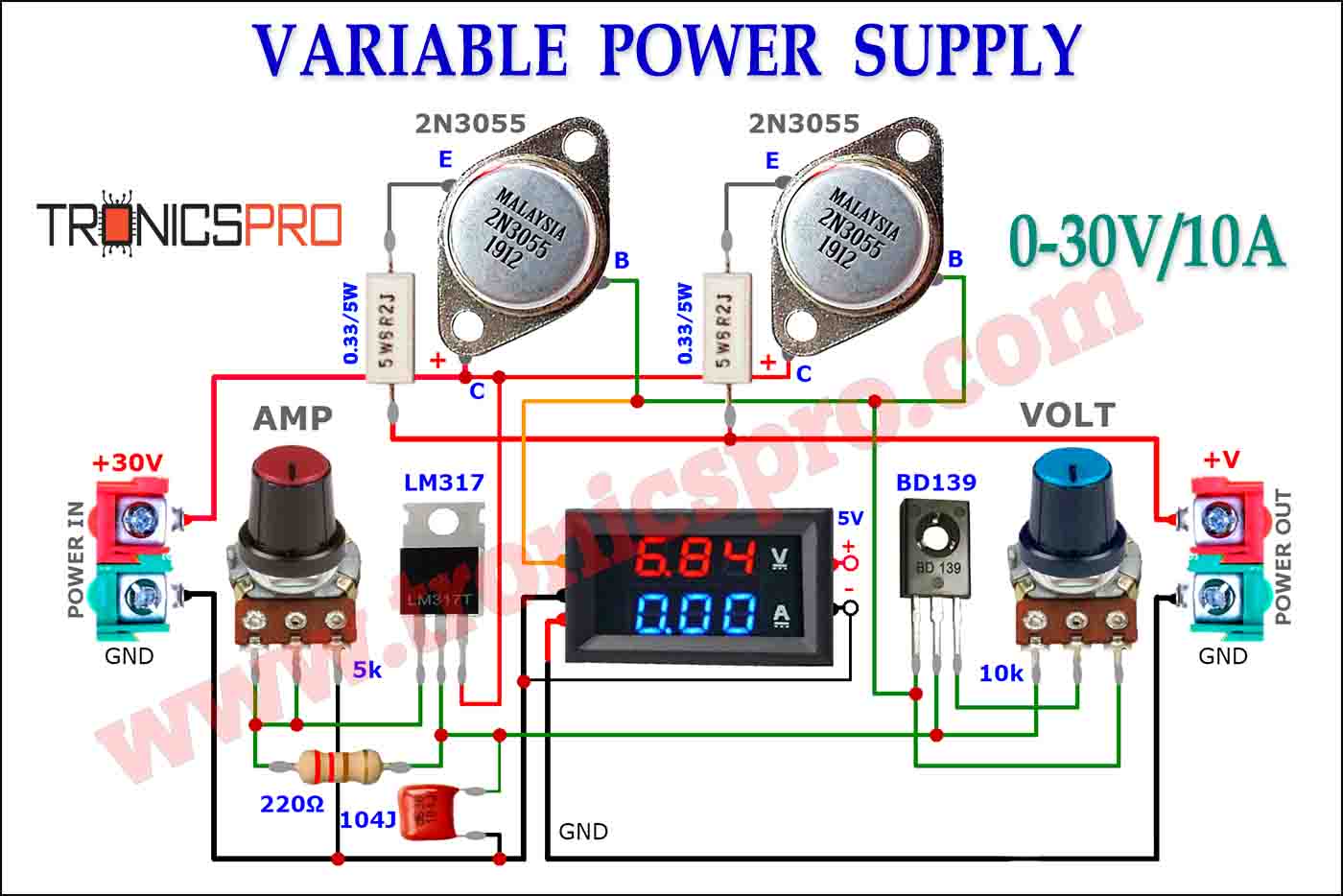
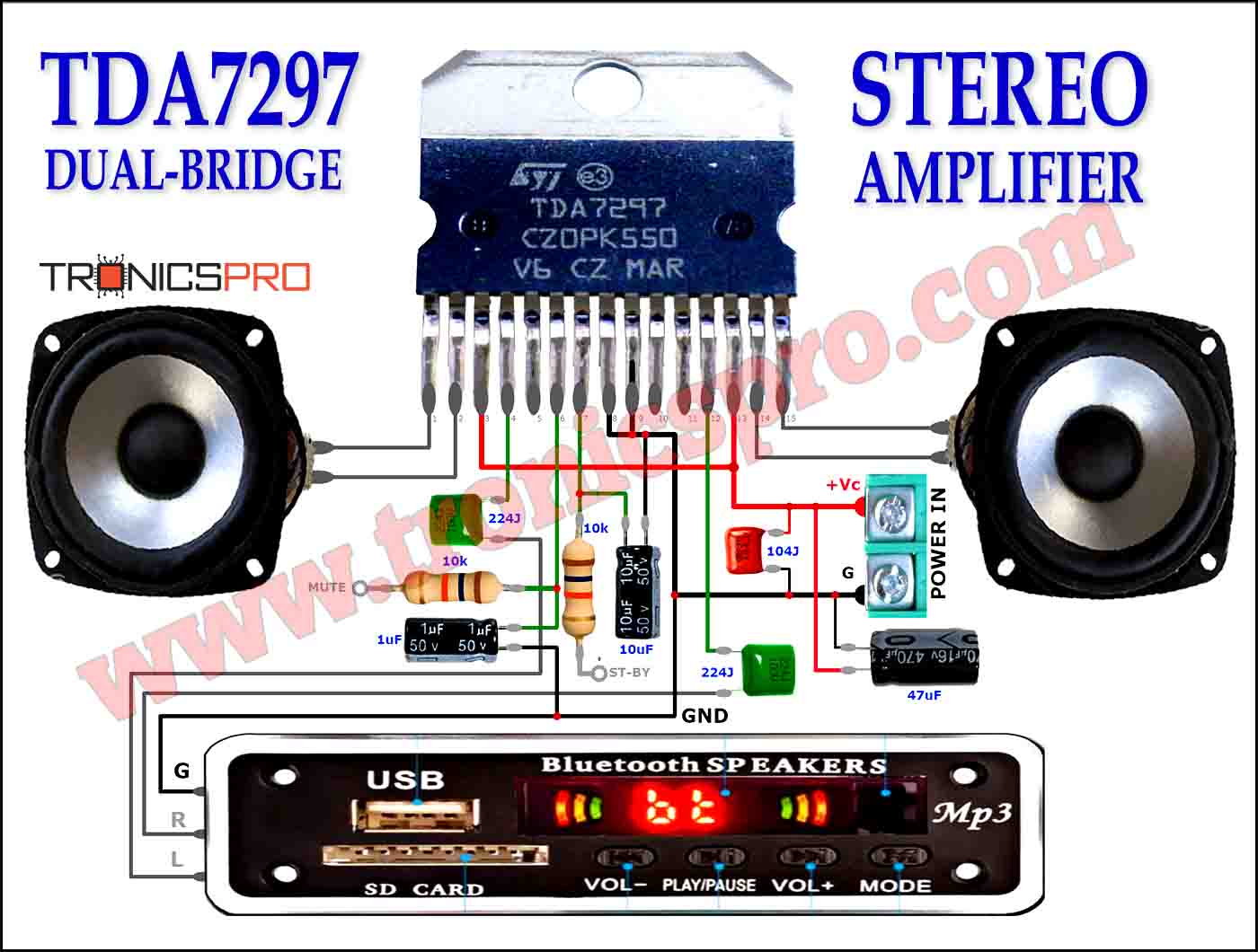
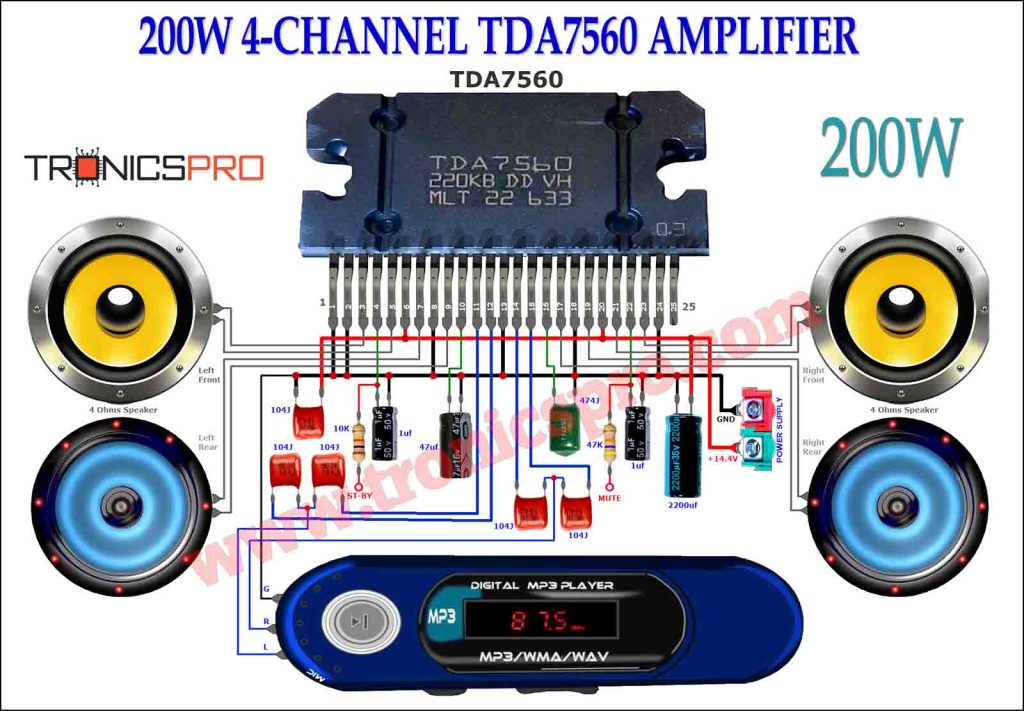
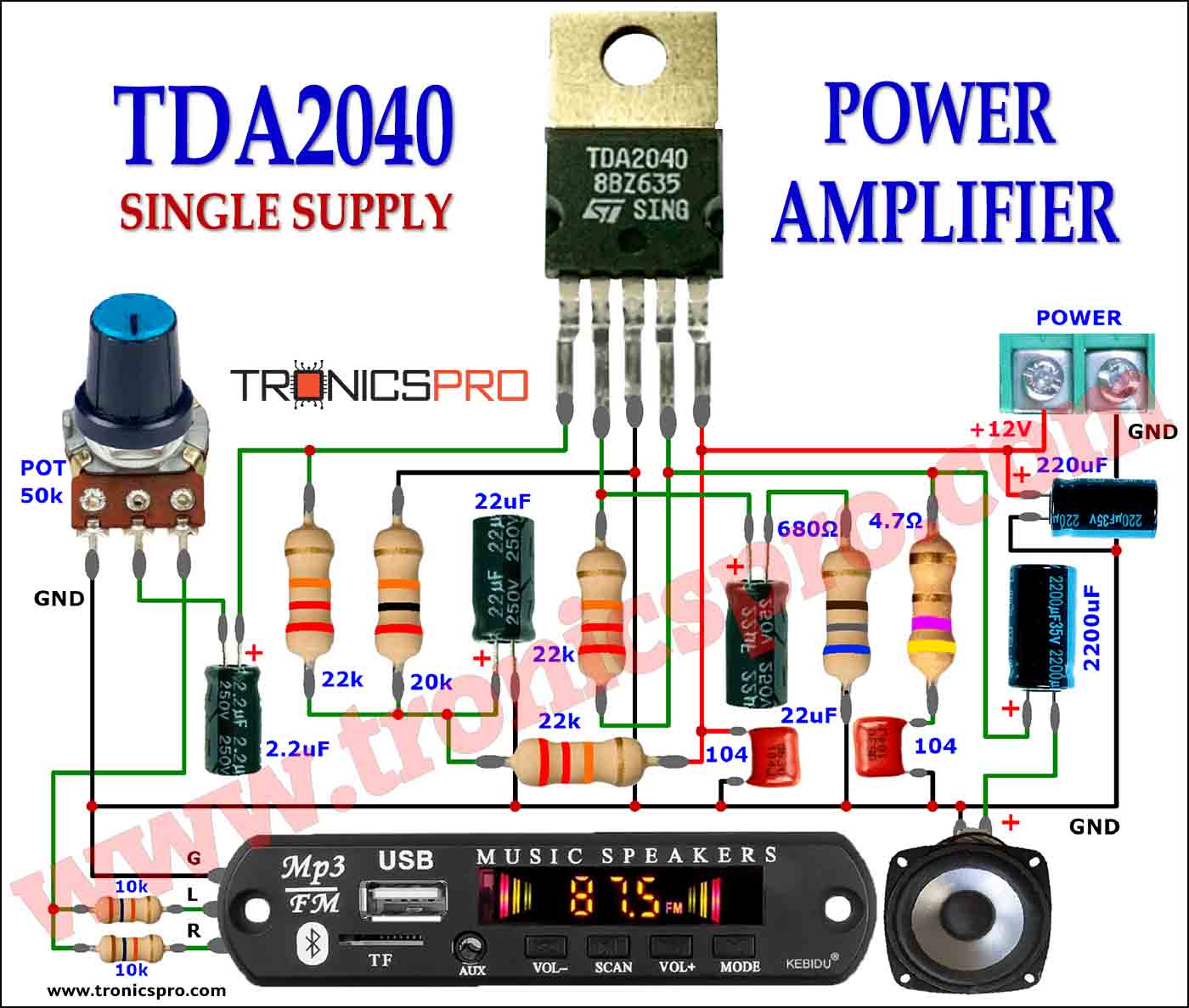
More Circuit Layouts
Typical Applications of BD709
- Audio power amplifier output stages
- Switching regulators and converters
- DC motor drivers and controllers
- Relay and solenoid drivers
- Power supply control and regulation
- Inverter and UPS systems
- Industrial automation and motor drive circuits
PNP Complementary Transistor
The PNP complementary transistor for BD709 is the BD710.
This pairing offers symmetrical current flow in push-pull amplifier designs, BD709 handles the positive half-cycle, while BD710 conducts during the negative. Together they produce high efficiency, reduced distortion, and excellent linearity in amplifier and control circuits.
Equivalent Transistors and Alternatives
Equivalent parts should match in voltage, current, and gain characteristics. Always verify the pinout configuration and package type when substituting BD709.
Comparison BD709 vs BD710 Complementary Transistors
The BD709 (NPN) and BD710 (PNP) transistors are complementary devices sharing identical voltage, current, and power ratings. The key difference lies in their polarity and direction of current flow.
While BD709 sources current from collector to emitter when the base is forward-biased, BD710 sinks current in the reverse direction. Working together, they form a balanced and highly efficient pair for push-pull amplifiers and power switching circuits.
Their symmetry in electrical characteristics ensures matched performance and improved reliability in dual-supply configurations and audio applications.
Frequently Asked Questions (FAQ)
What is the BD709 transistor used for?
BD709 is commonly used in amplifiers, switching circuits, and DC motor control systems requiring up to 80 V and 12 A handling capacity.
What type of transistor is BD709?
It is an NPN silicon power transistor designed for medium-voltage, high-current applications.
What is the BD709 pin configuration?
Pin 1 = Base, Pin 2 = Collector, Pin 3 = Emitter.
What is the complementary transistor for BD709?
The complementary device for BD709 is BD710, a PNP power transistor.
Can I use BD707 instead of BD709?
Yes, BD707 can serve as an alternative if circuit conditions, power ratings, and pin configurations are compatible.
Conclusion
The BD709 NPN transistor is a powerful and reliable component for amplification, switching, and motor-control applications. Its 80 V, 12 A rating, TO-220 package, and low saturation voltage make it a trusted choice for professional and industrial designs.
When combined with its BD710 PNP complement, the BD709 provides symmetrical and distortion-free performance in push-pull stages. Its high gain, strong thermal characteristics, and consistent operation make it a dependable part for engineers designing efficient power systems.
Datasheet of BD709 NPN Transistor
Click the following Button to download the datasheet of BD709 Transistor :
More projects, You may like:
- Video Transmitter DIY Homemade FM Radio Transmitter
- Adjustable Power Supply DIY Battery Charger
- 12V-220V 500 Watt inverter DIY Homemade
- MPPT Solar Charge Controller DIY Homemade
- DIY LA4440 bass amplifier homemade
For more project and circuit diagrams, you can go through the Schematics in the main menu where you can find many interesting projects and circuit diagrams like audio amplifier circuits, voltage booster circuit, battery charger circuit and timer circuits etc., which are all beginner circuit projects. Feel free to check them out!
Thank you for visiting the article
You may also like:
![BD201 NPN Transistor Datasheet]()
BD201 NPN Transistor Pinout Datasheet
![2n4919 datasheet pinout]()
2N4919 Pinout, Equivalent, Application, Datasheet
![bd250 datasheet pinout]()
BD250 Pinout, Equivalent, Applications, Datasheet
![mje802 datasheet pinout equivalent specification application npn transistor]()
MJE802 Pinout, Equivalent Application Datasheet
![bf421 datasheet pinout equivalent specification application transistor]()
BF421 Pinout, Equivalent, Application, Datasheet
![BD237 NPN Transistor Datasheet]()
BD237 NPN Transistor Pinout Datasheet
![2n4918 datasheet pinout]()
2N4918 Pinout, Equivalent, Application, Datasheet
![2n5400 datasheet pinout]()
2N5400 Pinout, Equivalent, Application, Datasheet