The BD907 pinout and transistor details are essential for engineers and hobbyists who need a high-power NPN transistor suitable for switching and amplifier circuits. The BD907 belongs to a reliable series of silicon power transistors, specifically designed for medium-to-high current and voltage applications. Its solid performance and thermal stability make it one of the most preferred NPN transistors for general-purpose and audio output stages.
Introduction to BD907 NPN Transistor
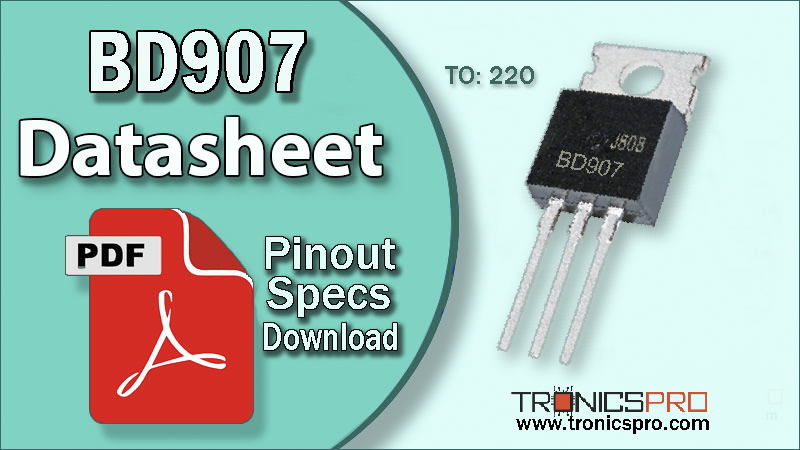
The BD907 is an NPN silicon power transistor primarily used in audio amplifiers, motor drivers, and high-current switching circuits. With a maximum collector-emitter voltage (Vce) of 60 V, a collector current (Ic) of 15A, and a power dissipation (Ptot) of 90 W, this transistor is known for excellent linearity and efficient power delivery. It comes in the TO-220 package, which ensures efficient heat dissipation during high-load operation.
Engineers prefer the BD907 transistor for its durability, low saturation voltage, and balanced performance between speed and power. It is commonly used in push-pull amplifier stages, DC motor control circuits, and as a high-gain output device in power electronic applications.
BD907 NPN Transistor
Pinout of BD907
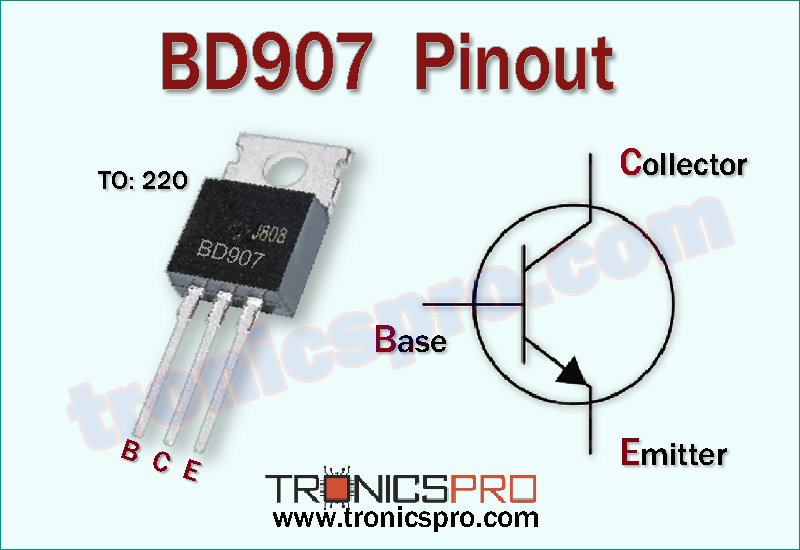
Understanding the BD907 Pinout Configuration
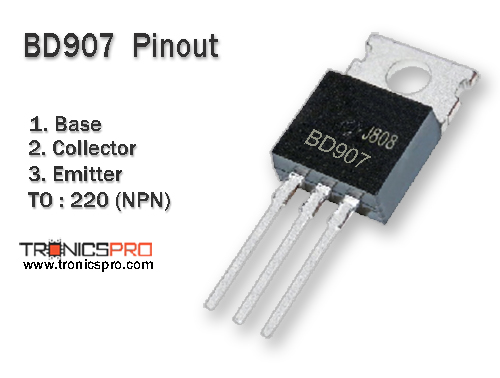
Knowing the BD907 transistor pin configuration is essential for proper circuit integration. It follows the standard TO-220 pinout, which is consistent across many complementary and similar transistors in its family.
Pin Configuration of BD907 Pinout
| Pin# | Pin Name | Pin Description |
|---|---|---|
| 1 | Base | Controls transistor biasing |
| 2 | Collector | Connected to load or output |
| 3 | Emitter | Connected to ground or return path |
Key Features of BD907 Transistor
- NPN silicon power transistor
- High current gain and switching speed
- Maximum collector current of 15A
- Power dissipation up to 90W
- Designed for linear and switching applications
- Low collector-emitter saturation voltage
- TO-220 package with high thermal efficiency
BD907 Transistor Datasheet and Specifications
- Collector-Emitter Voltage (Vce): 60 V
- Collector-Base Voltage (Vcb): 60 V
- Emitter-Base Voltage (Veb): 5 V
- Collector Current (Ic): 15A
- Power Dissipation (Ptot): 90 W
- DC Current Gain (hFE): 40–250
- Transition Frequency (fT): 3 MHz
- Operating Junction Temperature (Tj): 150 °C
- Package Type: TO-220
These specifications make the BD907 transistor datasheet useful for understanding its performance limits and electrical behavior in both AC and DC applications.
Working Principle of BD907 NPN Transistor
The BD907 NPN transistor operates as a current amplifier or switch. When a small current flows into the base, it allows a much larger current to pass between the collector and emitter. This amplification property makes it ideal for driving heavy loads, relays, or loudspeakers in audio amplifiers.
In amplifier configurations, it works in the active region, while in switching circuits it operates in saturation and cutoff modes. Due to its high power capacity and low thermal resistance, it ensures long-term reliability in high-demand environments.
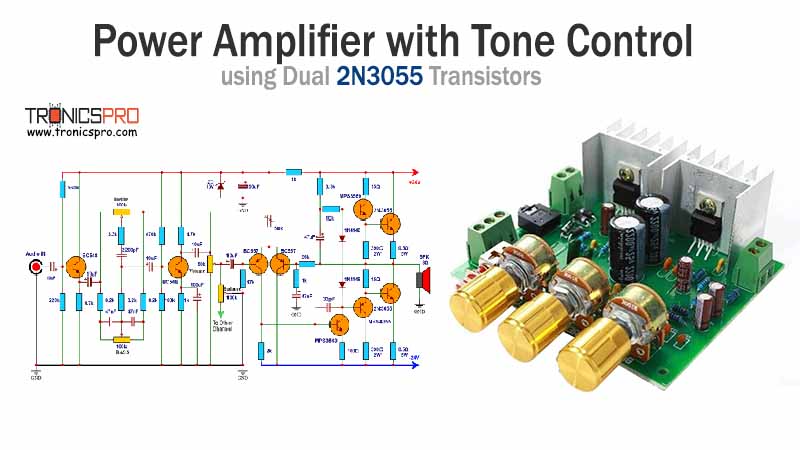
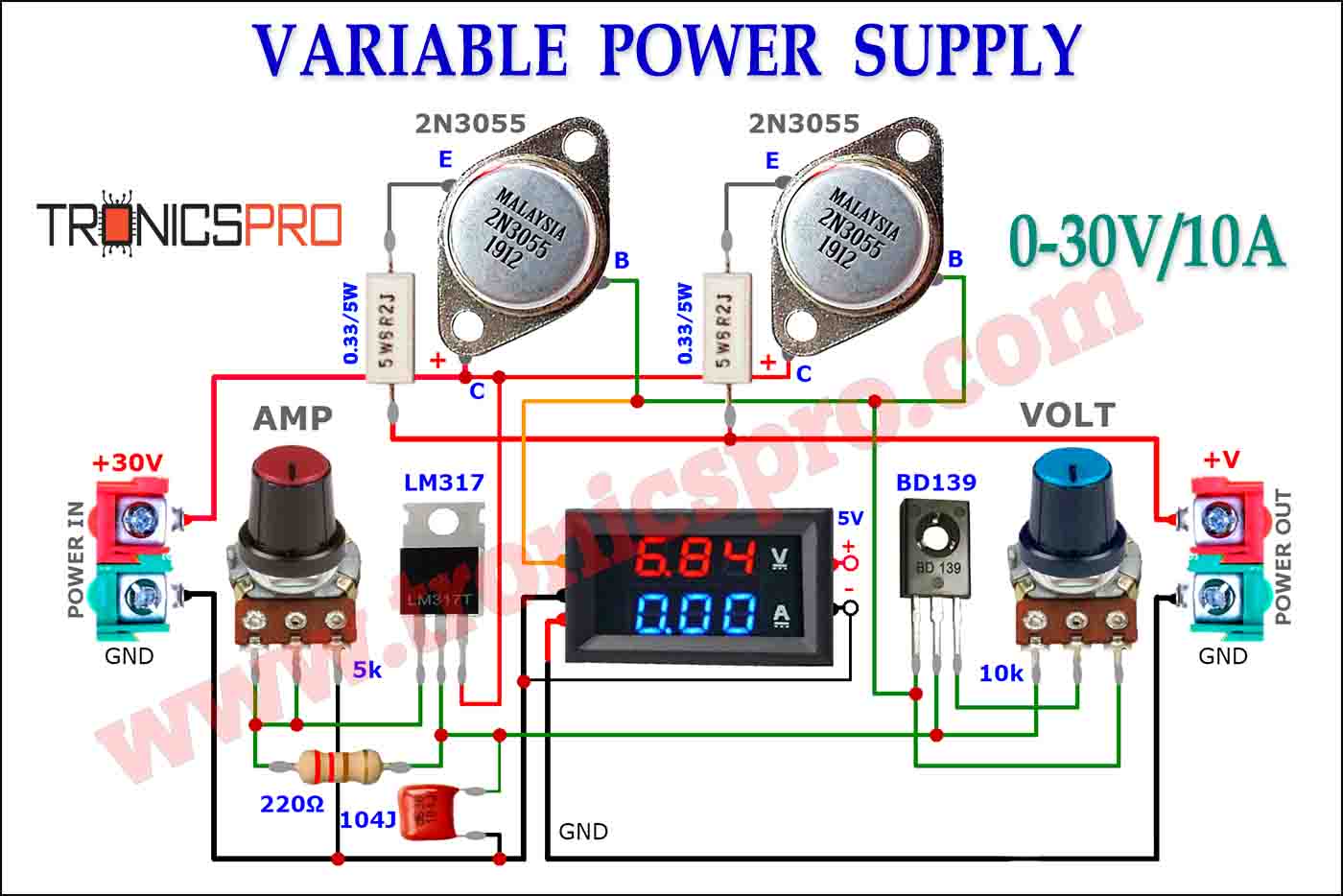
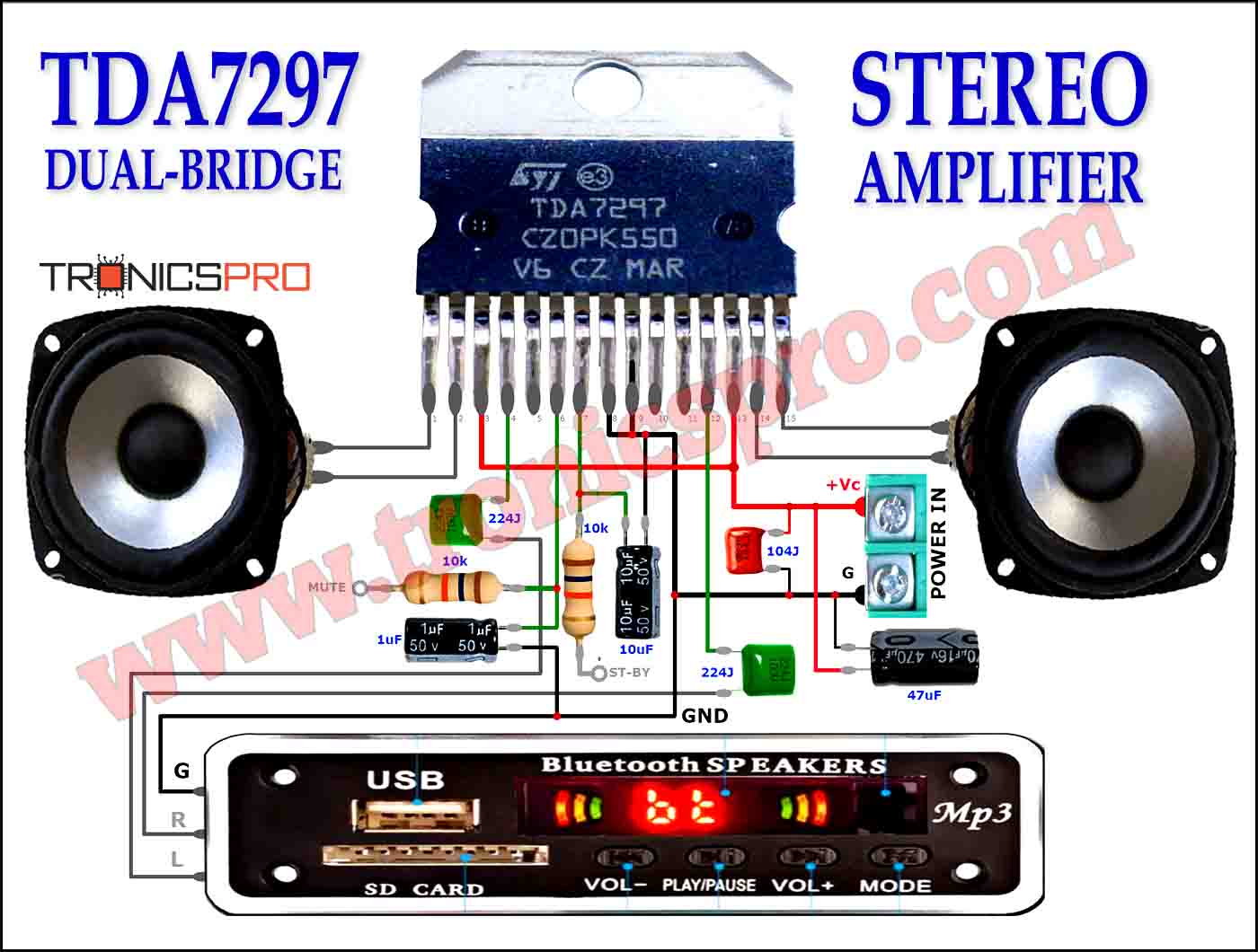
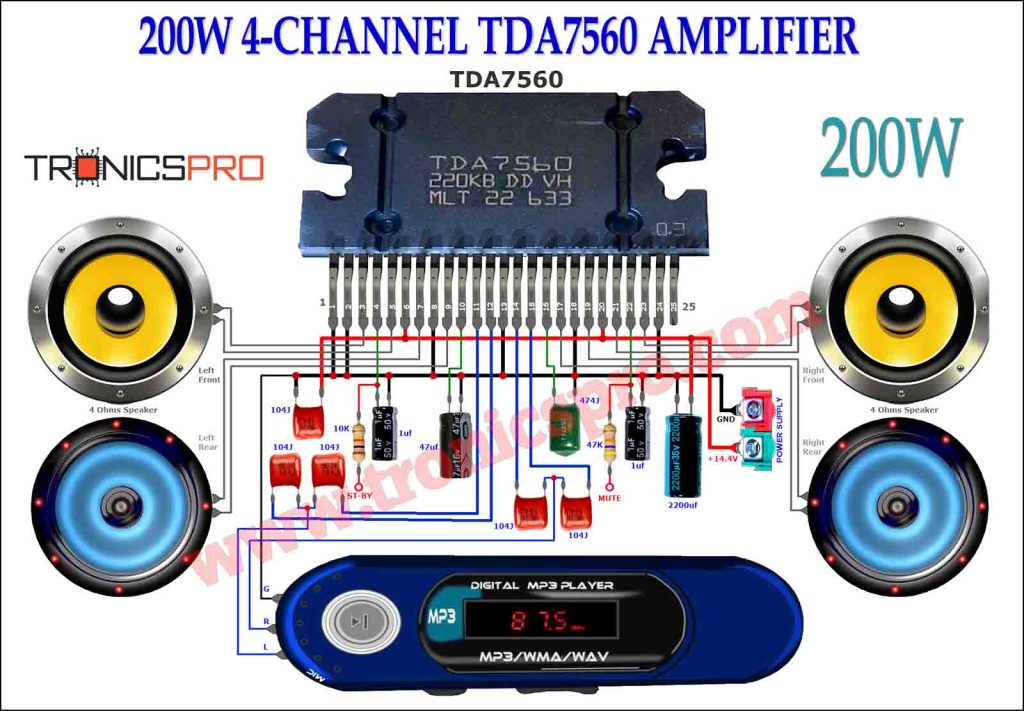
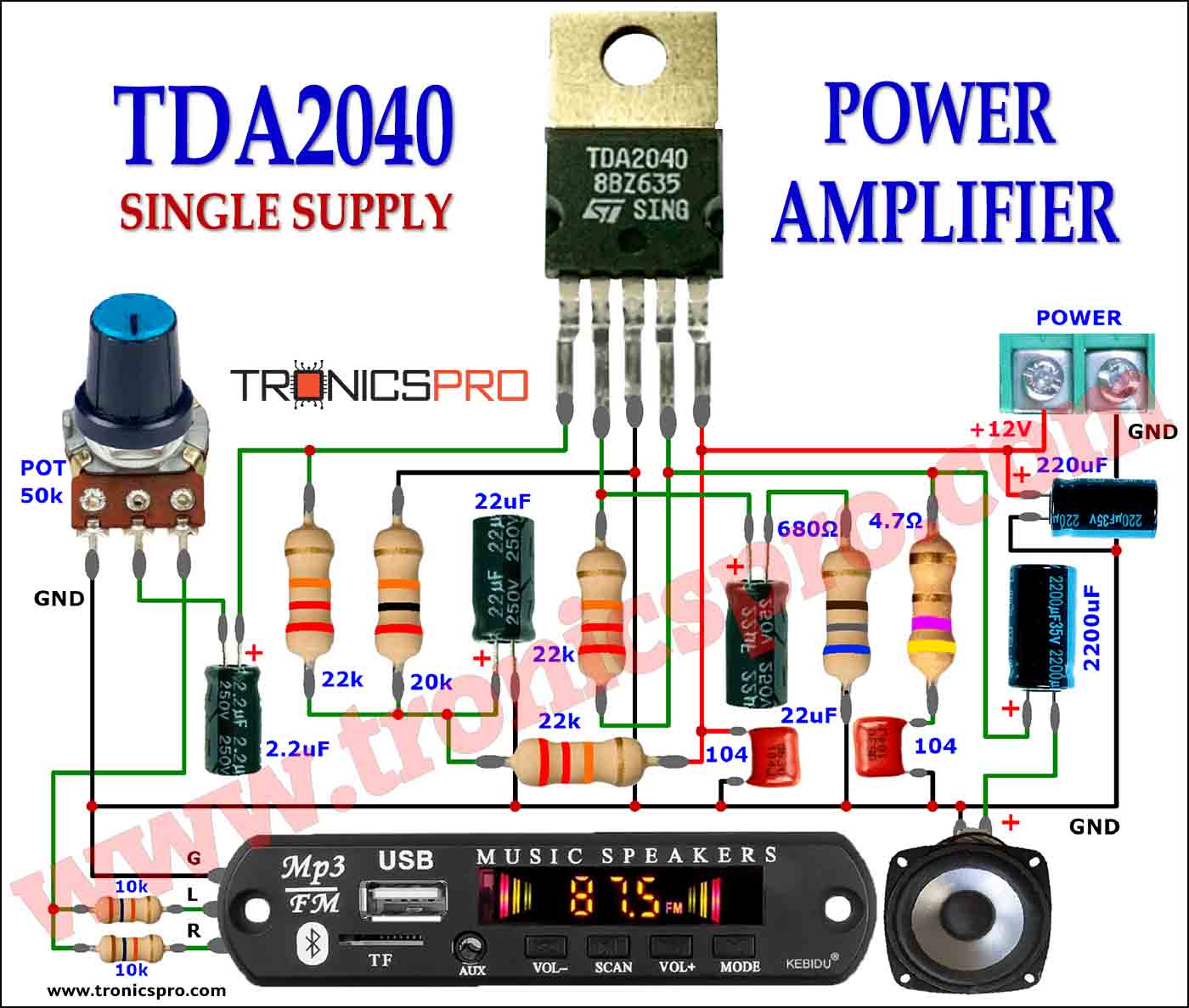
More Circuit Layouts
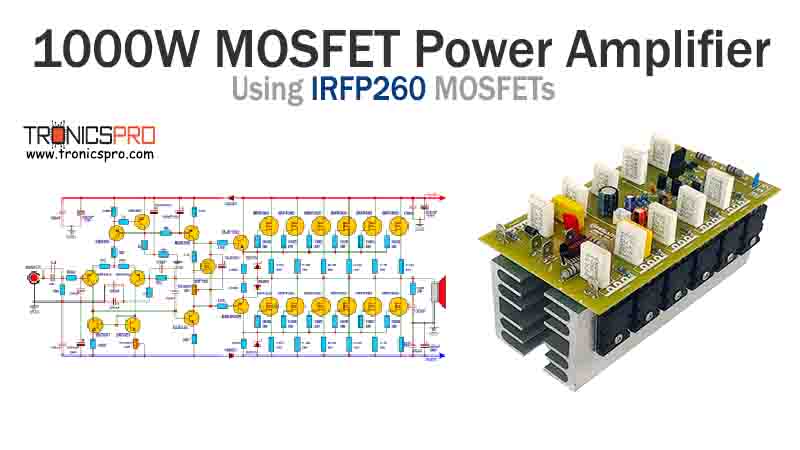
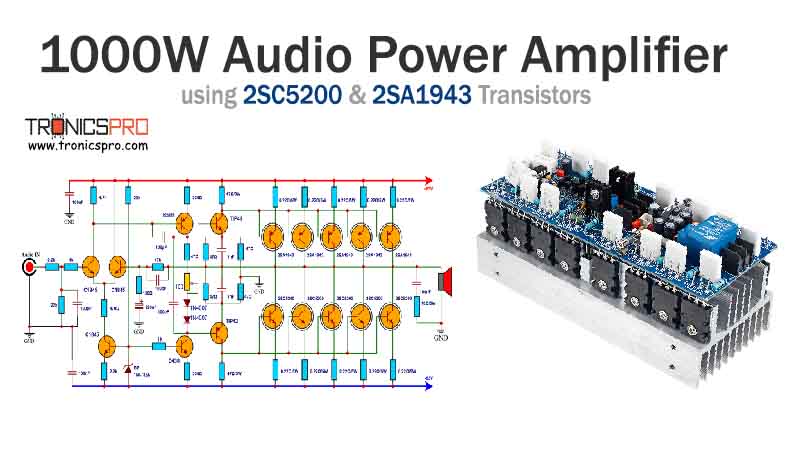
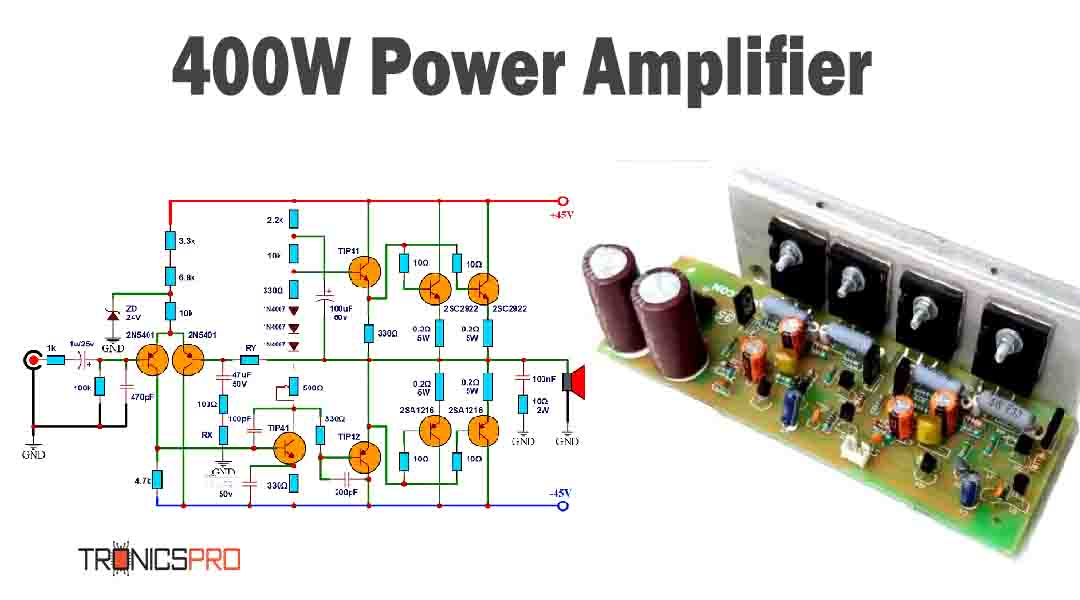
Typical Applications of BD907
- Audio power amplifiers
- DC motor control circuits
- Power supply regulation
- Relay and solenoid drivers
- Inverter and converter circuits
- High-current switching circuits
PNP Complementary Transistor
The PNP complementary transistor of BD907 is BD908. Both are designed to operate together in push-pull or complementary symmetry amplifier configurations, offering excellent performance for class-B or class-AB amplifier stages.
Equivalent Transistors and Alternatives
Some of the equivalent or replacement transistors for BD907 include:
- BD249C
- BD911
- 2N3055
- TIP35C
- MJ2955 (PNP complementary pair)
When substituting, ensure the same voltage, current, and package compatibility for best results.
Comparison BD907 vs BD908 Complementary Transistors
The BD907 and BD908 transistors are designed as complementary pairs, where the BD907 is NPN and the BD908 is PNP. Both support similar collector current and power ratings (15A and 90W respectively), making them ideal for push-pull amplifier stages. The BD907 conducts when the base is positive, while the BD908 conducts when the base is negative relative to the emitter. Together, they ensure balanced drive for symmetrical output in amplifier circuits.
Frequently Asked Questions (FAQ)
What is the BD907 transistor used for?
The BD907 is used in audio amplifiers, motor drivers, and power switching applications that require up to 8A current handling.
What type of transistor is BD907?
It is an NPN silicon power transistor housed in a TO-220 package.
What is the BD907 pin configuration?
The BD907 transistor has three pins — Pin 1: Base, Pin 2: Collector, and Pin 3: Emitter.
What is the complementary transistor for BD907?
The BD908 is the complementary PNP transistor to the BD907.
Can I use BD911 instead of BD907?
Yes, BD911 can be used as an alternative, provided that voltage and current requirements are matched in the circuit.
Conclusion
The BD907 transistor is a robust and efficient NPN power device built for medium-to-high current applications. With its 60V collector-emitter voltage, 15A current capacity, and 90W power dissipation, it delivers stable performance across a wide range of power electronics and amplifier projects. Its availability, TO-220 package, and compatibility with BD908 make it a reliable choice for both industrial and DIY electronics enthusiasts.
Datasheet of BD907 NPN Transistor
Click the following Button to download the datasheet of BD907 Transistor :
More projects, You may like:
- Video Transmitter DIY Homemade FM Radio Transmitter
- Adjustable Power Supply DIY Battery Charger
- 12V-220V 500 Watt inverter DIY Homemade
- MPPT Solar Charge Controller DIY Homemade
- DIY LA4440 bass amplifier homemade
For more project and circuit diagrams, you can go through the Schematics in the main menu where you can find many interesting projects and circuit diagrams like audio amplifier circuits, voltage booster circuit, battery charger circuit and timer circuits etc., which are all beginner circuit projects. Feel free to check them out!
Thank you for visiting the article
You may also like:
![mje13005 datasheet pinout equivalent specification application npn transistor]()
MJE13005 Pinout, Equivalent Application Datasheet
![BD442 PNP Transistor Datasheet]()
BD442 PNP Transistor Pinout Datasheet
![BC372 NPN Transistor Datasheet]()
BC372 NPN Transistor Pinout Datasheet
![BD437 NPN Transistor Datasheet]()
BD437 NPN Transistor Pinout Datasheet
![2SD718 NPN Transistor Datasheet Pinout]()
2SD718 NPN Transistor Datasheet & Pinout
![bd378 datasheet pinout]()
BD378 Pinout, Equivalent, Applications, Datasheet
![2n6427 datasheet pinout]()
2N6427 Pinout, Equivalent, Application, Datasheet
![BC560 PNP Transistor Pinout Datasheet]()
BC560 PNP Transistor Pinout Datasheet