The 2N5551 pinout follows the Emitter–Base–Collector (E–B–C) configuration in a TO-92 package, making it easy to identify during circuit assembly. The 2N5551 NPN transistor is a high-voltage, low-noise silicon BJT designed for signal amplification, switching, and driver circuits. With a collector-emitter voltage of 160V and collector-base voltage of 180V, it is ideal for audio amplifiers, power regulators, and high-voltage signal processing applications.

Introduction to 2N5551 NPN Transistor
The 2N5551 transistor is a general-purpose high-voltage NPN silicon transistor widely used in audio frequency (AF) and low-power amplifier circuits. It is designed to handle collector currents up to 600 mA and power dissipation of 625 mW, making it a robust component for both analog and digital electronic designs.
Its TO-92 plastic package and high voltage rating make it a suitable replacement for lower voltage NPN transistors when greater breakdown protection is required. The 2N5551 NPN transistor provides low noise, fast switching, and excellent linearity, ensuring superior signal amplification and control in high-voltage environments.
2N5551 NPN Transistor

Pinout of 2N5551

Understanding the 2N5551 Pinout Configuration
The 2N5551 pinout follows the Emitter–Base–Collector (E–B–C) sequence when viewed from the flat side with leads pointing downward. This configuration is standard for most TO-92 NPN transistors, simplifying breadboard or PCB design.
Pin Configuration of 2N5551 Pinout
| Pin# | Pin Name |
|---|---|
| 1 | Emitter |
| 2 | Base |
| 3 | Collector |
Key Features of 2N5551 Transistor
- High-voltage NPN transistor suitable for low-current switching and amplification
- Low-noise operation, ideal for high-fidelity audio and signal circuits
- Compact TO-92 package for easy installation and prototyping
- Fast switching response for pulse and timing applications
- Stable performance under wide temperature and voltage ranges
- Reliable gain and frequency characteristics
2N5551 Transistor Datasheet and Specifications
- Transistor Type: NPN Silicon BJT
- Collector–Emitter Voltage (Vce): 160 V
- Collector–Base Voltage (Vcb): 180 V
- Emitter–Base Voltage (Veb): 5 V
- Collector Current (Ic): 600 mA
- Total Power Dissipation (Ptot): 625 mW
- DC Current Gain (hFE): 40 – 250 (typical range)
- Transition Frequency (fT): 100 MHz (typical)
- Junction Temperature (Tj): 150°C (max)
- Package Type: TO-92 Plastic
- Pin Sequence: Emitter – Base – Collector (E–B–C)
Working Principle of 2N5551 NPN Transistor
The 2N5551 NPN transistor operates as both a switch and a signal amplifier. When a small current flows into the base terminal, it allows a much larger current to flow from the collector to the emitter. The transistor remains in cutoff mode until the base is activated with a positive voltage relative to the emitter.
Because of its high breakdown voltage (160V/180V), the 2N5551 is capable of operating safely in high-voltage, low-current environments. It is frequently used in audio amplifiers, voltage drivers, and signal stages where clean signal transfer and high reliability are essential.
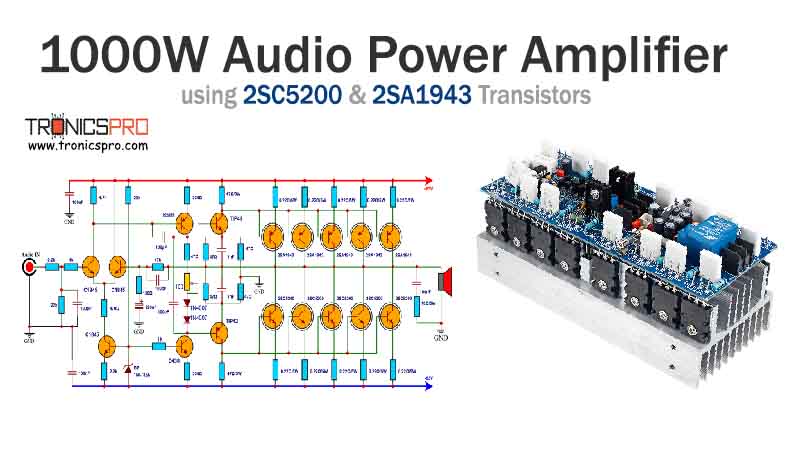
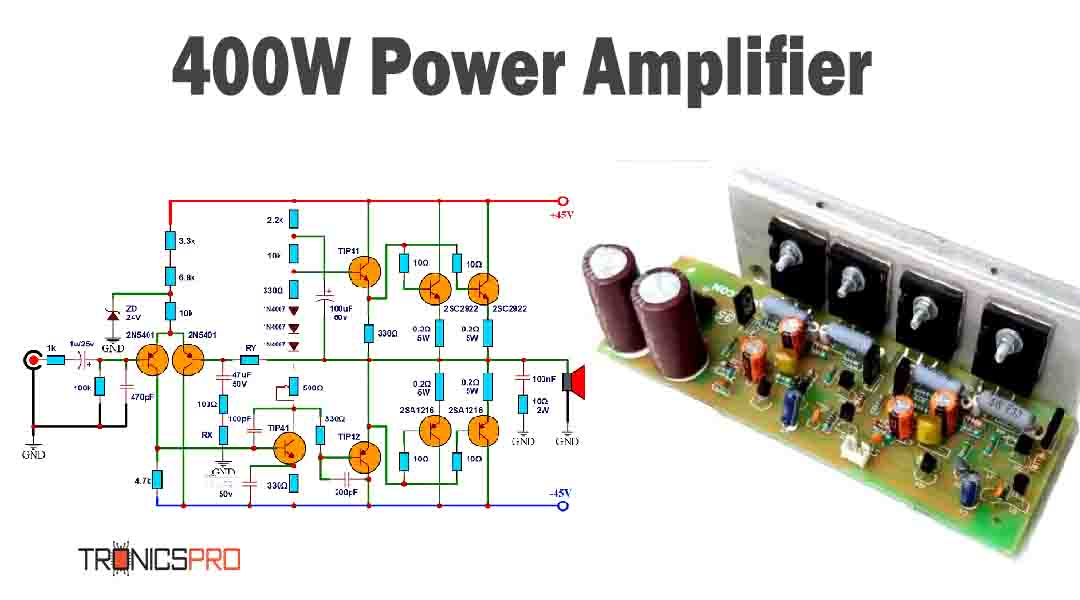
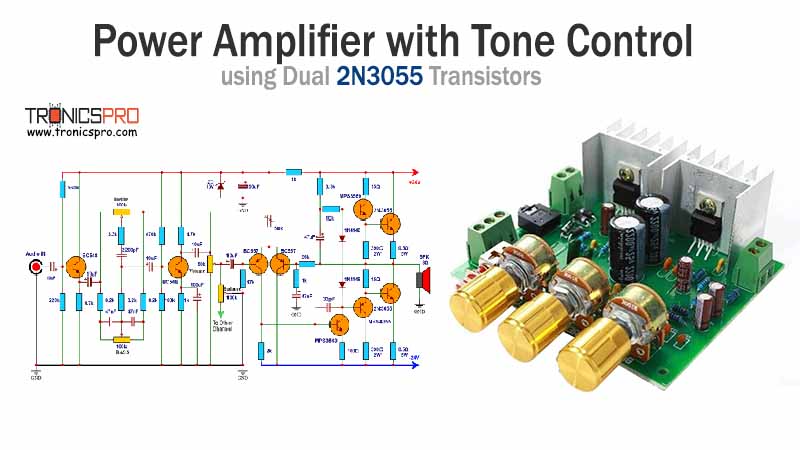
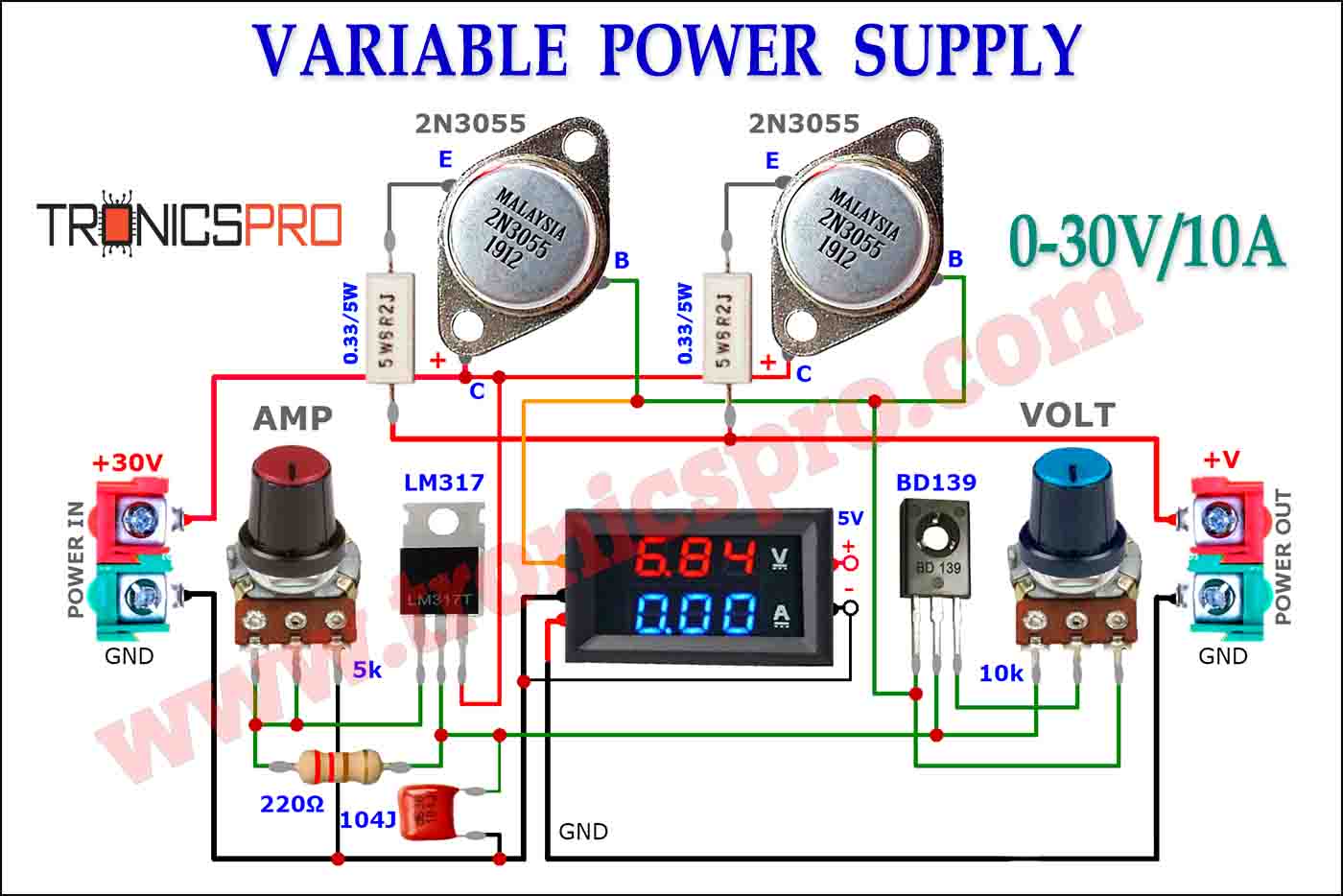
More Circuit Layouts




Typical Applications of 2N5551
- Audio preamplifier and driver circuits
- High-voltage signal amplifiers
- Voltage regulator control stages
- Switching and timing circuits
- Sensor signal conditioning
- Low-power control and logic circuits
- General-purpose high-voltage applications
Equivalent Transistors and Alternatives
Although no direct complementary device is required, a few equivalent NPN transistors can replace the 2N5551 in most circuits with similar ratings:
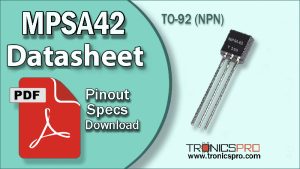
- MPSA42 – High-voltage NPN transistor for amplifier and driver use
- 2N5550 – Similar device with slightly lower voltage tolerance
- BC546B – Common low-noise NPN for small-signal amplification
- 2SC945 – General-purpose replacement with compatible pinout
Always verify the pin configuration and voltage ratings before substitution.
Frequently Asked Questions (FAQ)
What is the 2N5551 transistor used for?
It is used for audio signal amplification, voltage driving, and high-voltage switching circuits.
What is the 2N5551 pinout?
The 2N5551 pinout is Emitter–Base–Collector (E–B–C) when viewed from the flat face.
Is 2N5551 a high-voltage transistor?
Yes, it supports up to 160V Vce and 180V Vcb, suitable for high-voltage, low-current signal applications.
What is the maximum collector current for 2N5551?
The maximum collector current (Ic) is 600 mA.
Can 2N5551 replace 2N5550?
Yes, it can directly replace 2N5550 in most cases, offering a higher voltage rating and similar gain range.
Conclusion
The 2N5551 NPN transistor is a high-voltage, low-noise, general-purpose BJT that performs exceptionally well in both amplification and switching circuits. Its 160V/180V voltage ratings, 600 mA current capacity, and excellent frequency response make it ideal for audio, signal processing, and control circuits. Compact, reliable, and versatile, the 2N5551 transistor continues to be a preferred choice for engineers and electronics hobbyists requiring stable, high-voltage transistor performance in a TO-92 package.
Datasheet & Pinout of 2N5551 NPN Transistor
Click the following Button to download the datasheet of 2N5551 Transistor :
More projects, You may like:
- Video Transmitter DIY Homemade FM Radio Transmitter
- Adjustable Power Supply DIY Battery Charger
- 12V-220V 500 Watt inverter DIY Homemade
- MPPT Solar Charge Controller DIY Homemade
- DIY LA4440 bass amplifier homemade
For more project and circuit diagrams, you can go through the Schematics in the main menu where you can find many interesting projects and circuit diagrams like audio amplifier circuits, voltage booster circuit, battery charger circuit and timer circuits etc., which are all beginner circuit projects. Feel free to check them out!
Thank you for visiting the article.
You may also like:
![bd545 datasheet pinout]()
BD545 Pinout, Equivalent, Applications, Datasheet
![BD434 PNP Transistor Datasheet]()
BD434 PNP Transistor Pinout Datasheet
![2n3903 datasheet pinout]()
2N3903 Pinout, Equivalent, Application, Datasheet
![MJL21193 PNP Transistor Datasheet]()
MJL21193 PNP Power Transistor Datasheet
![2n5400 datasheet pinout]()
2N5400 Pinout, Equivalent, Application, Datasheet
![2n5320 datasheet pinout]()
2N5320 Pinout, Equivalent, Application, Datasheet
![BC637 NPN Transistor Datasheet]()
BC637 NPN Transistor Pinout Datasheet
![bd380 datasheet pinout]()
BD380 Pinout, Equivalent, Applications, Datasheet