Introduction
The LM741 Operational Amplifier (Op-Amp) IC is one of the most commonly used general-purpose op-amps in analog electronics. Developed by Fairchild Semiconductor, it has become a standard building block in analog circuit design. The LM741 is widely known for its versatility, reliability, and stable performance, making it an essential component in audio, instrumentation, and control systems.

The LM741 features high-gain, internally compensated circuitry with short-circuit protection, making it ideal for educational, hobbyist, and professional projects. It is designed to operate with a dual power supply but can also function with a single supply, which enhances its adaptability in various circuit topologies. With its ability to handle DC and AC signals, it is a preferred IC for signal amplification, active filters, comparators, and voltage followers.
LM741 Op-Amp IC

Thanks to its widespread use, the LM741 Op-Amp is often considered the “standard op-amp” and serves as a foundation for learning analog electronics. Its characteristics, such as offset nulling, internal compensation, and wide operating voltage range, make it suitable for both low-frequency and medium-frequency applications.
LM741 Pinout

LM741 Key Features
- General-purpose operational amplifier.
- High voltage gain and input impedance.
- Short-circuit protection.
- Internal frequency compensation.
- Operates with dual or single supply voltage.
- Offset null capability for precision adjustment.
- Compatible with TTL and CMOS logic.
- Available in DIP-8 and SOIC-8 packages.
- Stable and reliable performance.
LM741 Specifications/Characteristics
- Supply Voltage (Vcc): ±5V to ±22V (typical ±15V)
- Input Resistance: ~2 MΩ
- Input Offset Voltage: 1 mV (typical)
- Slew Rate: 0.5 V/µs (typical)
- Gain Bandwidth Product: 1 MHz
- Voltage Gain: 200,000 (typical open-loop)
- Output Short-Circuit Current: 25 mA
- Operating Temperature Range: 0°C to +70°C (commercial)
- Package Types: DIP-8, SOIC-8, TO-99 metal can
Note: DATASHEET DOWNLOAD button is provided end of this article.
Pin Configuration of LM741 Op-Amp IC
| Pin# | Pin Name | Pin Description |
|---|---|---|
| 1 | Offset Null | Used for offset voltage adjustment. |
| 2 | Inverting Input (-) | Input terminal where signal polarity is inverted at output. |
| 3 | Non-Inverting Input (+) | Input terminal where signal polarity remains unchanged at output. |
| 4 | V– (Ground) | Negative power supply voltage. |
| 5 | Offset Null | Used for offset voltage adjustment. |
| 6 | Output | The amplified signal output. |
| 7 | V+ | Positive power supply voltage. |
| 8 | NC | No internal connection. |

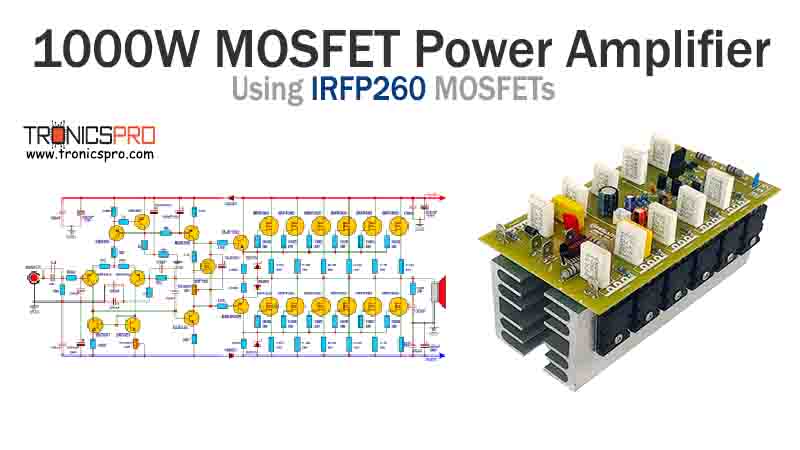
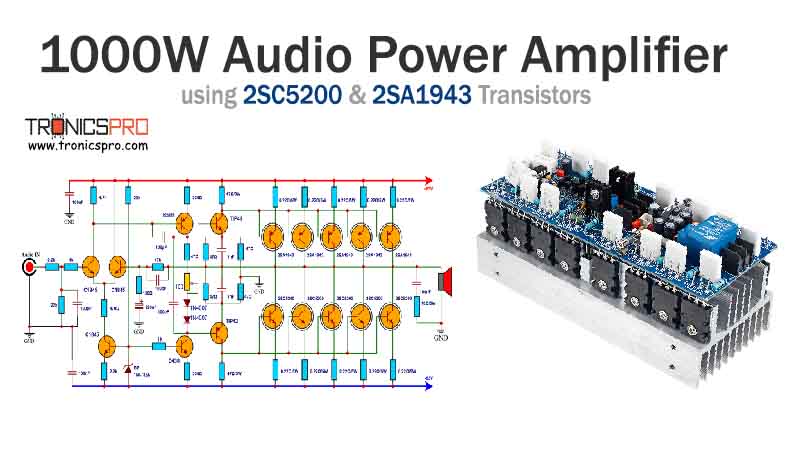
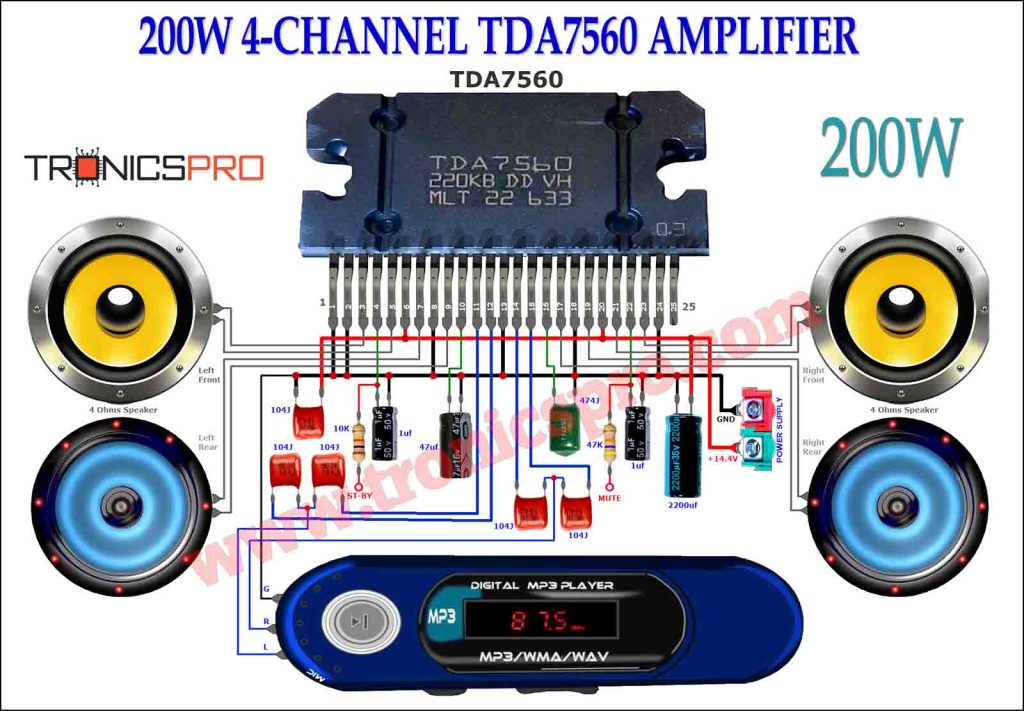
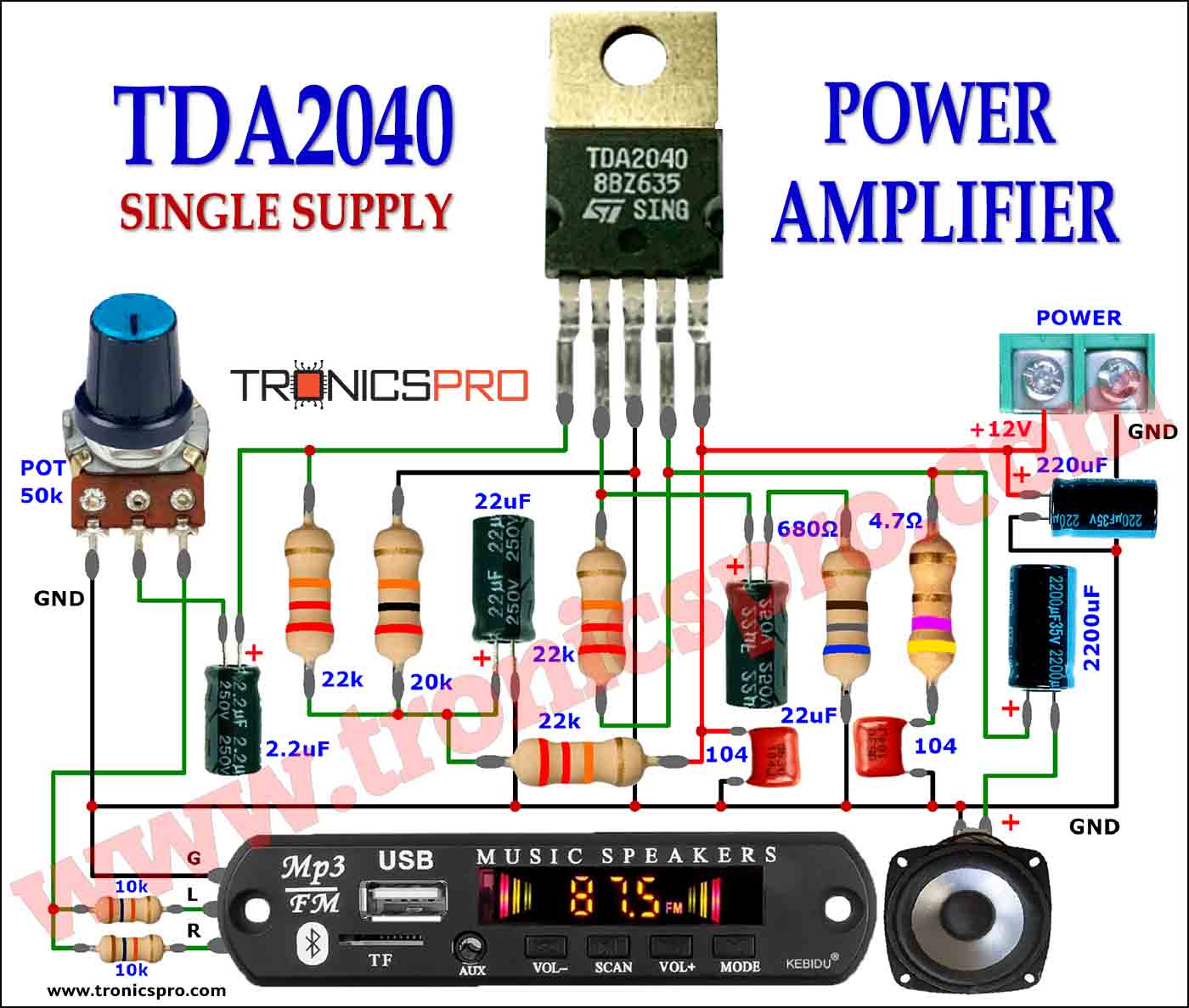
More Circuit Layouts
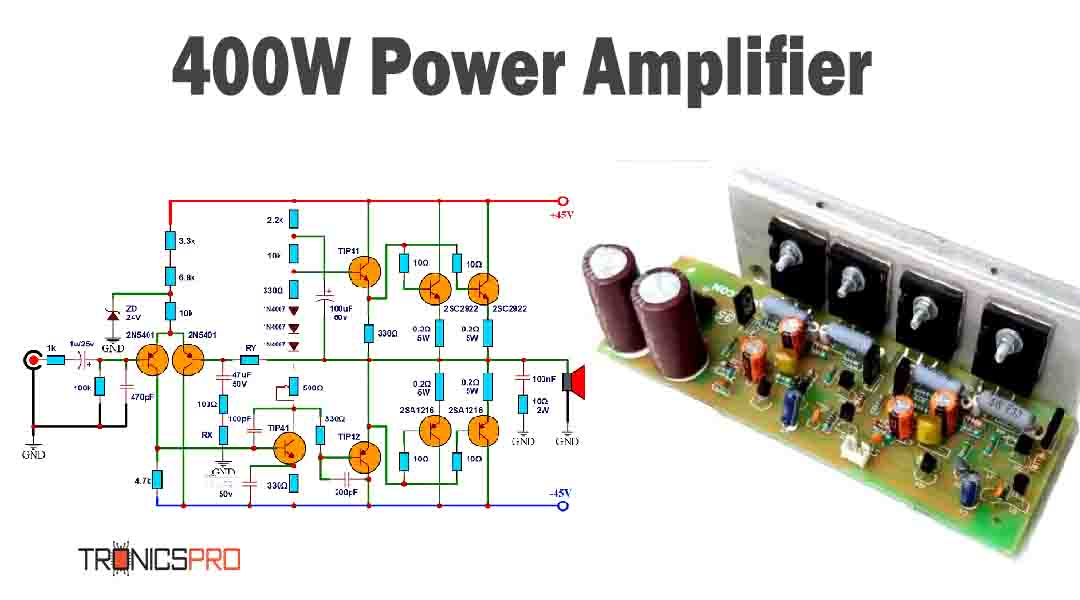
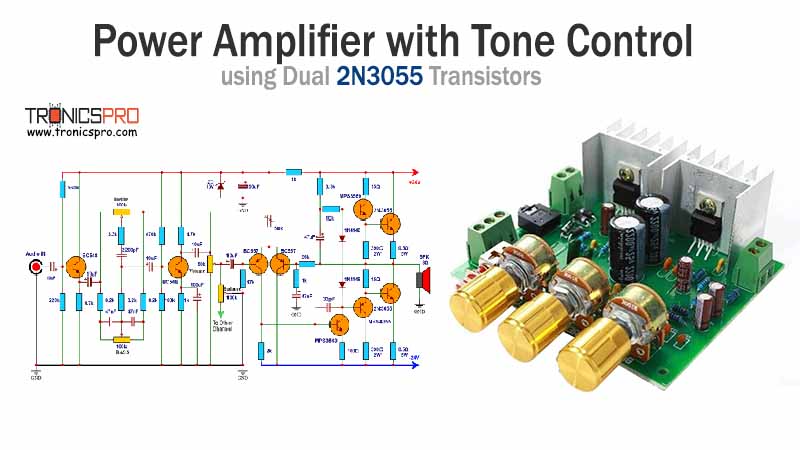
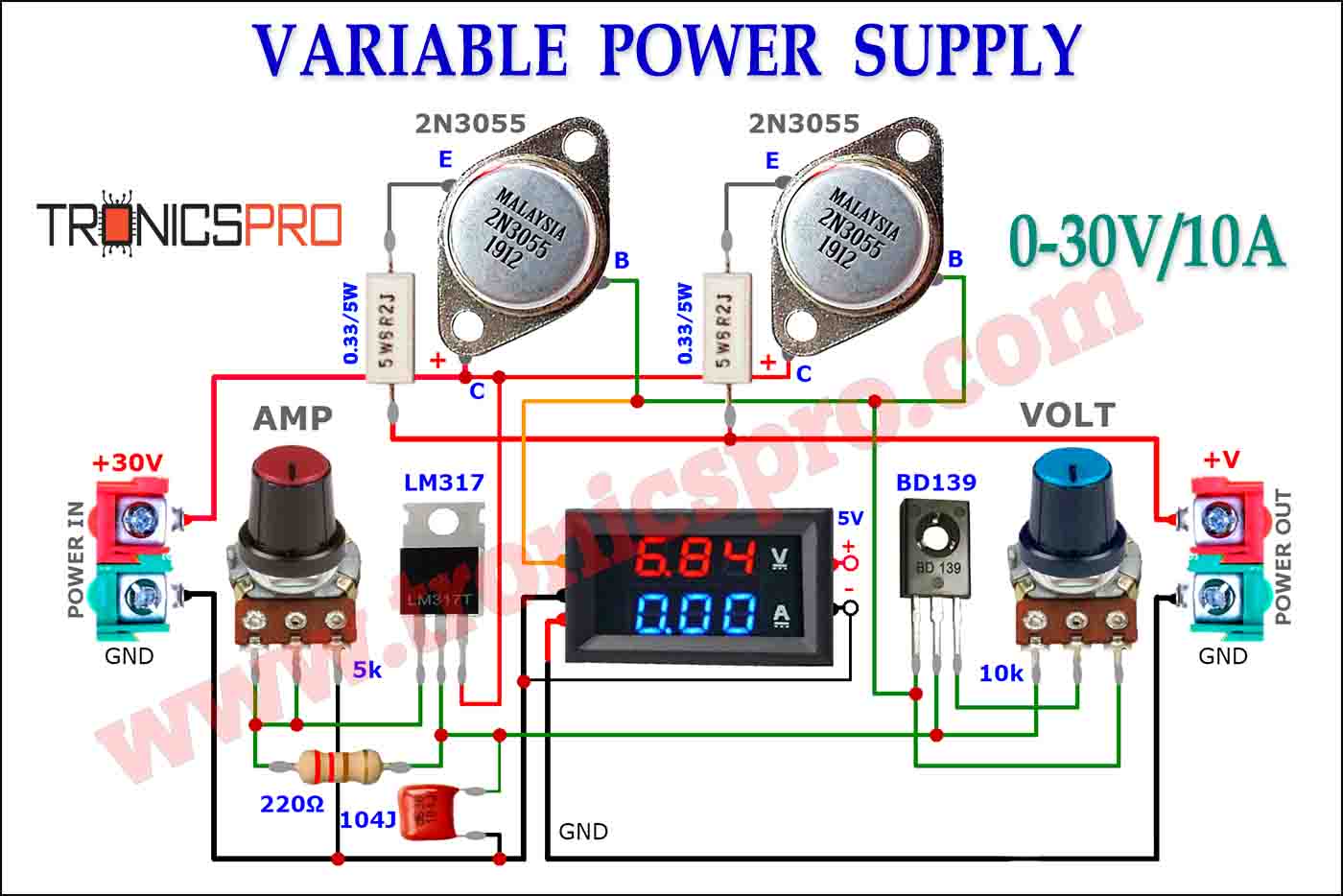
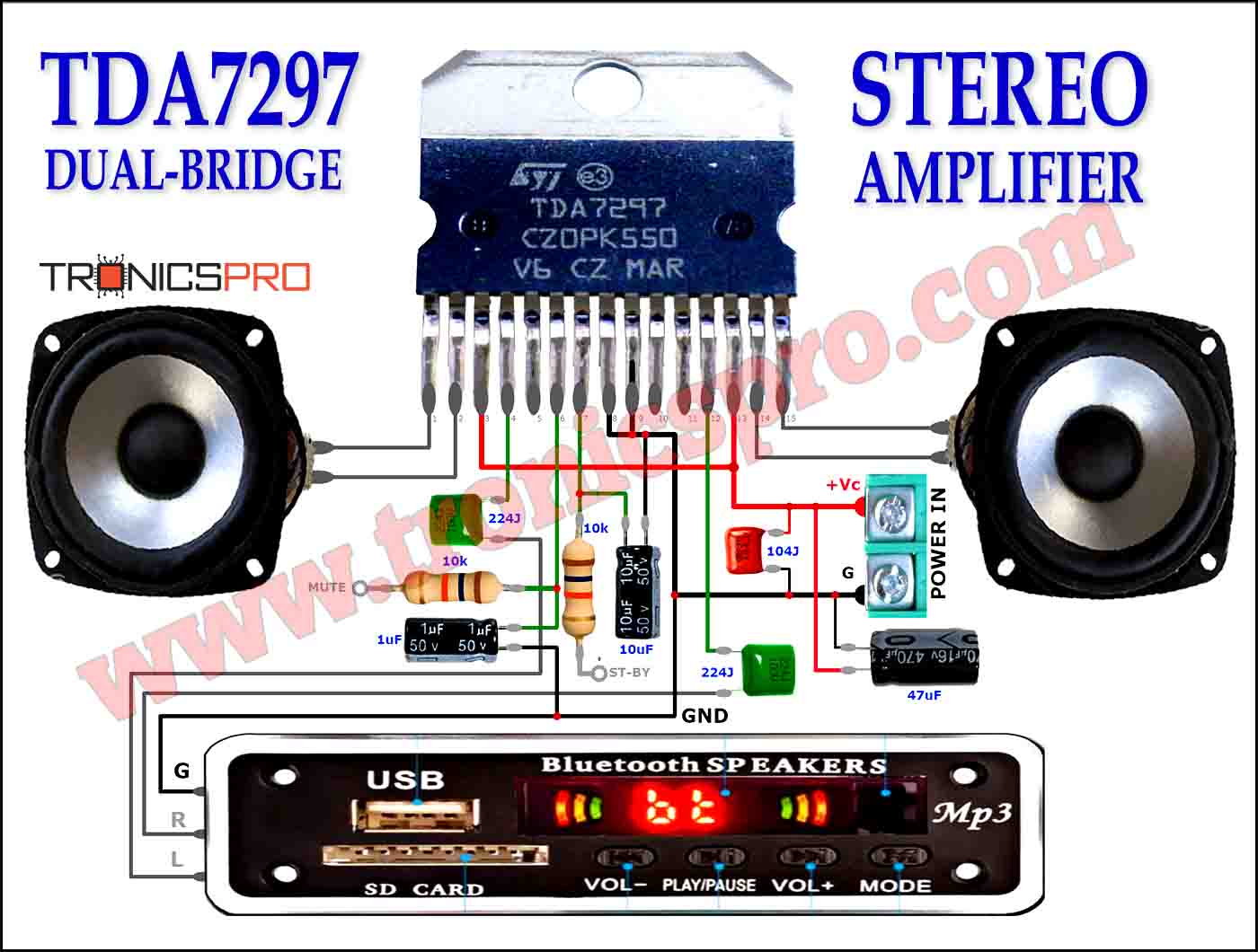
Key Applications of LM741 Op-Amp IC
- Signal amplification in audio and instrumentation circuits.
- Active filters (low-pass, high-pass, band-pass).
- Voltage comparators and zero-crossing detectors.
- Oscillators and waveform generators.
- Analog computing (summing, subtracting, integration, differentiation).
- Voltage followers (buffer circuits).
- Sensor signal conditioning.
LM741 Equivalent ICs / Alternatives
- LM301 – Similar op-amp with external compensation.
- LM358 – Dual operational amplifier IC.
- LM324 – Quad op-amp IC for multi-channel designs.
- TL071 / TL072 / TL074 – Low-noise JFET input op-amps.
- µA741 – Original version, fully compatible.
(The pinout for certain ICs can vary from that of the LM741).
Datasheet of LM741 Op-Amp IC
Click the following Button below to download the datasheet of LM741 :
More projects, You may like:
- Video Transmitter DIY Homemade FM Radio Transmitter
- Adjustable Power Supply DIY Battery Charger
- 12V-220V 500 Watt inverter DIY Homemade
- MPPT Solar Charge Controller DIY Homemade
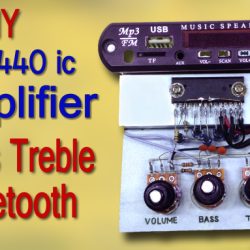
- DIY LA4440 bass amplifier homemade
For more project and circuit diagrams, you can go through the Schematics in the main menu where you can find many interesting projects and circuit diagrams like audio amplifier circuits, voltage booster circuit, battery charger circuit and timer circuits etc., which are all beginner circuit projects. Feel free to check them out!
Thank you for visiting the article.
You may also like:
![tda7386 datasheet pinout equivalent specification application]()
TDA7386 Pinout, Equivalent, Application, Datasheet
![tda7375 datasheet pinout equivalent specification application]()
TDA7375 Pinout, Equivalent, Application, Datasheet
![LM339 Quad Comparator IC Pinout Datasheet]()
LM339 Quad Comparator IC Pinout Datasheet
![LM7905 datasheet pinout equivalent specification application]()
LM7905 Pinout, Equivalent, Application, Datasheet
![LM358 Dual Op-Amp IC Pinout Datasheet]()
LM358 Dual Op-Amp IC Pinout Datasheet
![ne5532 datasheet pinout equivalent specification application]()
NE5532 Pinout, Equivalent, Application, Datasheet
![lm7924 datasheet pinout equivalent specification application]()
LM7924 Pinout, Equivalent, Application, Datasheet
![LA4440 Datasheet Pinout]()
LA4440 Dual Channel IC Pinout Datasheet