Introduction
The BD534 is a silicon PNP power transistor designed for medium- to high-power switching and amplification applications. It is commonly used in power amplifiers, voltage regulators, DC motor drivers, and complementary push-pull output stages. With its strong current handling and low saturation voltage, the BD534 provides high efficiency and stability in both industrial and consumer electronic circuits.

Built in a TO-220 package, the BD534 transistor offers excellent thermal performance and high reliability, allowing it to operate safely under elevated temperatures. Its power dissipation capability of up to 80 watts makes it ideal for use in circuits requiring consistent output under heavy loads. The transistor exhibits a high gain-bandwidth product and fast switching speed, which ensures minimal signal loss and smooth performance in dynamic systems.
BD534 PNP Transistor

The BD534 is the complementary PNP pair of the BD533 NPN transistor, often used together in audio amplifier output stages. When paired, these transistors provide balanced performance across the full signal waveform, improving sound quality and reducing distortion. Their matched electrical characteristics make them ideal for high-fidelity and efficient amplifier designs.
Pinout of BD534

Key Features
- PNP silicon power transistor.
- High current and voltage handling capability.
- Excellent linear gain and switching response.
- Durable TO-220 package with efficient heat dissipation.
- Suitable for push-pull and complementary output stages.
- Reliable performance under thermal stress.
- Complementary to BD533 NPN transistor.
Specifications/Characteristics
- Collector-Emitter Voltage (Vceo): -60V.
- Collector-Base Voltage (Vcbo): -80V.
- Emitter-Base Voltage (Vebo): -5V.
- Collector Current (Ic): -8A maximum.
- Total Power Dissipation (Ptot): 80W at Tc = 25°C.
- DC Current Gain (hFE): 40 to 250 at Ic = 3A, Vce = 2V.
- Transition Frequency (fT): 3 MHz typical.
- Operating and Storage Junction Temperature Range: -65°C to +150°C.
- Package Type: TO-220.
Pin Configuration
| Pin# | Pin Name | Pin Description |
|---|---|---|
| 1 | Base | Controls transistor operation |
| 2 | Collector | Current flows in |
| 3 | Emitter | Current flows out |
Comparison BD534 (PNP) vs BD533 (NPN Complementary)
- The BD534 is a PNP power transistor, while the BD533 is its complementary NPN counterpart. Both transistors share identical electrical ratings such as voltage, current, and power dissipation.
- When used together in push-pull or class AB amplifier configurations, they provide balanced output handling for both positive and negative signal swings.
- The BD534 manages the negative phase, ensuring smooth and distortion-free performance in high-power amplification and switching systems.
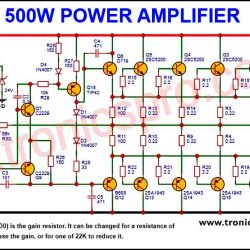
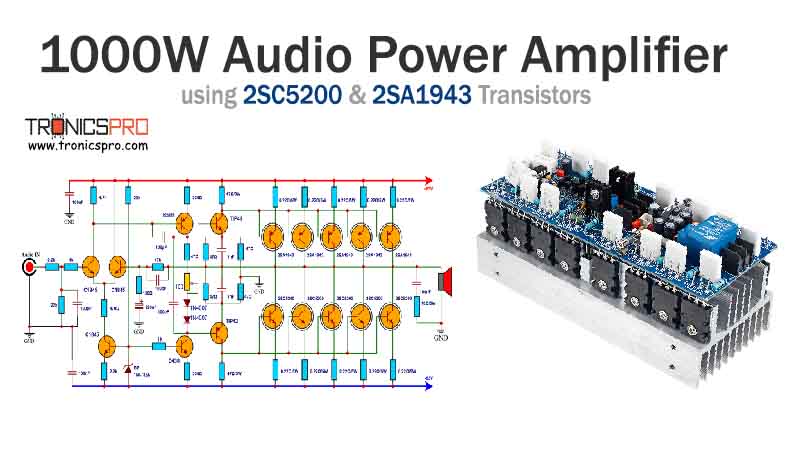
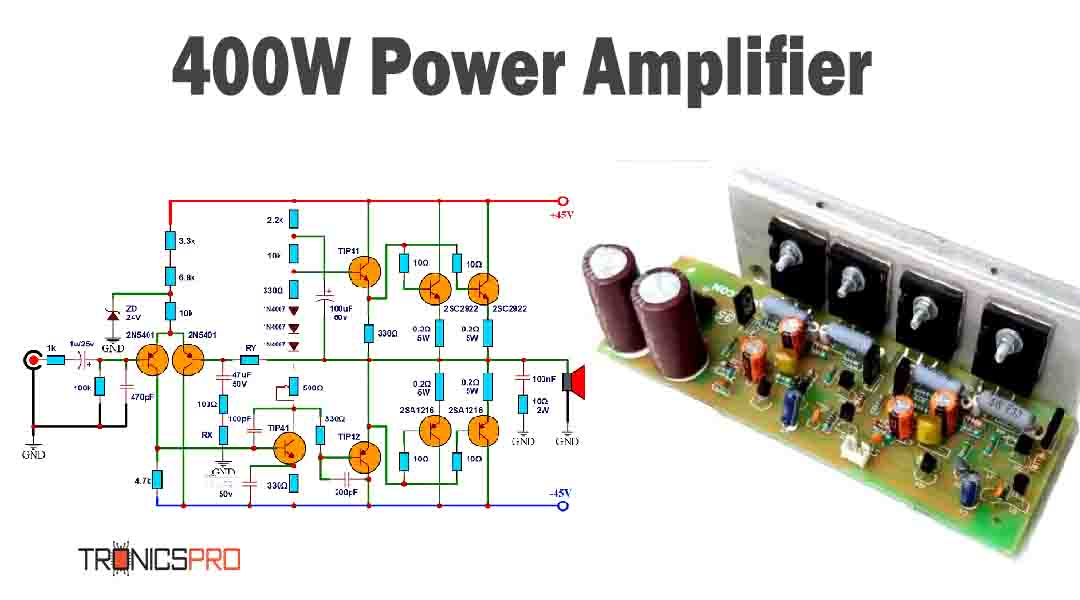
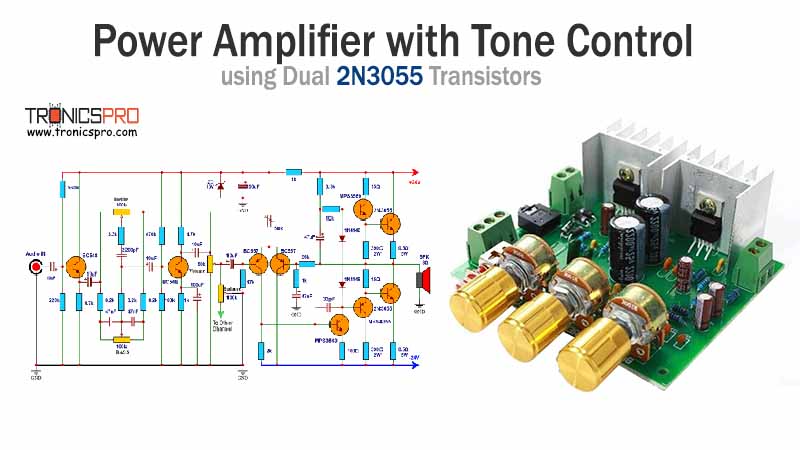
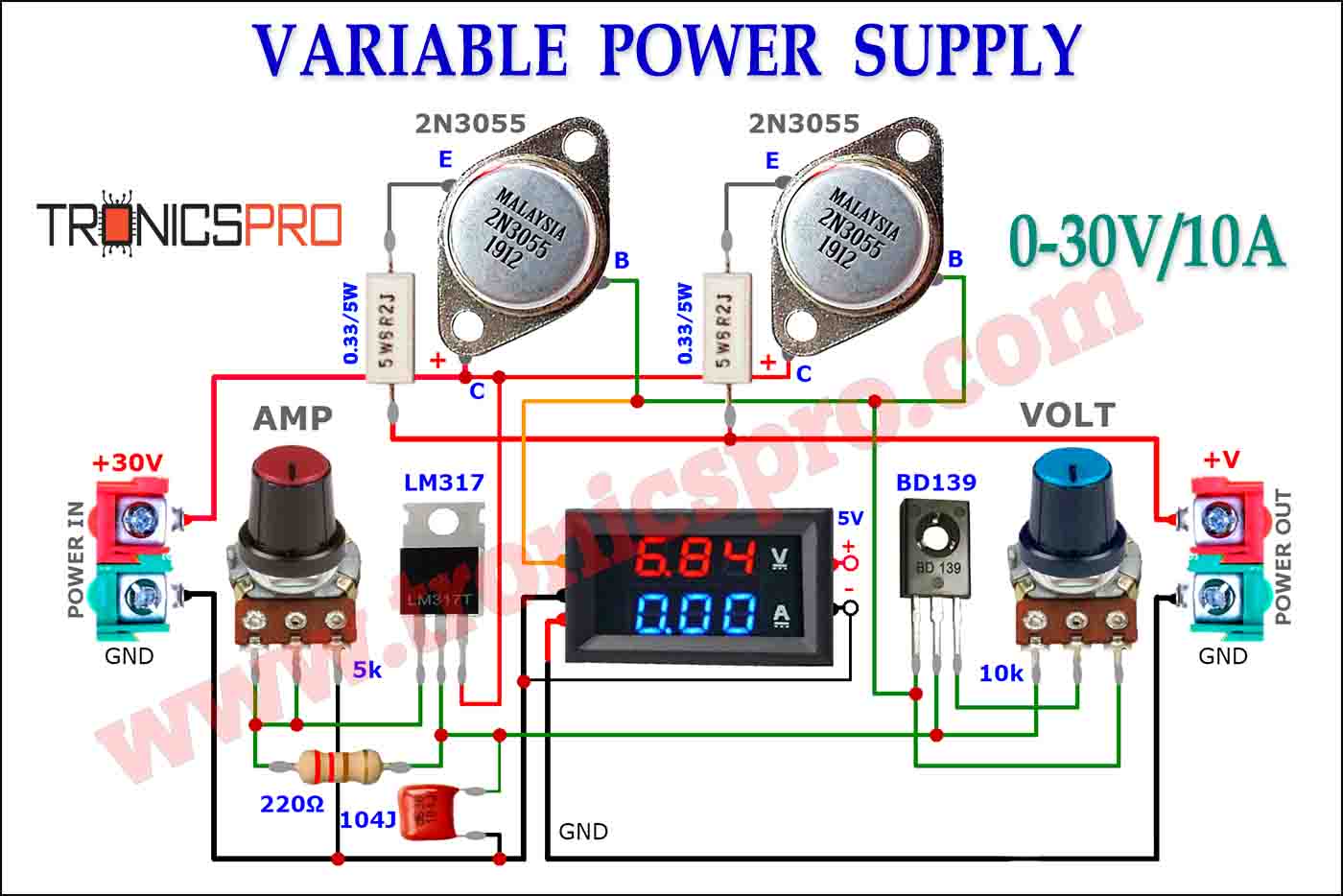
More Circuit Layouts




Key Applications of BD534 PNP Transistor
- Audio power amplifier output stages.
- Voltage regulator and DC supply systems.
- Motor control and driver circuits.
- Power switching applications.
- Complementary push-pull amplifiers with BD533.
- Industrial automation and control devices.
NPN Complimentary Transistor
- The NPN complementary transistor for BD534 is BD533. Together, they form a matched pair widely used in push-pull amplifier configurations and high-efficiency switching circuits.
Equivalent Transistors of BD534 PNP Transistor
- Possible equivalents include BD436, BD438, BD242, TIP42, and MJE2955, depending on circuit voltage and current requirements.
Datasheet of BD534 PNP Transistor
Click the following Button to download the datasheet of BD534 Transistor :
More projects, You may like:
- Video Transmitter DIY Homemade FM Radio Transmitter
- Adjustable Power Supply DIY Battery Charger
- 12V-220V 500 Watt inverter DIY Homemade
- MPPT Solar Charge Controller DIY Homemade
- DIY LA4440 bass amplifier homemade
For more project and circuit diagrams, you can go through the Schematics in the main menu where you can find many interesting projects and circuit diagrams like audio amplifier circuits, voltage booster circuit, battery charger circuit and timer circuits etc., which are all beginner circuit projects. Feel free to check them out!
Thank you for visiting the article.
You may also like:
![2n4918 datasheet pinout]()
2N4918 Pinout, Equivalent, Application, Datasheet
![2n3439 datasheet pinout equivalent specification]()
2N3439 Pinout, Equivalent, Application, Datasheet
![mje13003 datasheet pinout equivalent specification application npn transistor]()
MJE13003 Pinout, Equivalent Application Datasheet
![mje13005 datasheet pinout equivalent specification application npn transistor]()
MJE13005 Pinout, Equivalent Application Datasheet
![bf494 datasheet pinout equivalent specification application transistor]()
BF494 Pinout, Equivalent, Application, Datasheet
![bc177 datasheet pinout equivalent specification application]()
BC177 Pinout, Equivalent, Application, Datasheet
![2n4403 datasheet pinout]()
2N4403 Pinout, Equivalent, Application, Datasheet
![BD137 NPN Transistor Datasheet]()
BD137 NPN Transistor Pinout Datasheet