Understanding the BD375 pinout is essential for engineers and electronics enthusiasts working with medium-power audio or switching circuits. The BD375 is a silicon NPN transistor designed for moderate voltage and current applications, typically found in pre-driver or driver stages of amplifiers. With its TO-126 plastic package, the BD375 offers excellent thermal performance, durability, and compactness — making it suitable for space-limited designs and heat-sensitive systems.
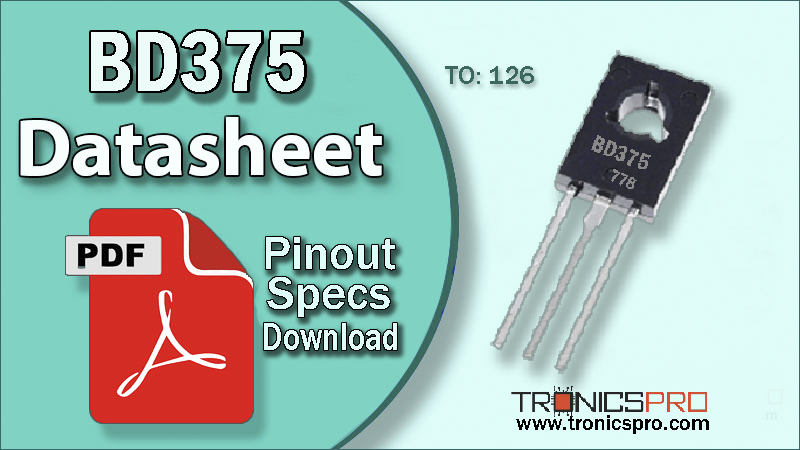
Introduction to BD375 NPN Transistor
The BD375 NPN transistor is built for use in general-purpose amplification and switching applications where voltage handling and gain stability are key. Operating with a collector-emitter voltage (Vce) of 45 V and a collector current up to 2 A, it can efficiently drive low-to-medium power loads, audio pre-stages, and control circuits.
Its TO-126 case style enables efficient heat dissipation while maintaining a small footprint on the PCB. The BD375 also provides good linearity, which makes it a reliable choice for signal amplification, low-power motor drivers, and control circuits. Engineers often choose this transistor for audio amplifiers, voltage regulators, and inverter control sections because of its stability and wide frequency response.
BD375 NPN Transistor

Pinout of BD375

Understanding the BD375 Pinout Configuration
The BD375 pinout is simple and follows the standard TO-126 package layout. It consists of three terminals: Base, Collector, and Emitter — each serving a distinct purpose for signal amplification and current control.
Pin Configuration of BD375 Pinout
| Pin# | Pin Name |
|---|---|
| 1 | Emitter |
| 2 | Collector |
| 3 | Base |
Key Features of BD375 Transistor
- Medium-power NPN silicon transistor
- Designed for audio driver and switching stages
- Compact and thermally efficient TO-126 package
- Good frequency response and linear amplification
- Suitable for pre-drivers and control circuits
- High DC gain stability over wide temperature range
BD375 Transistor Datasheet and Specifications
- Collector–Emitter Voltage (Vce): 45 V
- Collector–Base Voltage (Vcb): 50 V
- Emitter–Base Voltage (Veb): 5 V
- Collector Current (Ic): 2 A
- Power Dissipation (Ptot): 12 W
- DC Current Gain (hFE): 40 to 160
- Transition Frequency (fT): 4 MHz (typical)
- Operating Temperature Range: −55 °C to +150 °C
- Package Type: TO-126
Working Principle of BD375 NPN Transistor
The BD375 transistor functions as a current amplifier or electronic switch. When a small current is applied to the base terminal, it controls a much larger current flowing between the collector and emitter.
In amplifier circuits, it operates in the active region, amplifying weak audio or control signals with low distortion. In switching circuits, the BD375 works in saturation and cutoff modes, effectively turning devices like LEDs, relays, or small motors on and off. Its low collector-emitter saturation voltage ensures higher efficiency and minimal power loss.
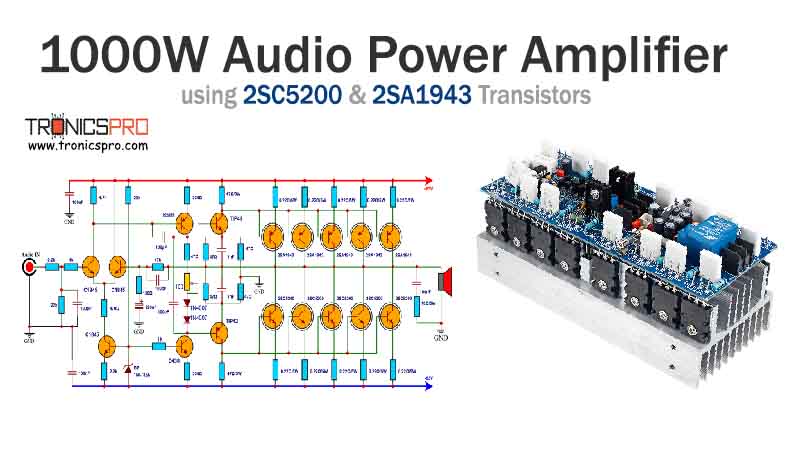
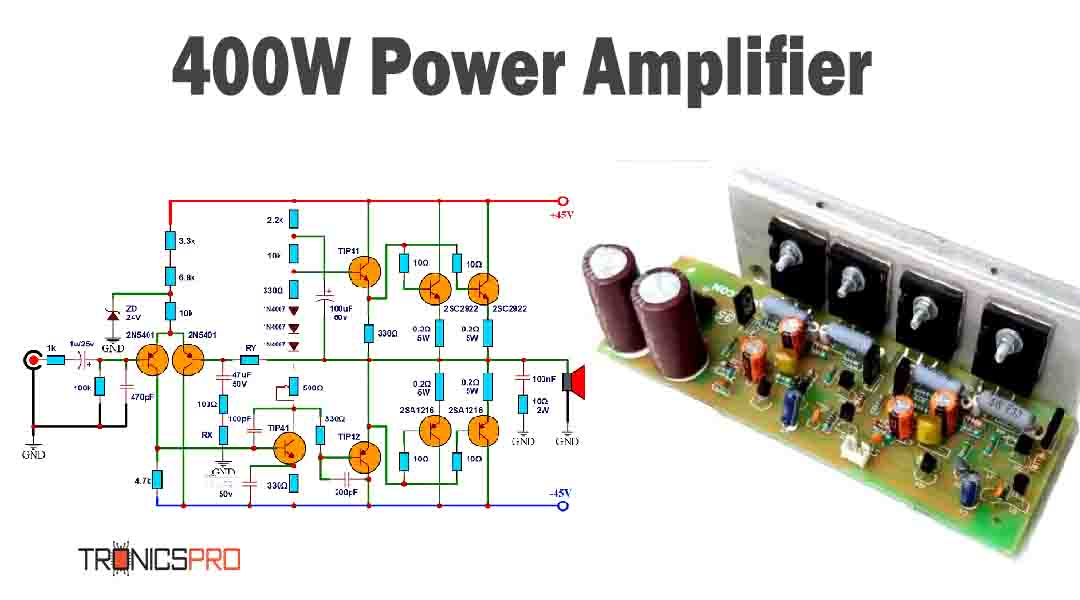
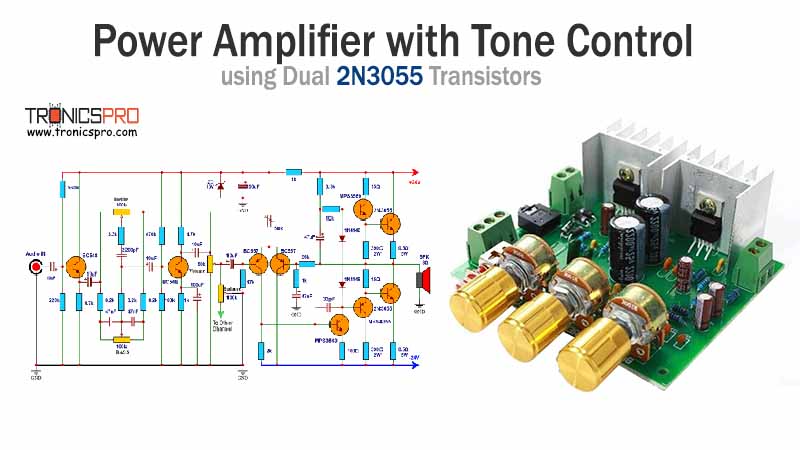
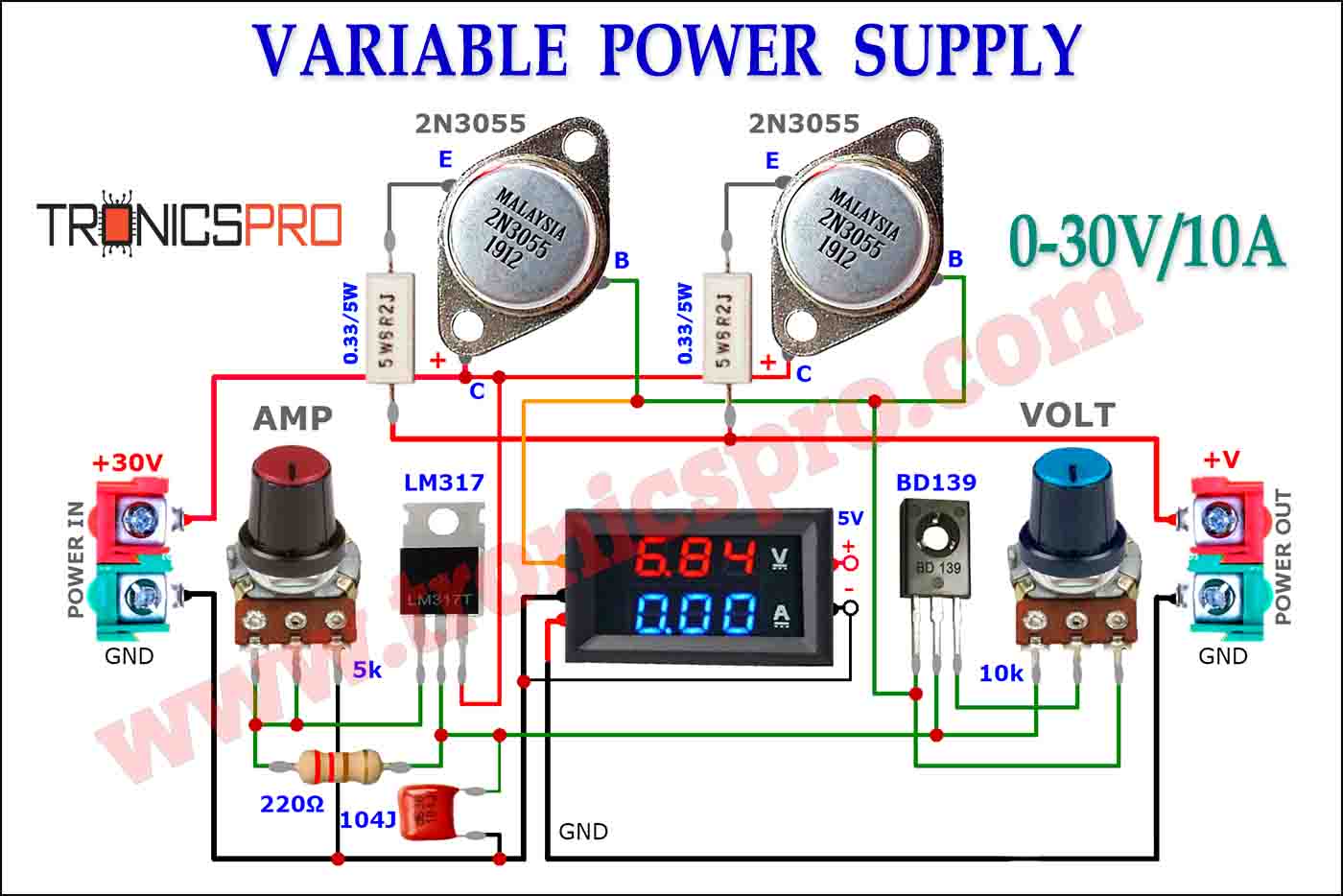
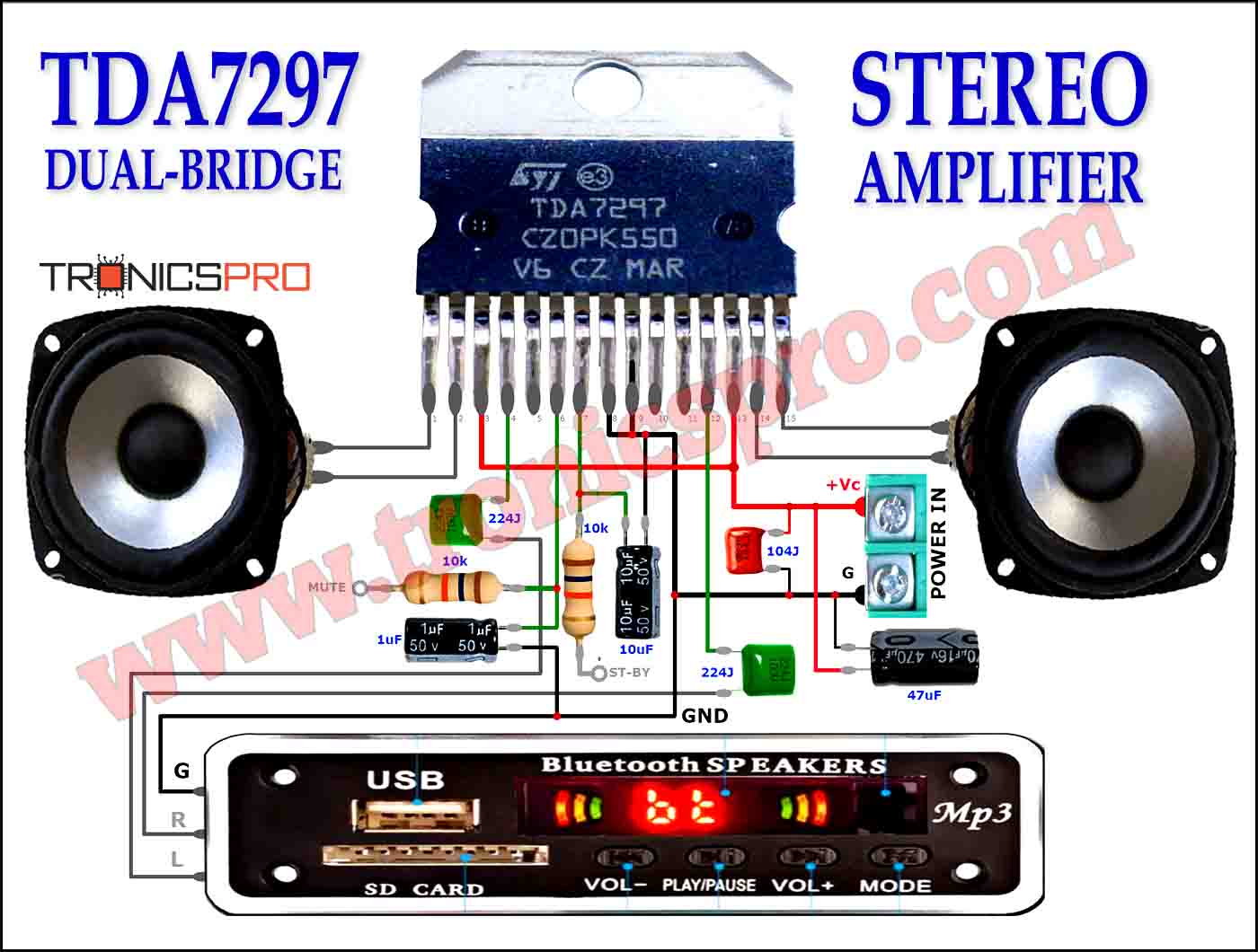
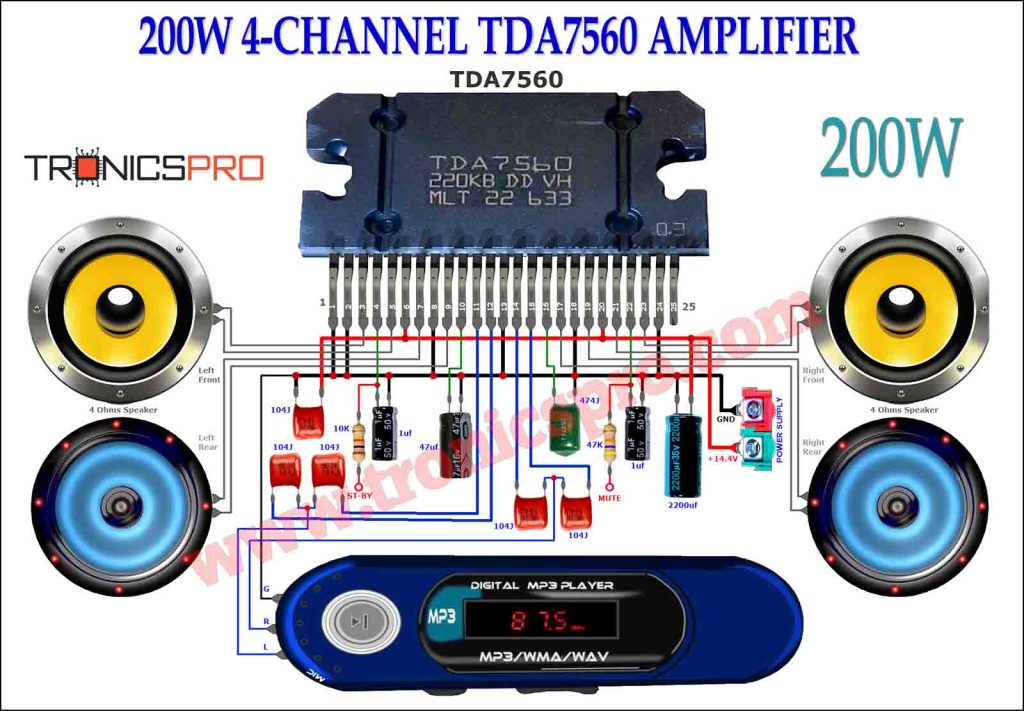
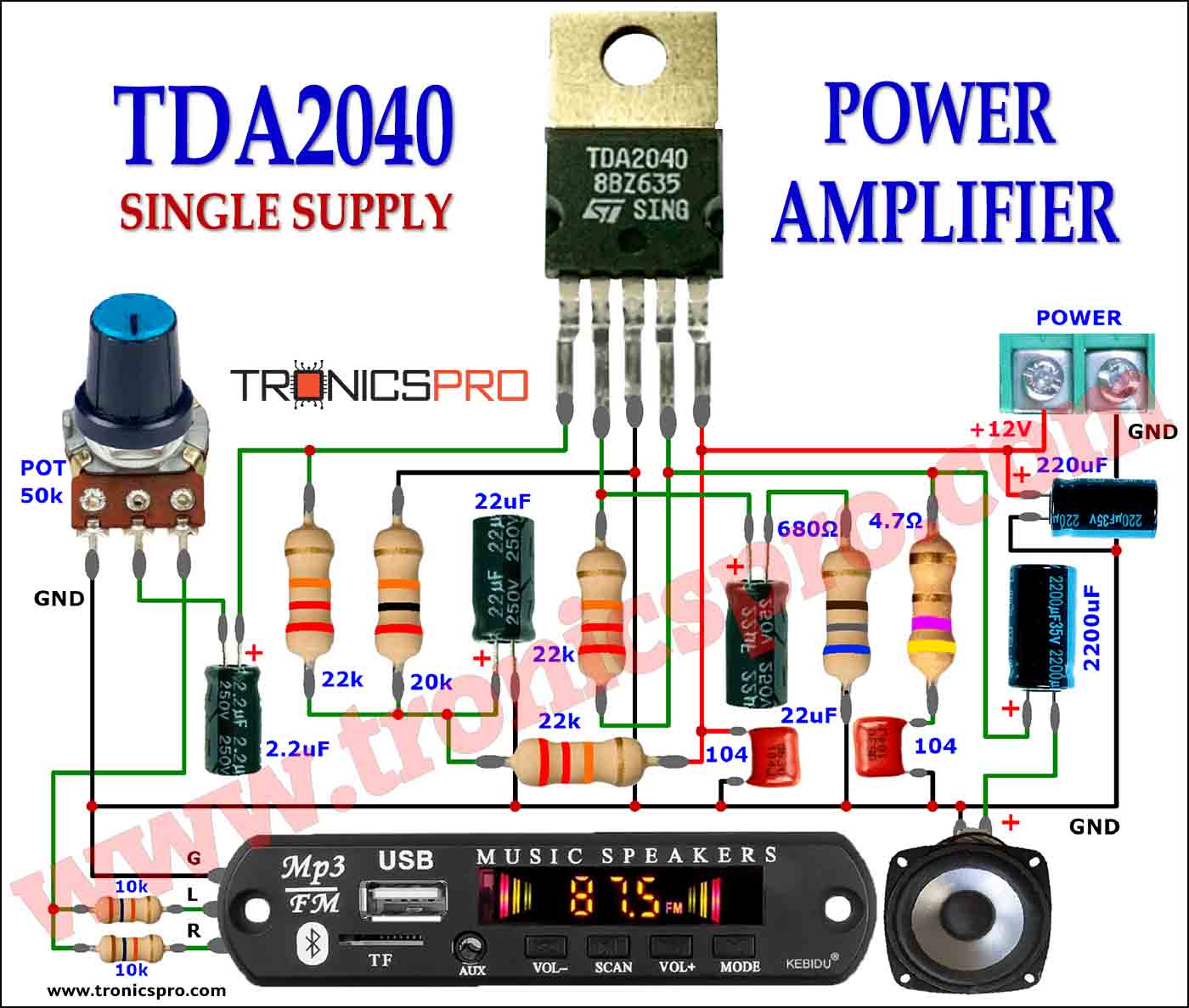
More Circuit Layouts

Typical Applications of BD375
- Audio amplifier driver and pre-driver stages
- Signal and voltage amplifier circuits
- Power control and regulator modules
- DC motor control systems
- Relay and solenoid driver circuits
- General switching and pulse control applications
- Inverter and converter driver sections
PNP Complementary Transistor
The PNP complementary transistor of BD375 is typically the BD376.
Both devices are matched for symmetrical operation in push-pull amplifier designs. The BD375 handles the positive half of the waveform (NPN), while BD376 conducts during the negative cycle (PNP). This makes the BD375/BD376 pair ideal for balanced and efficient class-AB amplifier outputs and power control stages.
Equivalent Transistors and Alternatives
You can use the following devices as BD375 equivalents or replacements, depending on your circuit requirements:
Always verify collector-emitter voltage and current ratings before substitution to ensure circuit safety.
Comparison BD375 vs BD377 vs BD379 Transistors
When comparing BD375, BD377, and BD379, all three transistors belong to the same BD3xx NPN transistor family, designed for medium-power amplification and switching applications. However, they differ mainly in voltage ratings, current capacity, and power dissipation, which define their ideal operating conditions and circuit compatibility.
The BD375 is the most modest in this group, featuring a collector-emitter voltage (Vce) of 45 volts and a collector current (Ic) rating of 2 amperes. It is well-suited for low to medium-voltage audio amplifiers, driver circuits, and control systems where efficiency and compactness are important. Its TO-126 package provides good thermal stability for continuous use in confined enclosures, making it a reliable choice for medium-load switching and linear amplification.
The BD377, on the other hand, offers a step up in voltage and power handling. With a Vce of around 60 volts and higher current tolerance, it is designed for circuits requiring slightly more headroom and stronger load control. This makes BD377 an excellent choice for audio driver stages, regulated power supplies, and servo control modules where both signal integrity and power delivery are crucial. It also maintains compatibility with other transistors in the BD3xx family, which simplifies substitution and parallel configurations.
At the top of the range is the BD379, which is built for higher voltage (up to 80 volts) and greater power dissipation capability. This device can manage heavier loads, handle more demanding audio or control applications, and provide robust performance in power amplifier driver sections and industrial switching systems. Its thermal efficiency and extended voltage margin make it more versatile in circuits where safety margins and reliability are prioritized.
In simple terms, BD375 is ideal for medium-power applications, BD377 serves as a balanced option for higher voltage and moderate current use, while BD379 stands out for maximum power and voltage handling within this transistor family. All three share the same TO-126 case and similar pin configuration (Base–Collector–Emitter), allowing easy interchangeability depending on specific design needs.
Frequently Asked Questions (FAQ)
What is the BD375 transistor used for?
The BD375 pinout for TO-126 package is: Pin 1 = Base, Pin 2 = Collector, Pin 3 = Emitter.
What is the voltage rating of BD375?
It has a collector-emitter voltage of 45 V and a collector-base voltage of 50 V.
What is the BD375 pinout?
The BD375 pinout for TO-126 package is: Pin 1 = Emitter, Pin 2 = Collector, Pin 3 = Base.
What is the complementary transistor for BD375?
The complementary PNP transistor is the BD376.
Can I use BD139 instead of BD375?
Yes, BD139 can be used as a substitute in many circuits if the voltage and current parameters meet your requirements.
Conclusion
The BD375 NPN transistor is a reliable, medium-power semiconductor device widely used for signal amplification and electronic switching. With its strong performance, 45 V collector-emitter voltage, and 2 A collector current capacity, it provides an excellent balance between power handling and efficiency. Its complementary PNP pair (BD376) and compact TO-126 package make it an excellent choice for driver stages, control modules, and amplifier circuits. Understanding the BD375 pinout ensures correct implementation and maximum reliability in any design.
Datasheet of BD375 NPN Transistor
Click the following Button to download the datasheet of BD375 Transistor :
More projects, You may like:
- Video Transmitter DIY Homemade FM Radio Transmitter
- Adjustable Power Supply DIY Battery Charger
- 12V-220V 500 Watt inverter DIY Homemade
- MPPT Solar Charge Controller DIY Homemade
- DIY LA4440 bass amplifier homemade
For more project and circuit diagrams, you can go through the Schematics in the main menu where you can find many interesting projects and circuit diagrams like audio amplifier circuits, voltage booster circuit, battery charger circuit and timer circuits etc., which are all beginner circuit projects. Feel free to check them out!
Thank you for visiting the article
You may also like:
![bc184 datasheet pinout equivalent specification application]()
BC184 Pinout, Equivalent, Application, Datasheet
![TIP127 PNP Transistor Datasheet]()
TIP127 PNP Transistor Pinout Datasheet
![bd539 transistor datasheet]()
BD539 Pinout, Equivalent, Applications, Datasheet
![BD233 NPN Transistor Datasheet]()
BD233 NPN Transistor Pinout Datasheet
![2n5320 datasheet pinout]()
2N5320 Pinout, Equivalent, Application, Datasheet
![bc108 datasheet pinout equivalent specification application]()
BC108 Pinout, Equivalent, Application, Datasheet
![mj15003 datasheet pinout]()
MJ15003 Pinout Equivalent Applications Datasheet
![2n6426 datasheet pinout]()
2N6426 Pinout, Equivalent, Application, Datasheet