Understanding the BD250 pinout is essential for engineers and hobbyists designing high-power amplifier or switching circuits. The BD250 is a PNP power transistor built for large-current, high-voltage applications where reliability and thermal stability are critical. With its rugged TO-3PN package and strong electrical performance, this transistor is widely used in audio amplifiers, motor control, and power supply designs.

Introduction to BD250 PNP Transistor
The BD250 PNP transistor is a silicon-based power device designed to complement the BD249 NPN transistor. It handles heavy current loads efficiently, providing reliable switching and amplification in demanding circuits. With a collector–emitter voltage of −45 V and a collector current rating of 25 A, the BD250 can drive high-power speakers, motors, and industrial regulators with minimal power loss.
Its durable TO-3PN case allows excellent heat dissipation, while its low saturation voltage enhances energy efficiency. The BD250’s linear response makes it a preferred choice for symmetrical push-pull amplifier stages when paired with BD249. Because of its solid electrical characteristics and affordability, it is frequently used in professional audio systems, DC motor drives, and other high-power equipment.
BD250 PNP Transistor

Pinout of BD250

Understanding the BD250 Pinout Configuration
The BD250 pinout follows the standard TO-3PN layout consisting of three leads: Base, Collector, and Emitter. Correct identification of these pins is critical to ensure stable biasing and proper transistor operation within the circuit.
Pin Configuration of BD250 Pinout
| Pin# | Pin Name | Pin Description |
|---|---|---|
| 1 | Base | Controls transistor switching |
| 2 | Collector | Handles main current flow |
| 3 | Emitter | Connects to load or ground |
Key Features of BD250 Transistor
- High collector-current capability
- Low collector-emitter saturation voltage
- Suitable for linear and switching operations
- Complementary match with BD249 NPN transistor
- Excellent thermal and electrical stability
- Designed for audio, power, and industrial circuits
BD250 Transistor Datasheet and Specifications
- Collector–Emitter Voltage (Vce): −45 V
- Collector–Base Voltage (Vcb): −55 V
- Emitter–Base Voltage (Veb): −5 V
- Collector Current (Ic): −25 A
- Total Power Dissipation (Ptot): 125 W
- DC Current Gain (hFE): 15 to 60
- Transition Frequency (fT): 3 MHz
- Operating Temperature Range: −65 °C to +150 °C
- Package Type: TO-3PN (Plastic Power Package)
Working Principle of BD250 Transistor
The BD250 operates on the PNP transistor principle, where current flows from the emitter to the collector when the base is driven negative relative to the emitter. In switching applications, the transistor acts like an electronic valve, controlling high-current loads through a small base current.
In amplifier circuits, it functions in the active region, providing linear amplification for audio or power signals. Because of its high current gain and low power loss, the BD250 is an excellent option for push-pull audio amplifiers when used with its complementary NPN pair BD249.
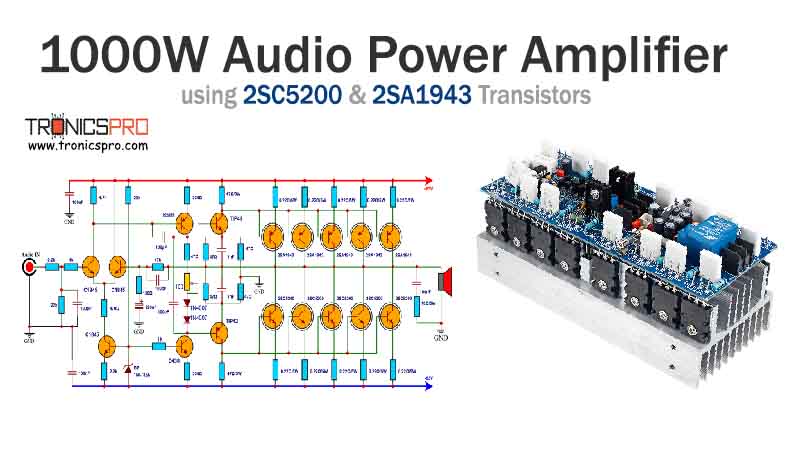
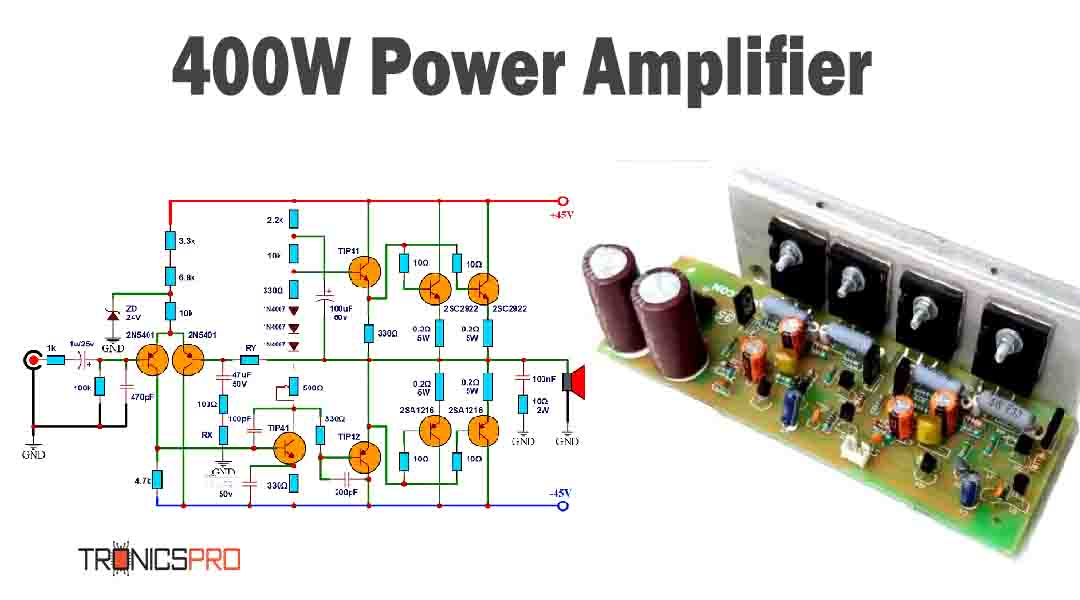
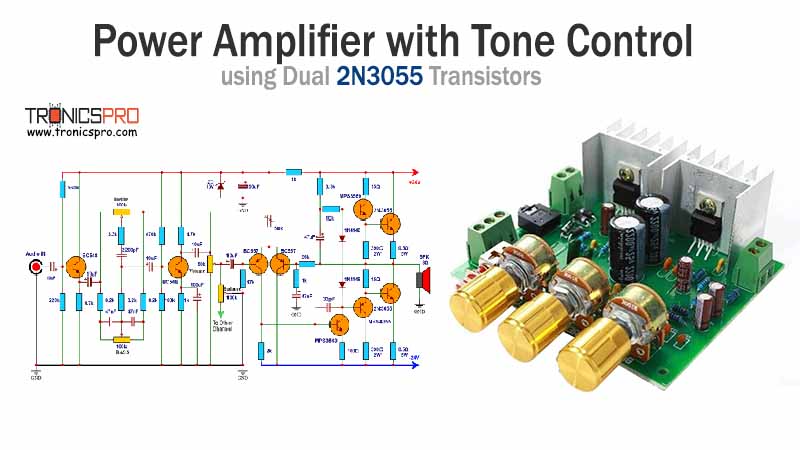
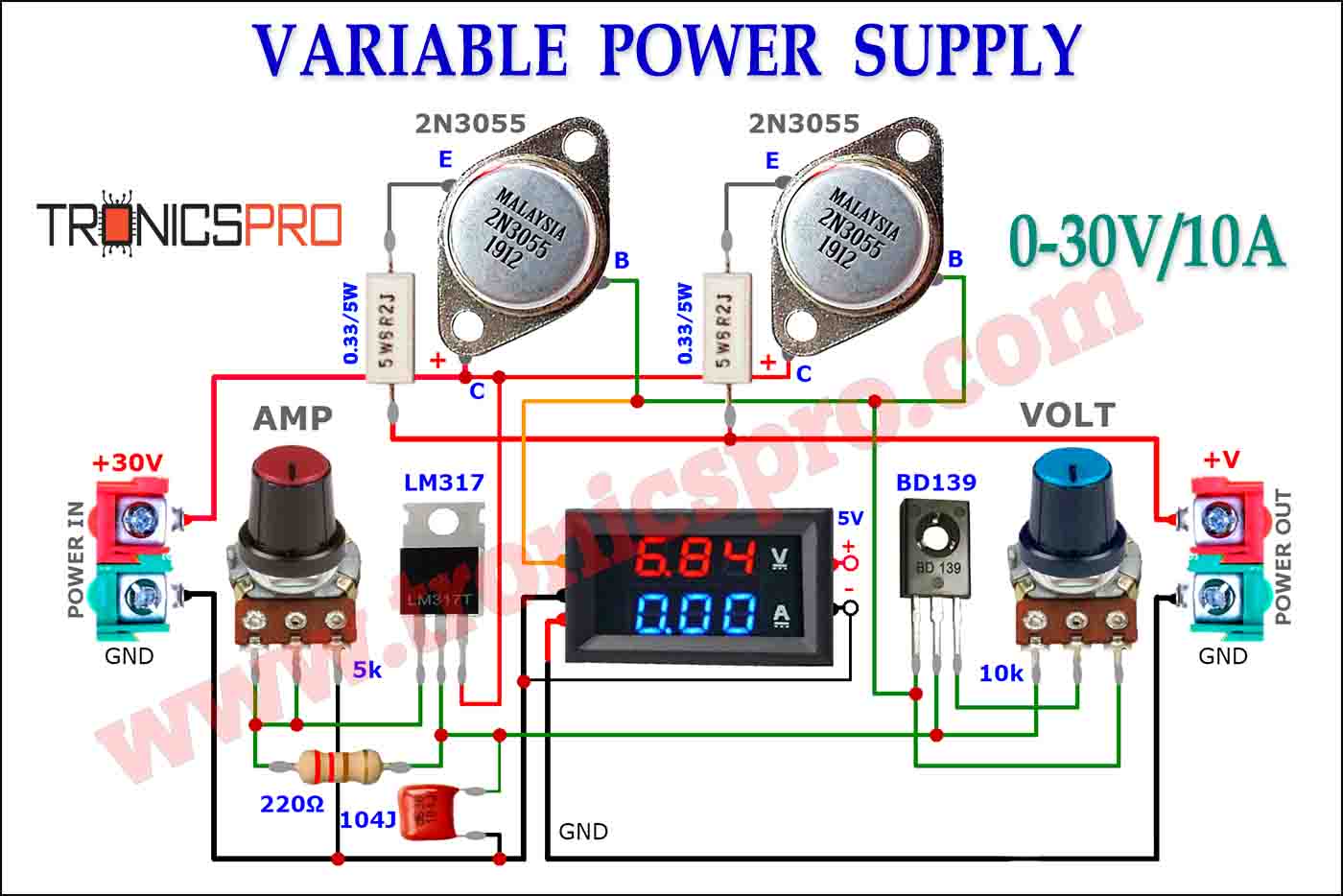
More Circuit Layouts




Typical Applications of BD250
- High-power audio amplifiers
- Voltage regulator circuits
- Motor driver and controller modules
- Switching power supplies
- Battery charger systems
- Industrial automation controllers
- Inverter and DC-DC converter designs
NPN Complementary Transistor
The NPN complementary transistor of the BD250 PNP device is the BD249. Both share matching electrical and thermal parameters, making them ideal for balanced push-pull or symmetrical amplifier designs. The BD249 handles positive current flow, whereas the BD250 manages the negative phase of operation, ensuring complete waveform reproduction in amplifier outputs.
Equivalent Transistors and Alternatives
Close equivalents or alternatives for BD250 include:
- MJ15004
- 2N3773 (PNP counterpart version)
- TIP36C
- BDW94C
- BD746
- 2SB554
Each alternative should be cross-checked for exact voltage and current requirements before substitution to maintain circuit reliability.
BD250 vs BD249 Comparison
The BD250 (PNP) and BD249 (NPN) are designed as complementary transistors with identical voltage, current, and power ratings but opposite current flow directions.
In amplifier circuits, BD249 conducts when the input is positive, while BD250 handles the negative half of the waveform, resulting in smooth and distortion-free amplification. In switching circuits, their complementary nature allows full bridge configurations for efficient high-power control. This symmetry makes the BD249/BD250 pair ideal for dual-supply power stages, balanced audio systems, and high-efficiency regulators.
Frequently Asked Questions (FAQ)
What is the BD250 transistor used for?
The BD250 is used for high-power amplifiers, motor drivers, voltage regulators, and switching power applications.
What type of transistor is BD250?
It is a PNP power transistor designed for high-current and high-voltage circuits.
What is the BD250 pin configuration?
The BD250 pinout is: Pin 1 = Base, Pin 2 = Collector, Pin 3 = Emitter (TO-3PN package).
What is the complementary transistor for BD250?
The complementary device is the BD249 NPN transistor.
Can I use TIP36C instead of BD250?
Yes, TIP36C can replace BD250 if the voltage and current ratings match your circuit design.
Conclusion
The BD250 PNP transistor is a durable, high-power semiconductor component optimized for industrial, audio, and motor-control applications. Its robust TO-3PN package ensures reliable performance under thermal stress, while its electrical balance with BD249 makes it a perfect match for high-efficiency push-pull circuits.
Whether you’re designing a power amplifier or a switching regulator, understanding the BD250 pinout and electrical specifications ensures safe and optimal performance.
Datasheet & Pinout of BD250 NPN Transistor
Click the following Button to download the datasheet of BD250 Transistor :
More projects, You may like:
- Video Transmitter DIY Homemade FM Radio Transmitter
- Adjustable Power Supply DIY Battery Charger
- 12V-220V 500 Watt inverter DIY Homemade
- MPPT Solar Charge Controller DIY Homemade
- DIY LA4440 bass amplifier homemade
For more project and circuit diagrams, you can go through the Schematics in the main menu where you can find many interesting projects and circuit diagrams like audio amplifier circuits, voltage booster circuit, battery charger circuit and timer circuits etc., which are all beginner circuit projects. Feel free to check them out!
Thank you for visiting the article
You may also like:
![TIP41 NPN Transistor Datasheet Pinout]()
TIP41 NPN Transistor Pinout Datasheet
![bd544 datasheet pinout]()
BD544 Pinout, Equivalent, Applications, Datasheet
![bf872 datasheet pinout equivalent specification application transistor]()
BF872 Pinout, Equivalent, Application, Datasheet
![2n2218 datasheet pinout]()
2N2218 Pinout, Equivalent, Application, Datasheet
![TIP2955 PNP Transistor Pinout Datasheet]()
TIP2955 PNP Transistor Pinout Datasheet
![bd678 datasheet pinout]()
BD678 Pinout, Equivalent, Applications, Datasheet
![bf472 datasheet pinout equivalent specification application transistor]()
BF472 Pinout, Equivalent, Application, Datasheet
![bc212 datasheet pinout equivalent specification application transistor]()
BC212 Pinout, Equivalent, Application, Datasheet