The 2N5321 transistor is a silicon NPN bipolar junction transistor (BJT) designed for medium-power switching and amplification. It delivers reliable performance in driver and output stages where moderate voltage and current handling are required. The 2N5321 pinout follows the Emitter–Base–Collector (E–B–C) configuration in its TO-39 metal-can package, ensuring excellent heat dissipation and stable operation under continuous load.
With a collector-emitter voltage (Vce) of 50 V, collector-base voltage (Vcb) of 75 V, and a collector current (Ic) of 2 A, this transistor provides up to 10 W of power dissipation. Its versatility and rugged structure make it suitable for amplifier drivers, voltage regulators, and medium-current switching circuits.

Introduction to 2N5321 NPN Transistor
The 2N5321 belongs to a family of TO-39 metal-can power transistors commonly used in audio amplifiers, control systems, and industrial electronics. It is engineered for high reliability, providing a balanced combination of current gain, voltage capability, and thermal stability.
Because of its strong electrical characteristics, it’s often found in driver stages preceding higher-power transistors. The TO-39 package ensures proper thermal performance and mechanical durability, enabling long-term operation in environments where temperature and current spikes occur frequently.
2N5321 NPN Transistor

Pinout of 2N5321

Pin Configuration of 2N5321 Pinout
| Pin# | Pin Name |
|---|---|
| 1 | Emitter |
| 2 | Base |
| 3 | Collector |
Key Features of 2N5321 Transistor
- General-purpose NPN silicon transistor for medium-power circuits
- TO-39 metal-can package for better thermal performance
- Suitable for amplification and switching applications
- Complementary to 2N5323 PNP transistor
- Stable operation with moderate current gain
- Ideal for driver and output stages
2N5321 Transistor Datasheet and Specifications
- Transistor Type: NPN Silicon
- Collector-Emitter Voltage (Vce): 50 V
- Collector-Base Voltage (Vcb): 75 V
- Emitter-Base Voltage (Veb): 5 V (typical)
- Collector Current (Ic): 2 A
- Total Power Dissipation (Ptot): 10 W
- DC Current Gain (hFE): 30 – 120 (typical range)
- Transition Frequency (fT): 50 MHz (typical)
- Junction Temperature (Tj): –65 °C to +200 °C
- Package Type: TO-39 Metal Can
- Pin Configuration: Emitter – Base – Collector (E–B–C)
Equivalent and Alternative Transistors
Transistors that can serve as equivalents or replacements for the 2N5321 include:
- 2N3053 – NPN, TO-39, 40 V, 700 mA
- BD135 – NPN, TO-126, 45 V, 1.5 A
- 2N2219A – NPN, TO-39, 50 V, 800 mA
- 2N3440 – NPN, TO-39, 120 V, 1 A
- MJE15028 – NPN, TO-220, 120 V, 8 A
When choosing an alternative, match both voltage and power ratings to ensure safe circuit operation.
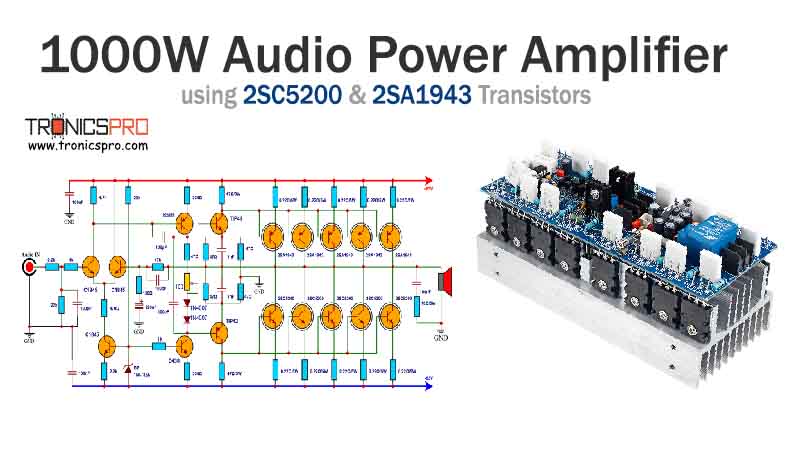
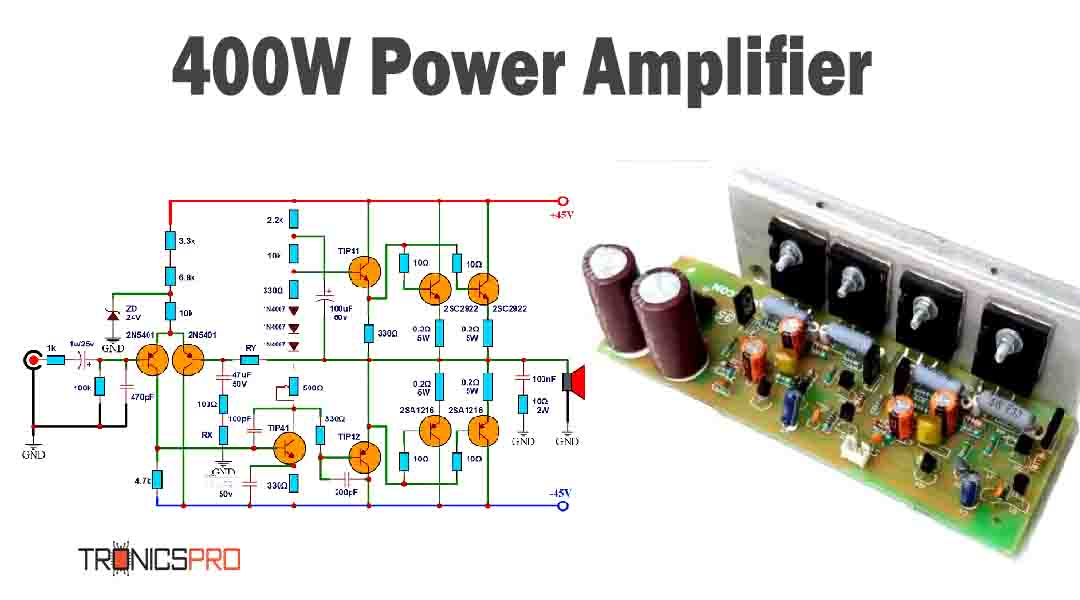
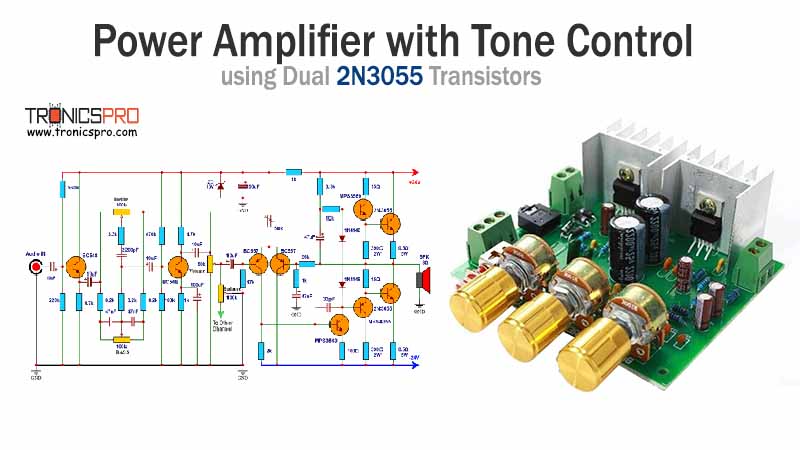
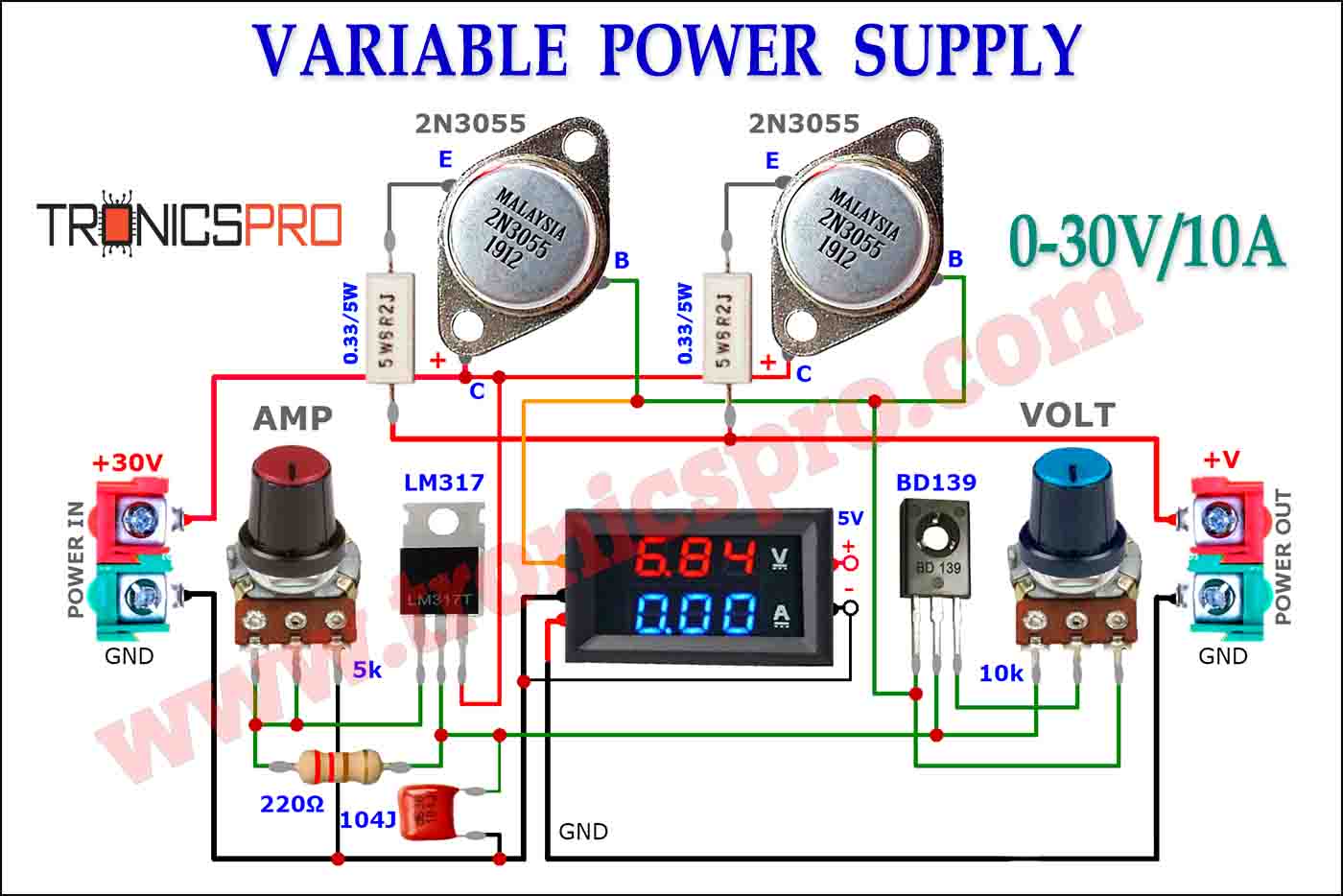
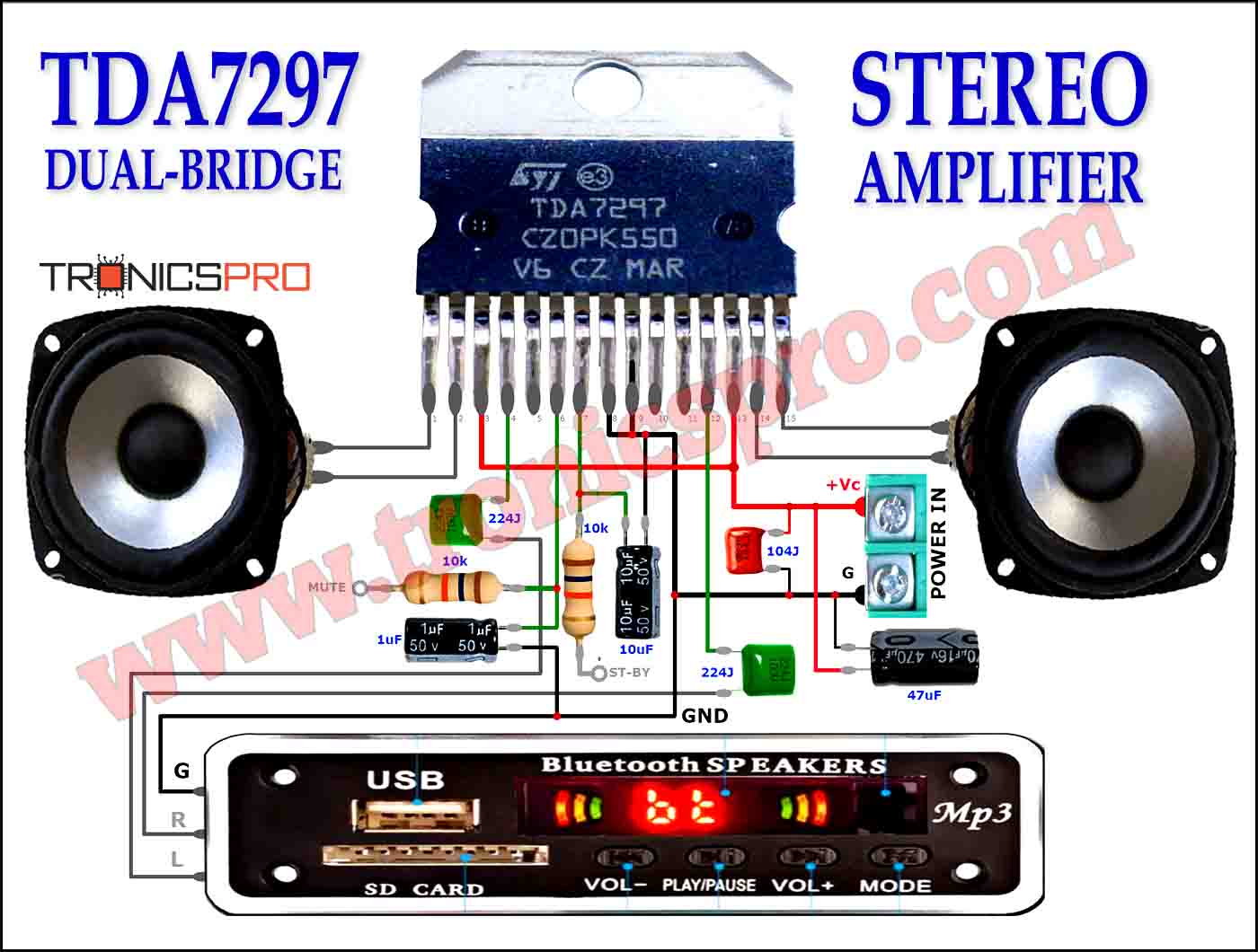
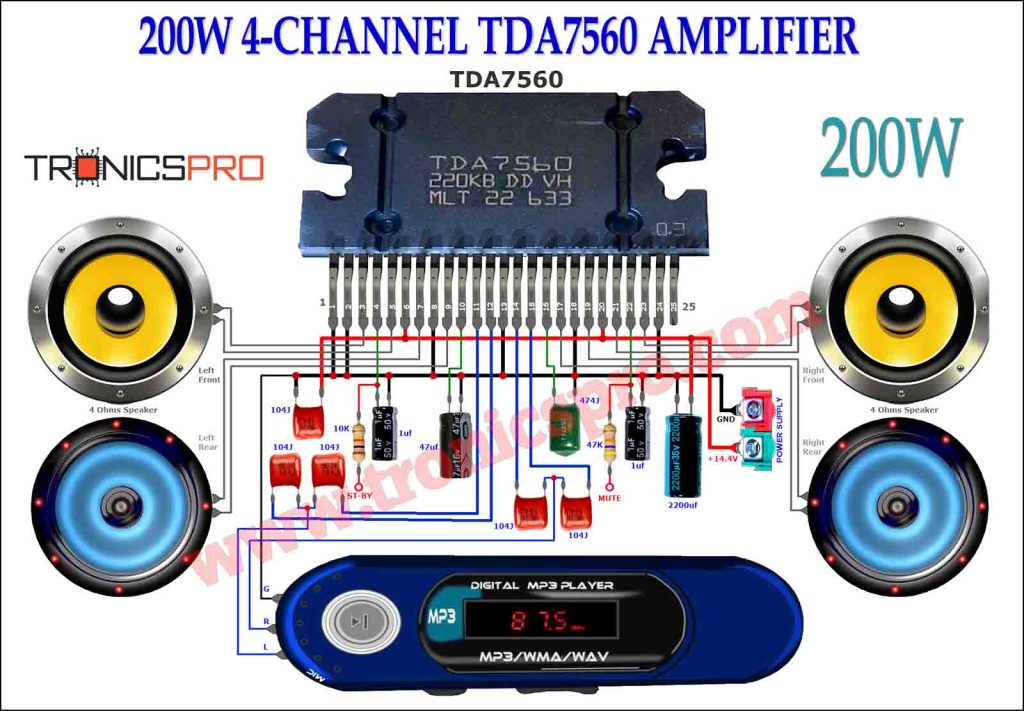
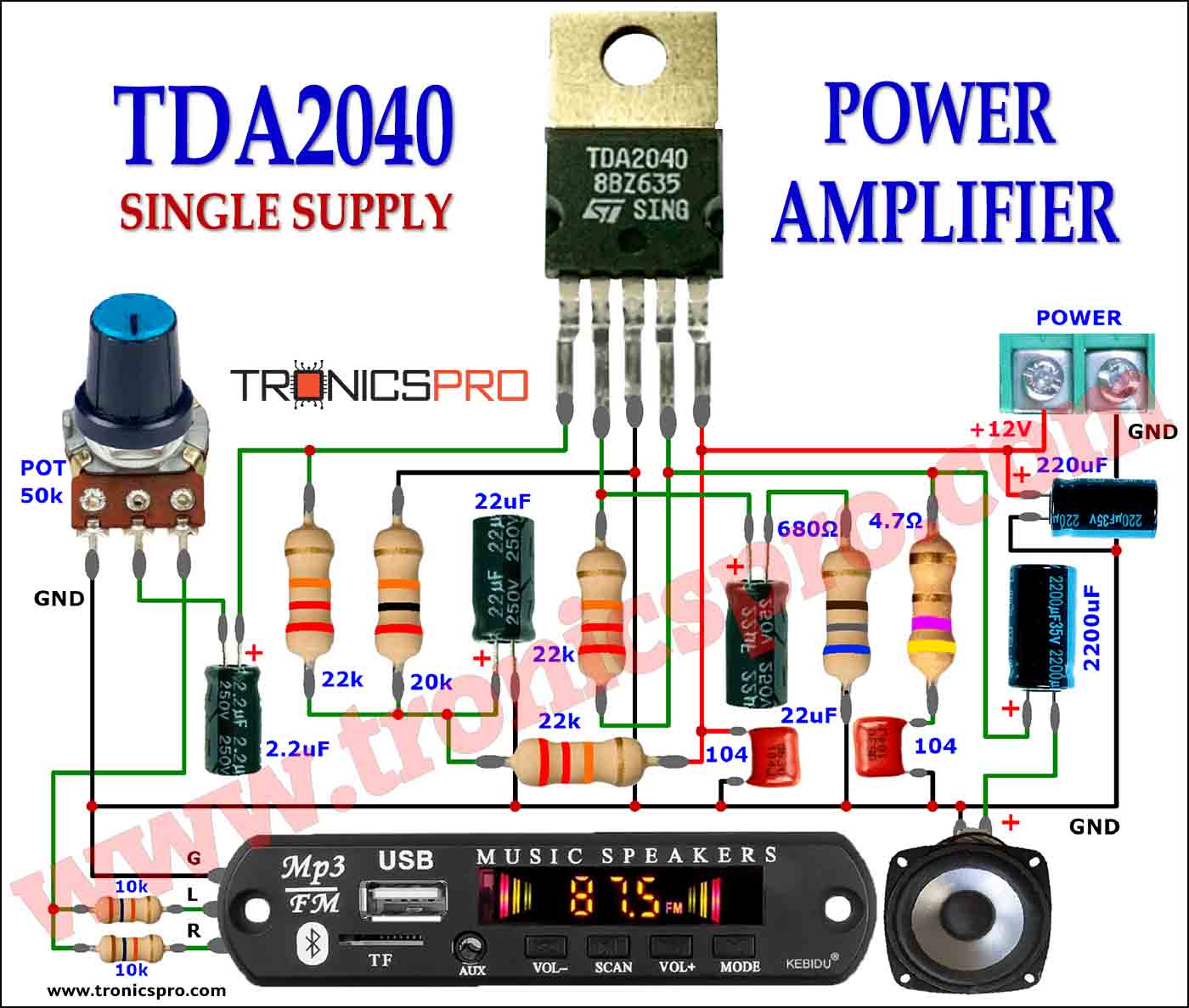
More Circuit Layouts

Applications of 2N5321 Transistor
The 2N5321 is versatile and can be applied in many medium-power circuits, such as:
- Audio driver and pre-amplifier stages
- Push-pull amplifier pairs (with 2N5323)
- Voltage regulator circuits
- Relay and solenoid drivers
- Switching control circuits
- Signal amplification and control electronics
Its 10 W dissipation capability allows it to handle steady current without significant thermal drift, making it suitable for continuous operation.
Working Principle of 2N5321 Transistor
The 2N5321 NPN transistor operates by allowing a small base current to control a larger collector-emitter current. When the base is supplied with a positive signal relative to the emitter, the transistor conducts, enabling controlled current amplification or switching.
In amplifier mode, it operates in the active region, producing linear output. In switching mode, it functions between saturation (fully ON) and cutoff (fully OFF). This makes it ideal for low-to-medium power control and amplification tasks.
PNP Complementary Transistor
The 2N5323 is the PNP complementary transistor to the 2N5321 NPN transistor, sharing identical ratings but opposite polarity. Both are housed in TO-39 metal can packages and are commonly paired for push-pull amplifier stages and class AB drivers.
The complementary relationship between 2N5321 and 2N5323 provides symmetrical current drive and reduces crossover distortion in audio applications, improving efficiency and signal clarity.
Comparison Summary: 2N5321 vs 2N5323
Both transistors share identical electrical limits—Vce of 50 V, Vcb of 75 V, Ic of 2 A, and 10 W power dissipation.
The main distinction lies in polarity:
- 2N5321 is an NPN transistor, activated by a positive base current, allowing current flow from collector to emitter.
- 2N5323 is a PNP transistor, activated by a negative base current, with current flow from emitter to collector.
When combined, they form balanced complementary pairs, perfect for audio amplifiers, driver modules, and regulated power stages requiring linear and thermally stable behavior.
Advantages of 2N5321 Transistor
- High-voltage capacity (up to 75 V Vcb)
- Moderate current handling of 2 A
- Excellent thermal conductivity with metal TO-39 case
- Linear current gain for precise signal amplification
- Complementary pairing with 2N5323 for balanced designs
Conclusion
The 2N5321 NPN transistor is a reliable choice for medium-power amplifier and switching applications, offering a 50 V Vce, 2 A current capability, and 10 W power dissipation in a durable TO-39 package.
Its complementary relationship with the 2N5323 PNP transistor enables high-fidelity push-pull stages and stable performance in both analog and digital circuits. Whether used in audio drivers, control circuits, or voltage regulation, the 2N5321 offers dependable operation with solid thermal performance and low distortion.
Datasheet & Pinout of 2N5321 NPN Transistor
Click the following Button to download the datasheet of 2N5321 Transistor :
More projects, You may like:
- Video Transmitter DIY Homemade FM Radio Transmitter
- Adjustable Power Supply DIY Battery Charger
- 12V-220V 500 Watt inverter DIY Homemade
- MPPT Solar Charge Controller DIY Homemade
- DIY LA4440 bass amplifier homemade
For more project and circuit diagrams, you can go through the Schematics in the main menu where you can find many interesting projects and circuit diagrams like audio amplifier circuits, voltage booster circuit, battery charger circuit and timer circuits etc., which are all beginner circuit projects. Feel free to check them out!
Thank you for visiting the article.
You may also like:
![2n3391 datasheet pinout equivalent specification]()
2N3391 Pinout, Equivalent, Application, Datasheet
![C9012 PNP Transistor Datasheet]()
C9012 PNP Small Signal Transistor Datasheet
![bf469 datasheet pinout equivalent specification application transistor]()
BF469 Pinout, Equivalent, Application, Datasheet
![bc141 datasheet pinout equivalent specification application]()
BC141 Pinout, Equivalent, Application, Datasheet
![2N3904 NPN Transistor Datasheet Pinout]()
2N3904 NPN Transistor Datasheet & Pinout
![MJE15033 PNP Transistor Datasheet]()
MJE15033 PNP Power Transistor Datasheet
![BD175 NPN Transistor Datasheet]()
BD175 NPN Transistor Pinout Datasheet
![BD234 PNP Transistor Datasheet]()
BD234 PNP Transistor Pinout Datasheet