Introduction
The BD440 is a medium-power PNP silicon epitaxial-base transistor engineered for linear amplification and switching applications. It is part of the BD43x transistor family, serving as the PNP complement to the NPN devices such as BD439 and BD441.
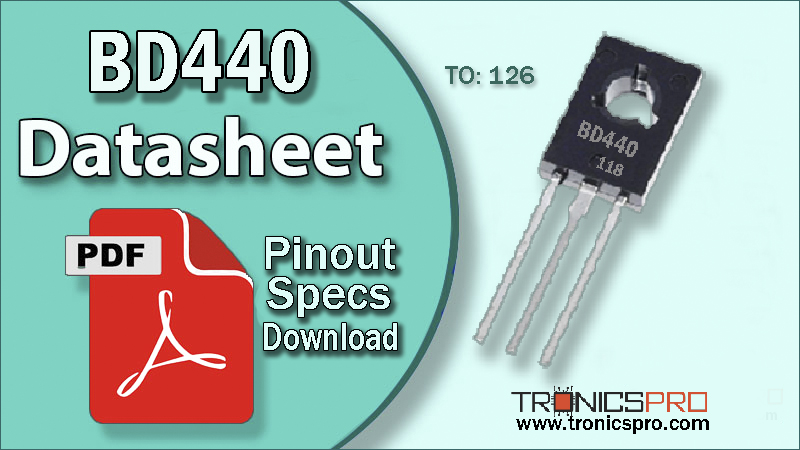
It is packaged in a TO-126 / SOT-32 plastic case, which supports mounting to small heatsinks for better thermal performance. Its design ensures a balance of voltage rating, current capability, and gain, making it suitable for audio output stages, amplifier circuits, and power drivers.
BD440 PNP Transistor
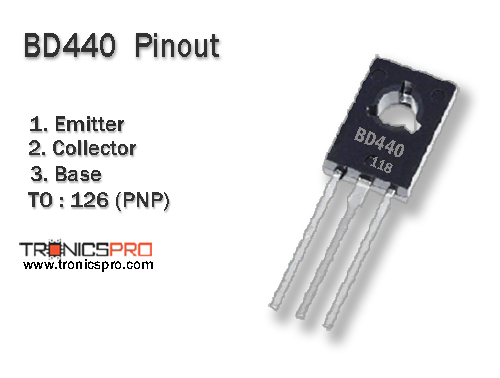
Because BD440 is the complementary PNP for BD439, it is often used in push-pull amplifier stages, complementary driver circuits, and PNP side switching in power designs. Its parameters are chosen to match those of its NPN counterpart in symmetrical circuits.
Pinout of BD440

Key Features
- PNP polarity ideal for high-side conduction or negative cycle drive
- Designed for complementary pairing with NPN devices
- Compact plastic package for moderate heatsinking
- Balanced performance in both switching and linear roles
- Suitable for audio, driver, and power circuits
- Robust design for medium-power applications
Specifications/Characteristics
- Collector-Emitter Voltage, VCEO = –60 V
- Collector-Base Voltage, VCBO = –60 V
- Emitter-Base Breakdown Voltage, VEBO = –5 V
- Continuous Collector Current, IC = –4 A
- Peak (Pulse) Collector Current, ICM = –7 A
- Total Power Dissipation, Ptot = 36 W (case temperature = 25 °C)
- Maximum Junction Temperature, Tj = 150 °C
- Storage Temperature Range, Tstg = –65 to +150 °C
- DC Current Gain (hFE) minimum = 25
- Transition Frequency, fT = 3 MHz
Pin Configuration
| Pin# | Pin Name | Pin Description |
|---|---|---|
| 1 | Emitter | Output / current source terminal (PNP side) |
| 2 | Collector | Main current sink terminal |
| 3 | Base | Control / bias input terminal |
Comparison BD440 (PNP) vs BD439 (NPN Complementary)
- BD439 is the NPN half of the complementary pair, conducting for the positive half-cycles or low-side roles in push-pull designs. It handles current in the positive direction when its base is driven appropriately.
- BD440, as its PNP counterpart, conducts for the negative half-cycles or high-side roles. Its polarity is opposite that of BD439, allowing symmetrical operation for both halves of a signal in an amplifier.
- Together, BD439 and BD440 are matched in current rating, power dissipation, voltage tolerance, gain, and frequency characteristics (with inverted polarity), making them ideal for complementary amplifier and switching circuits where symmetry and balance are critical.
More Circuit Layouts
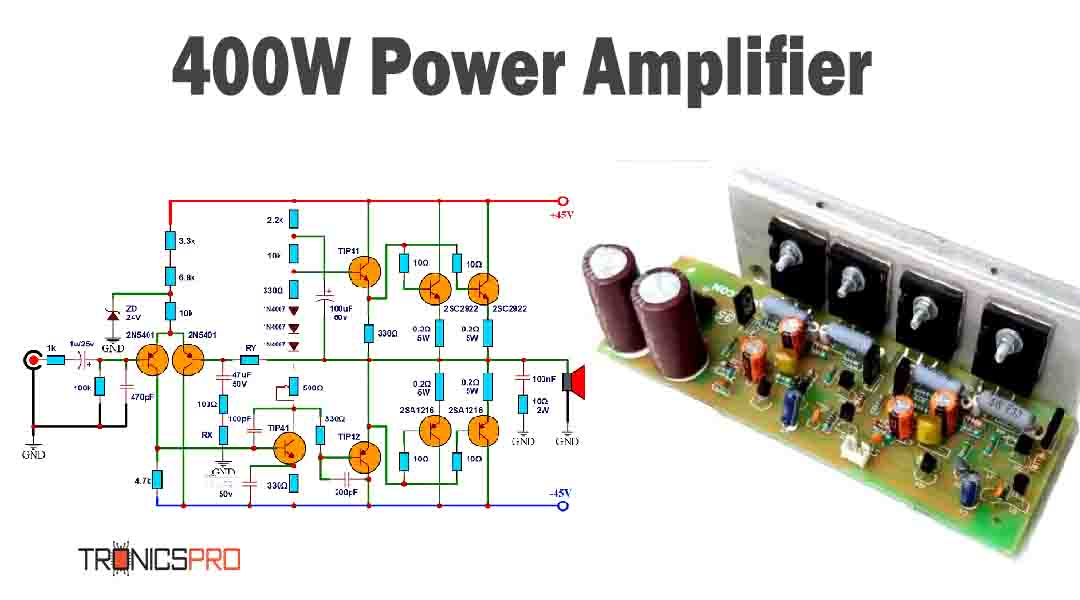
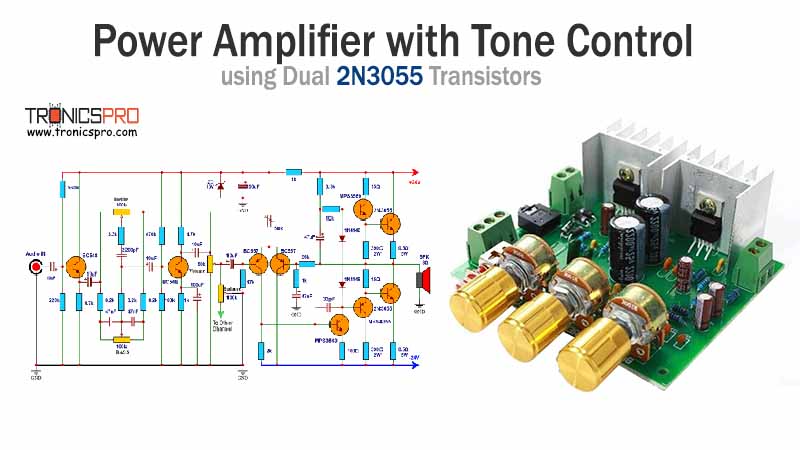
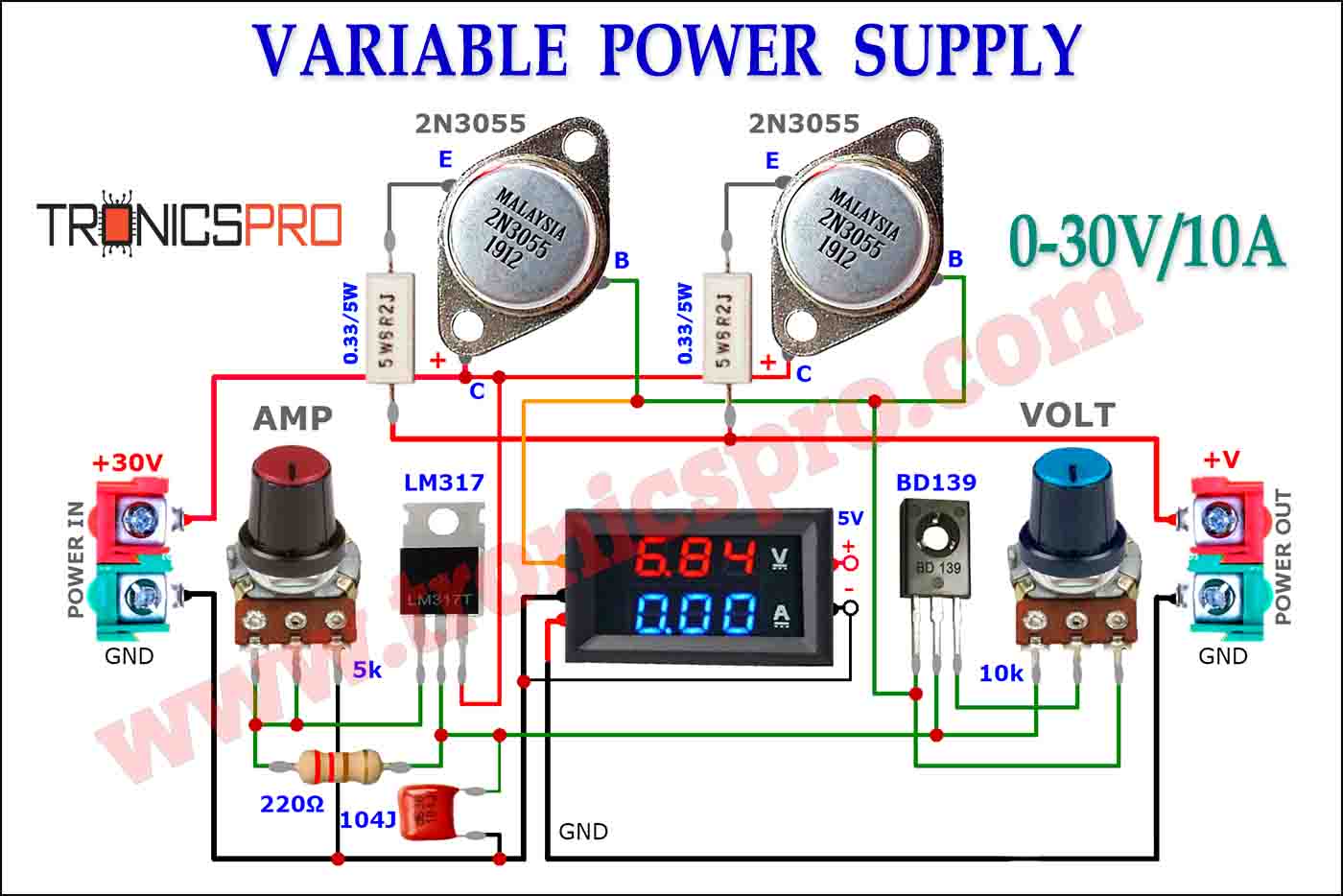
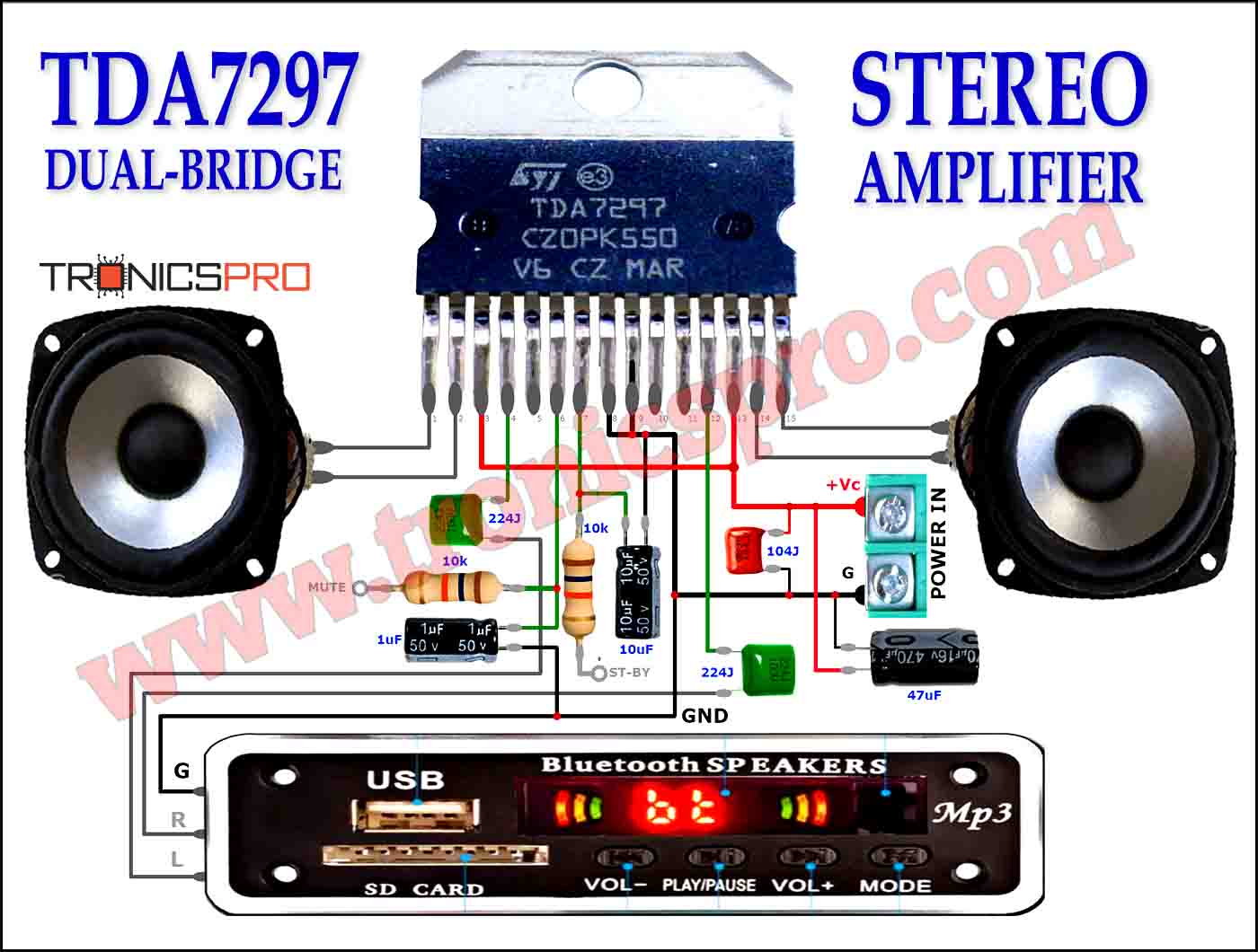
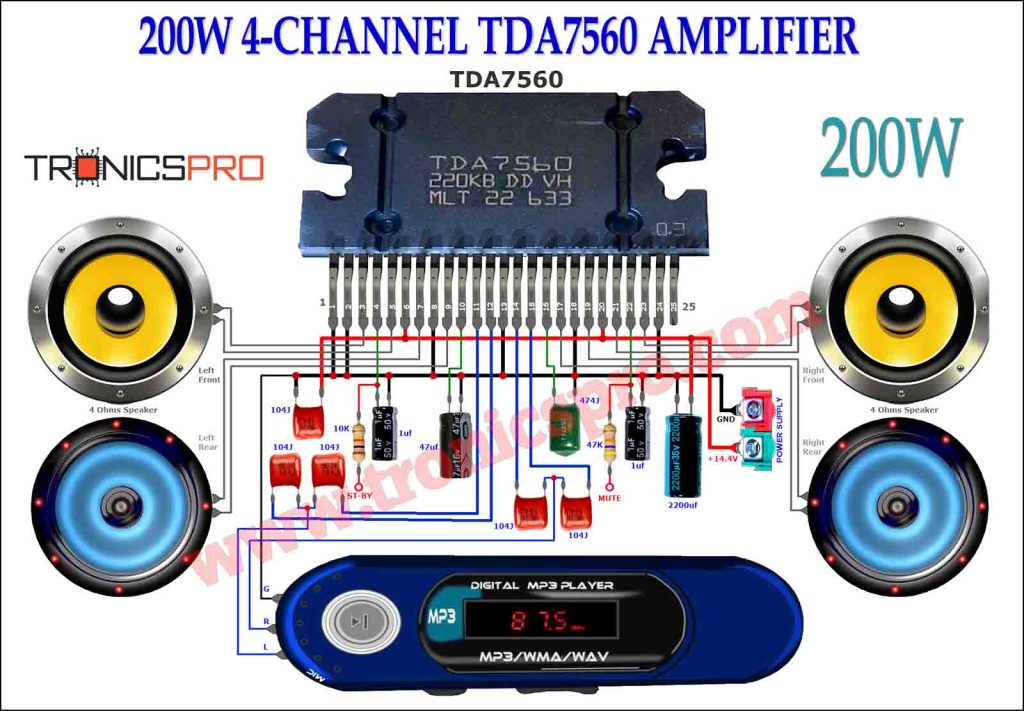
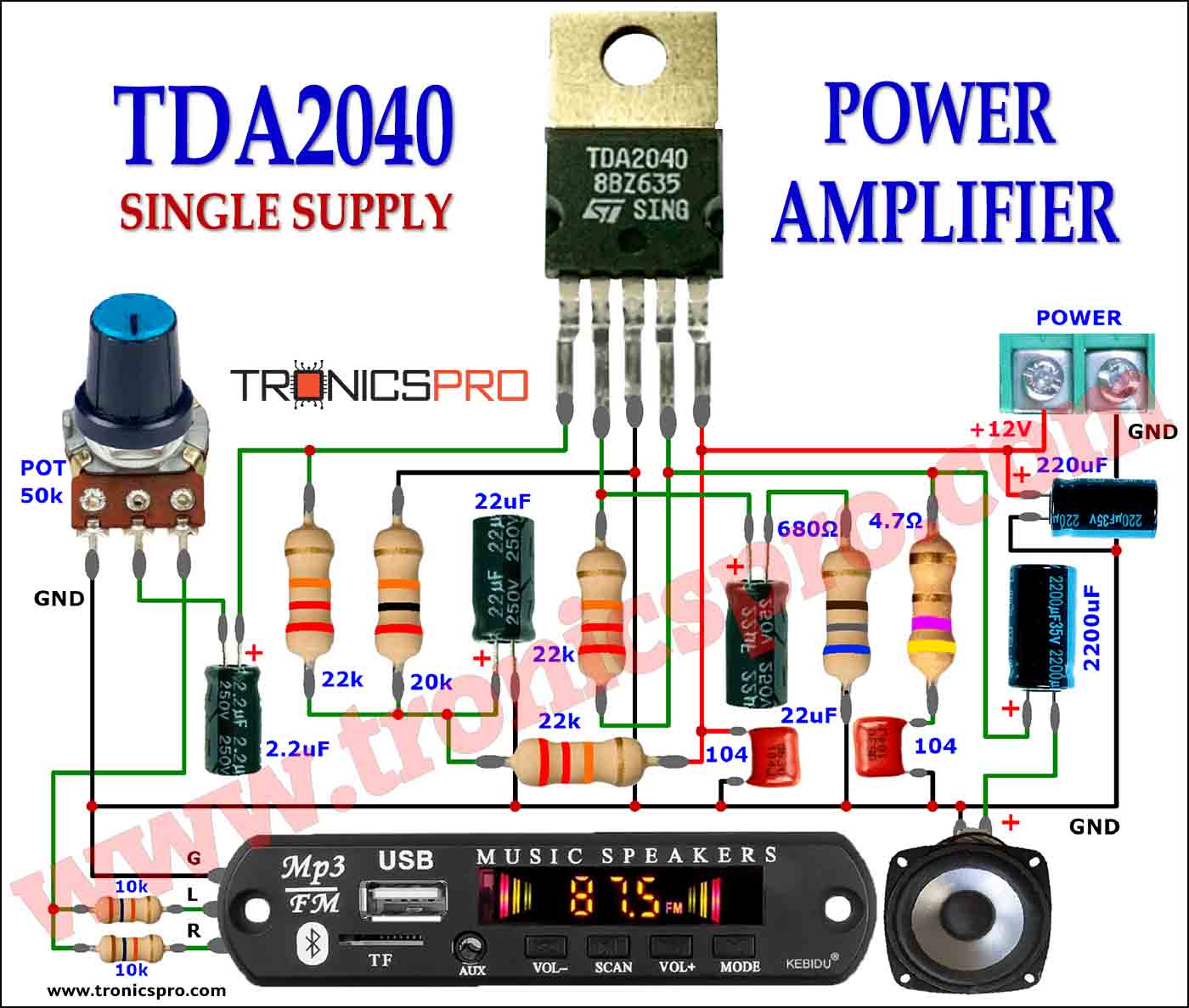
Key Applications of BD440 PNP Transistor
- Push-pull complementary amplifier output stages
- Audio amplifier driver circuits
- High-side switching in power and driver circuits
- Power supply regulation and linear stages
- General-purpose PNP switching and amplification
NPN Complimentary Transistor
- The complementary NPN transistor for BD440 is BD439.
Equivalent Transistors of BD440 PNP Transistor
Some possible alternatives or equivalent PNP transistors include:
- BD438 (lower-voltage sibling PNP in same series)
- BD442 (higher-voltage PNP in same family)
- Other PNP power transistors in TO-126 or TO-220 form with similar voltage (60 V) / current (4 A) ratings
- For instance, classic PNP devices such as TIP32C, MJE2955 (if matching voltage & current)
Datasheet of BD440 PNP Transistor
Click the following Button to download the datasheet of BD440 Transistor :
More projects, You may like:
- Video Transmitter DIY Homemade FM Radio Transmitter
- Adjustable Power Supply DIY Battery Charger
- 12V-220V 500 Watt inverter DIY Homemade
- MPPT Solar Charge Controller DIY Homemade
- DIY LA4440 bass amplifier homemade
For more project and circuit diagrams, you can go through the Schematics in the main menu where you can find many interesting projects and circuit diagrams like audio amplifier circuits, voltage booster circuit, battery charger circuit and timer circuits etc., which are all beginner circuit projects. Feel free to check them out!
Thank you for visiting the article
You may also like:
![TIP3055 NPN Transistor Datasheet]()
TIP3055 NPN Power Transistor Pinout Datasheet
![BC638 PNP Transistor Datasheet]()
BC638 PNP Transistor Pinout Datasheet
![TIP145 PNP Transistor Datasheet]()
TIP145 PNP Transistor Pinout Datasheet
![MJE340 NPN Transistor Datasheet]()
MJE340 NPN Power Transistor Datasheet
![MJE15032 NPN Transistor Pinout Datasheet]()
MJE15032 NPN Power Transistor Datasheet
![TIP41 NPN Transistor Datasheet Pinout]()
TIP41 NPN Transistor Pinout Datasheet
![2n5305 datasheet pinout]()
2N5305 Pinout, Equivalent, Application, Datasheet
![TIP140 NPN Transistor Datasheet]()
TIP140 NPN Transistor Pinout Datasheet